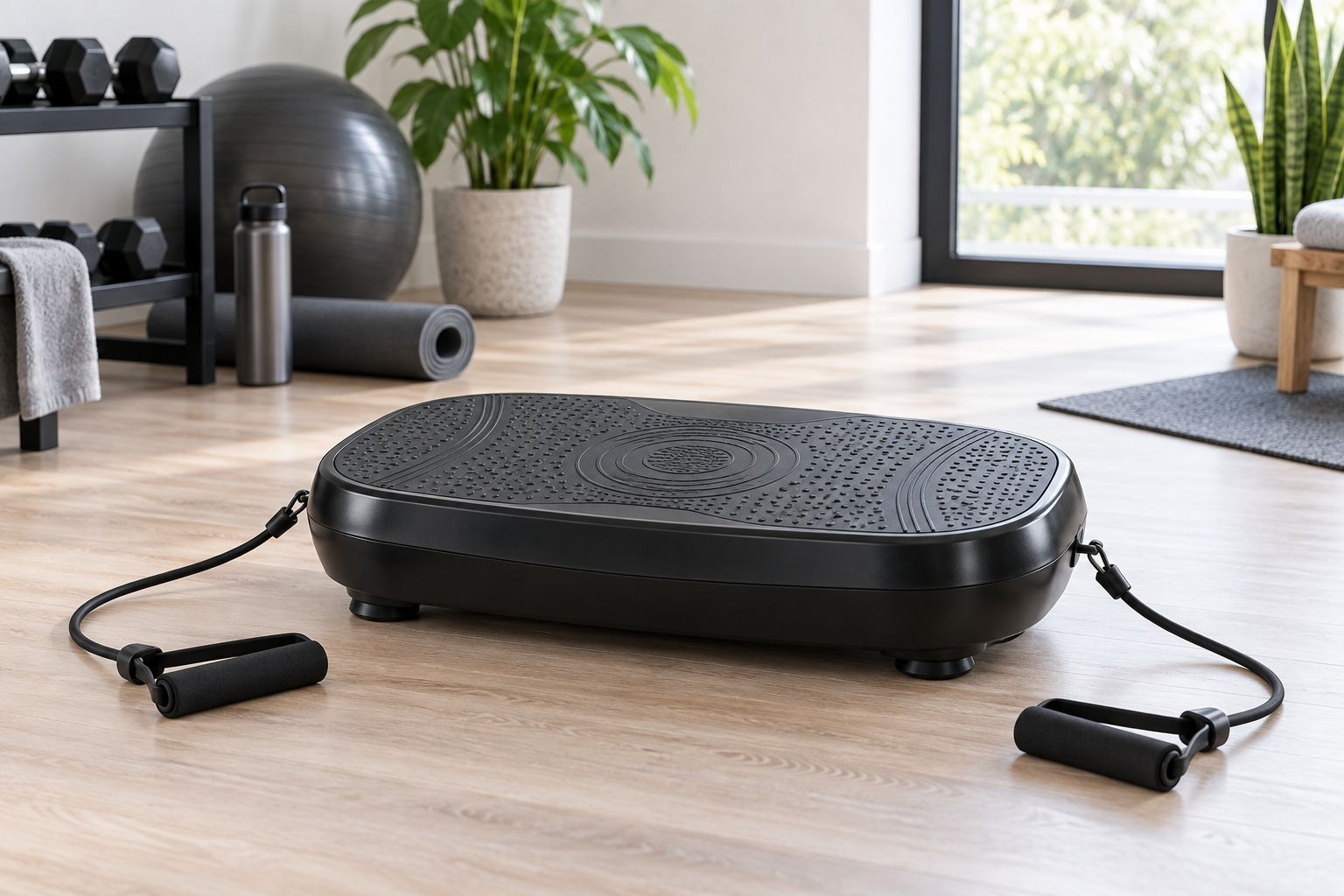
Bluefin Fitness
Bluefin Fitness Ultra Slim 3D Vibration Plate
A low-profile Bluefin option aimed at buyers balancing multi-direction motion and storage.
Dual-direction and dual-motor models sold with 3D movement labels.
3D is a manufacturer term, not a single technical standard. For each Bluefin model, identify the axes or motor modes described in its current manual and note whether they operate independently, together, or through presets. Do not assume the Ultra Slim and full-size dual-motor plate create identical movement because both use the same label. Compare the lowest controllable setting in each mode, console and remote feedback, timer, deck dimensions, capacity, and product weight. Level numbers are meaningful only inside the model that generated them, so avoid cross-brand or cross-model arithmetic.
Name the exercise or session that benefits from each documented mode. If the plan uses only one ordinary movement, a simpler oscillating machine may be easier to learn and own. For the remaining 3D candidates, compare low-profile storage against full-size stability, delivery route, band setup, seller, warranty, and return handling. Test one mode at a time on the actual floor, keeping stance and duration constant while observing comfort, control, noise, and structural transmission. Combined operation should be evaluated only after the individual behavior is clear. Choose 3D for useful variety rather than the label alone. Create a small mode chart during the trial and ask every intended user to identify the active direction and reproduce a comfortable setting. If the household cannot explain the difference between modes without guessing, the extra system is adding complexity instead of usable choice. Clarity belongs in the comparison alongside motor count.
As an Amazon Associate, we may earn from qualifying purchases.
A low-profile Bluefin option aimed at buyers balancing multi-direction motion and storage.
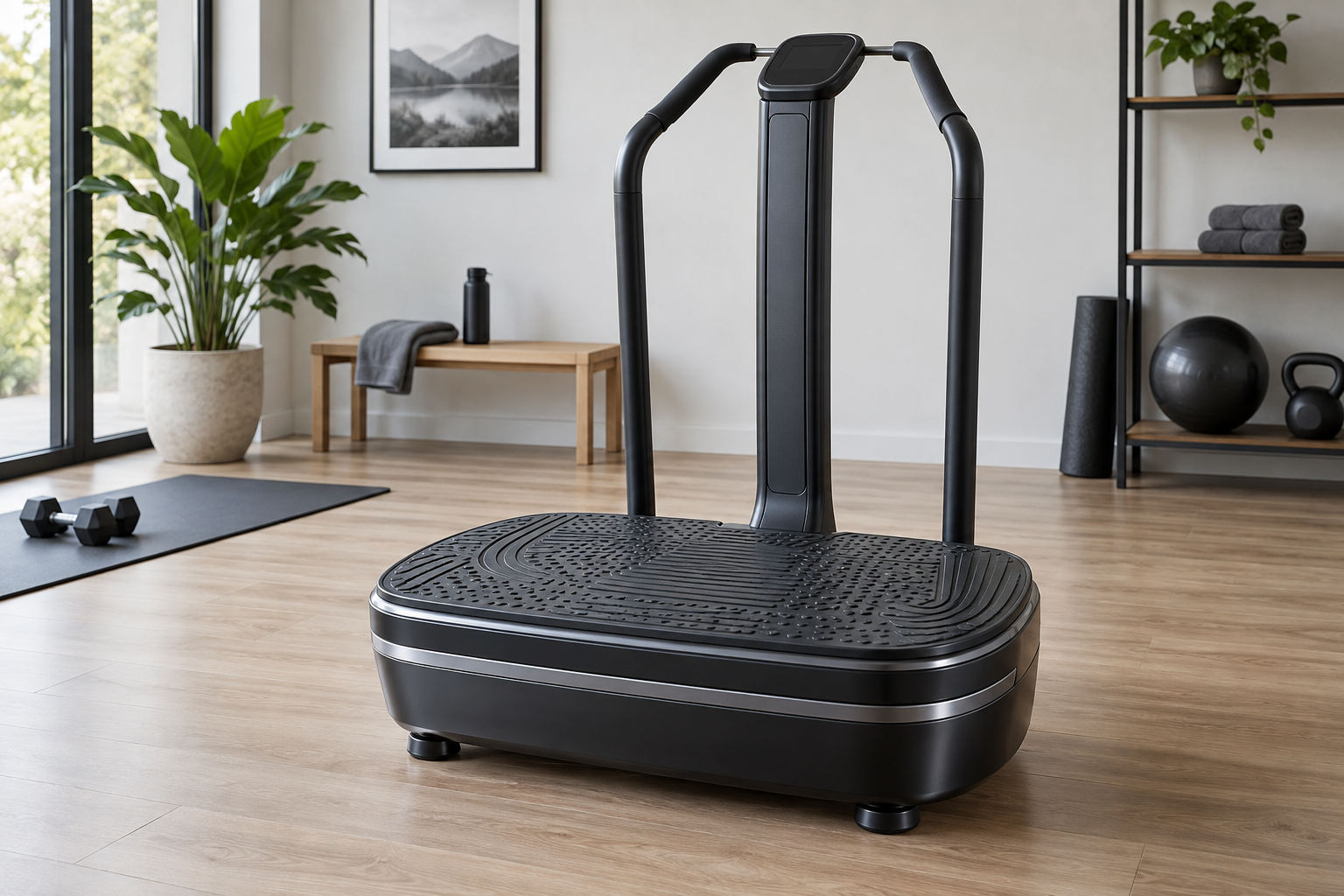
A dual-motor Bluefin model with a larger home-training footprint.