FEIERDUN
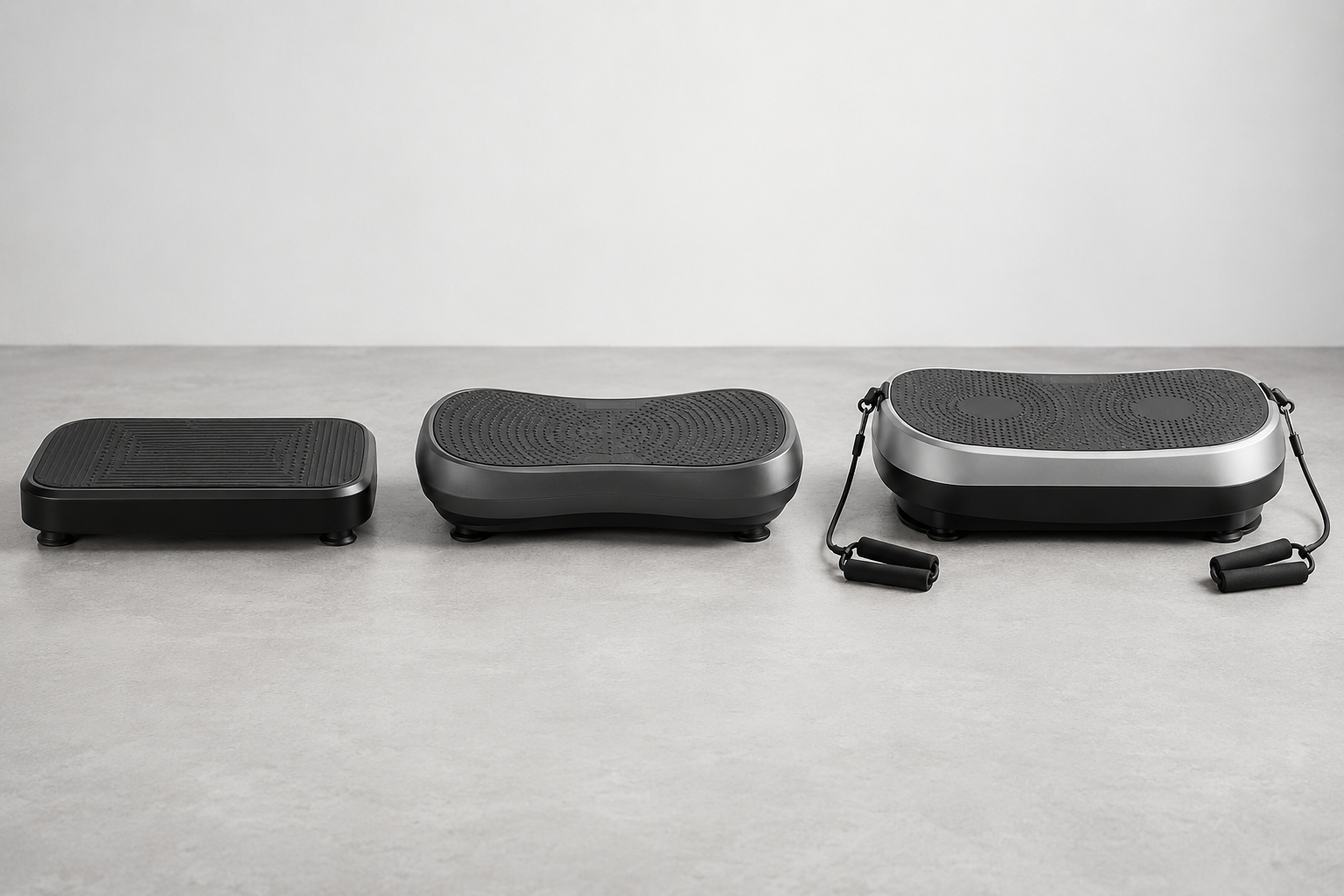
FEIERDUN 200W 120-Level Oscillating Vibration Plate
A 200-watt oscillating model with a broad listed control range.
Ten minutes is enough for a structured vibration plate session when every minute has a job. This routine moves from a steady stance into leg work, upper-body work, balance, and a deliberate finish. Keep a stable handhold nearby. Start low enough to keep your eyes level and movements controlled. Display numbers are not comparable across brands, so judge the setting by your form.
Place the plate on a level floor and clear space around it. Wear flat athletic shoes unless the manufacturer permits another setup. Test the controls and choose a low level before climbing on.
Keep your knees soft and breathe normally. If the vibration reaches your jaw or makes your head bob, reduce the setting, bend the knees slightly more, or narrow your stance. Stop for pain, dizziness, or loss of control.
0:00-1:00 — Athletic stance. Place both feet hip-width with the whole foot supported. Sit back a few inches, stack ribs over hips, look forward, and touch the rail if needed. Find the lowest smooth, controllable setting.
1:00-2:00 — Alternating heel lifts. Raise one heel, lower it, then raise the other. Move slowly and keep pressure across each forefoot without rolling outward. Lift only a fraction to regress; pause one count at the top to progress.
2:00-3:00 — Shallow squat pulses. Lower into a quarter squat, then rise halfway without straightening completely. Send hips back while knees track with toes. Reduce the range or hold still if the pulse becomes bouncy.
3:00-4:00 — Split stance, right foot forward. Keep both feet on the platform if it is long enough; otherwise place the back foot securely on the floor according to your machine's instructions. Bend both knees slightly and keep most of your weight through the front midfoot. Hold the position for 30 seconds, then make controlled one-inch rises and lowers for 30 seconds. Use the rail for balance.
4:00-5:00 — Split stance, left foot forward. Repeat the same sequence on the other side. Match the stance length and knee bend you used previously rather than forcing the second side deeper. A common error is allowing the front knee to collapse inward; reduce the bend and press the knee gently toward the middle toes.
5:00-6:00 — Incline plank. Turn the machine off for repositioning if required. Place hands on the platform, step back, and align ears, hips, and heels. Hold 20 seconds, rest upright 10, and repeat. Move feet closer to regress. Keep shoulders down and back level.
6:00-7:00 — Supported push-up pattern. From the same incline position, bend the elbows slightly back and lower the chest a comfortable distance, then press away. Aim for six to ten slow repetitions, pausing whenever form slips. The regression is a static incline plank; the progression is a slightly longer body angle, provided the plate remains stable and the manufacturer's guidance allows hands-on-platform work.
7:00-8:00 — Weight shifts. Stand hip-width with fingertips supported. Move roughly 60 percent of your weight right for five seconds, center, then left. To progress, hover the light heel; keep the toes relaxed.
8:00-9:00 — Wide-stance hold. Stand slightly wider than the hips with toes barely turned out. Hold a shallow squat 20 seconds, stand for 10, and repeat. Balance heel and forefoot pressure. Shorten the stance if knees drift inward.
9:00-10:00 — Low-setting recovery stance. Return to hip-width, lower the speed to the easiest setting, and stand with soft knees for 30 seconds. For the final 30 seconds, step off and walk slowly beside the plate while taking relaxed breaths. This off-platform finish gives you a moment to check how you feel before moving on with the day.
Repeat the same version for several sessions. Then change one variable: add a little squat depth, reduce hand support, lengthen one hold by five seconds, or choose the next modest setting. Multiple changes at once make a loss of form harder to diagnose.
Look for quieter posture, cleaner transitions, and less dependence on the rail. Keep the routine at ten minutes until every transition feels familiar.
As an Amazon Associate, we may earn from qualifying purchases.
A 200-watt oscillating model with a broad listed control range.
This 10:00 plan gives each major task a defined place: posture, calves, squat mechanics, split-stance control, upper-body support, balance, and recovery. Save the exact version you completed, including the machine setting and any support used. Also note which minute first disrupted your breathing or alignment. On the next attempt, improve that minute before raising the setting. If all ten minutes remain controlled, make one small progression while leaving the clock unchanged. Repeat it on the same plate when possible, because settings and movement patterns vary between machines. That simple record keeps progression tied to movement quality.
Continue the A 10-Minute Vibration Plate Workout With Clear Transitions decision in the full product catalog, brand directory, or vibration plate finder.