LifePro
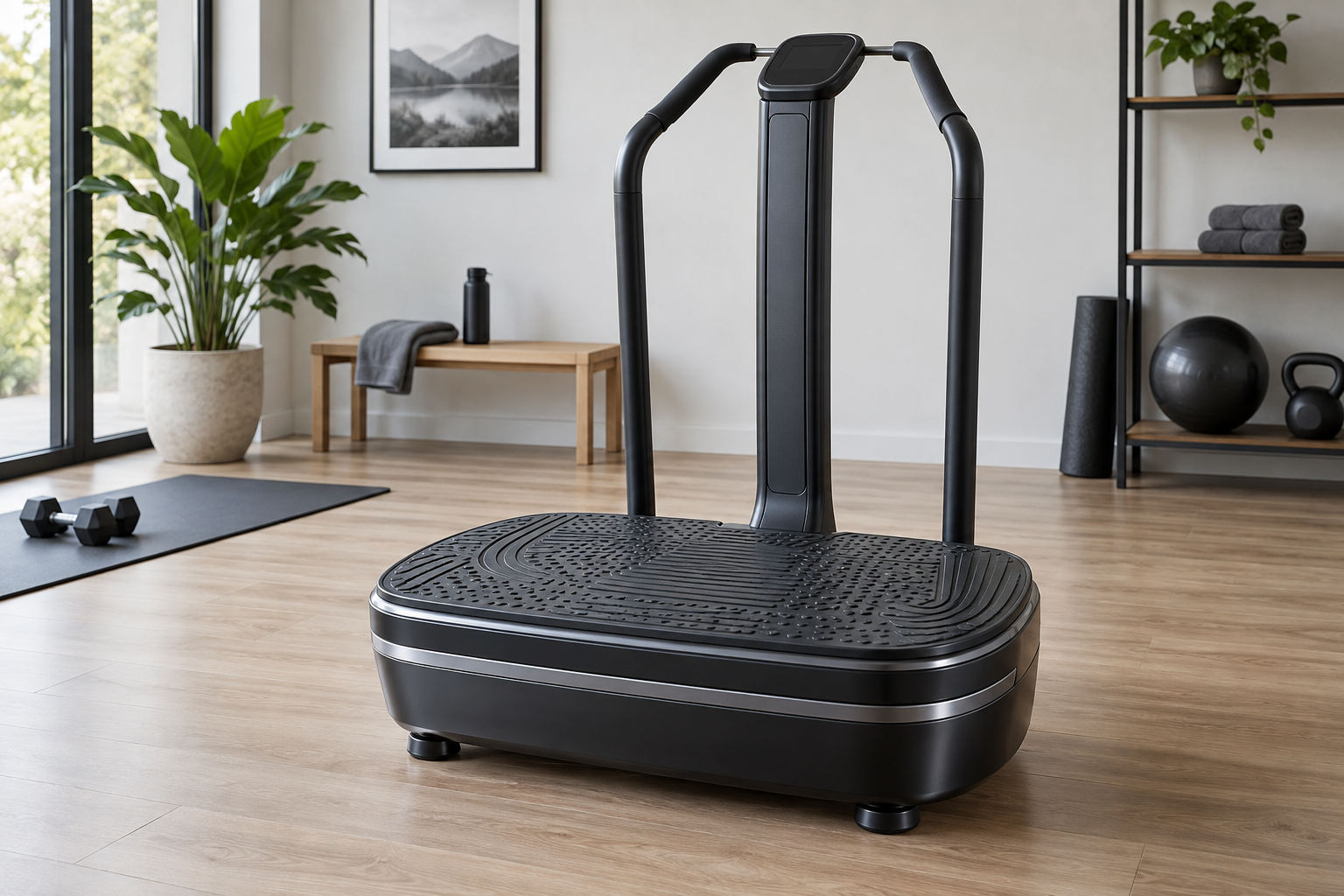
LifePro Rumblex Plus 4D Triple-Motor Vibration Plate
A multi-motor platform for buyers comparing more than one movement pattern.
The 3D and 4D labels sound precise, but the market has no shared rule defining them. One seller may call two motor directions 3D, while another reserves 3D for three movement components. A fourth dimension can mean an added pulsation motor, a programmed combination, or marketing language. The winner is the plate whose selectable movements are documented and useful.
List what the deck does in each mode. Does it pivot left to right, move vertically, shift horizontally, or pulse through a short path? Can each motor run alone? Can two or three run together? This map is the only reliable way to compare products labeled 3D and 4D.
If the listing supplies diagrams but no manual, verify them with the manufacturer. A colorful arrow may describe sensation rather than mechanical travel.
A predictable oscillating mode may suit standing, squats, and band work. Multiple axes offer variety, but combined movement may demand more balance and a longer learning period. Identify which planned exercise needs the extra mode before paying for it.
Independent manual control is valuable. Presets blending motors without showing settings make sessions difficult to repeat or compare.
Extra motors add weight and can make a unit harder to store. They also introduce more electronics. Check dimensions, assembled weight, ventilation, cord location, warranty, and support. A heavy chassis may suit a permanent exercise area and frustrate a user who stores it daily.
Deck size still matters. Multiple modes do not help if the intended stance does not fit or if the remote cannot be used from a plank.
Choose the simpler 3D candidate when its named modes cover the routine, controls are clearer, or frequent storage matters. Choose the 4D candidate when its additional independently selectable movement has a defined role and the buyer accepts extra mass. If neither seller identifies directions, neither earns a technical advantage.
Compare exact revisions and manuals because manufacturers reuse family names. Confirm the current listing, accessories, and return terms before ordering.
Create one row for every selectable motor state rather than one row for each marketing dimension. Columns should include the named mode, actual direction, independent level control, documented frequency, documented displacement, and whether it can run with other modes. A 3D machine with three clearly explained selections may offer more practical control than a 4D machine whose fourth mode exists only inside automatic programs. Empty cells expose the information that needs confirmation.
Next, assign each intended exercise to a mode. Side-alternating oscillation may be the preferred choice for standing and shallow squats. A shorter-travel mode may feel more suitable for hand-supported positions. Combined movement may be reserved for experienced users who can maintain posture. If the same single mode wins every row, the additional dimension has no role in this buyer’s plan and should not command a premium.
Finally, compare non-motor details that influence whether those modes get used. Check how many button presses are required to select a direction, whether the remote can change individual motors, and whether the plate remembers prior settings. Confirm the deck remains stable in combined operation and the manual explains a full stop. The better machine is the one whose extra motion can be selected intentionally, repeated accurately, and stopped immediately.
Noise can also change by mode. A plate may sound quiet with one motor yet transmit a stronger buzz when motors combine. Test every mode on the intended floor, using a dense mat only if the manufacturer permits it. Listen in adjacent rooms and confirm that the feet remain evenly planted. Mode-specific vibration through the building is a practical dimension that the 3D or 4D name never captures.
As an Amazon Associate, we may earn from qualifying purchases.
A multi-motor platform for buyers comparing more than one movement pattern.
There is no universal 3D-to-4D ladder. Translate both labels into motion directions, independent controls, and combined modes. The practical winner is the model that makes the desired movement repeatable and fits the room, stance, and storage routine. A documented three-mode machine deserves more confidence than a four-mode claim that cannot be mapped to physical movement.
Continue the 3D vs 4D Vibration Plates: What the Labels Usually Mean decision in the full product catalog, brand directory, or vibration plate finder.