LifePro
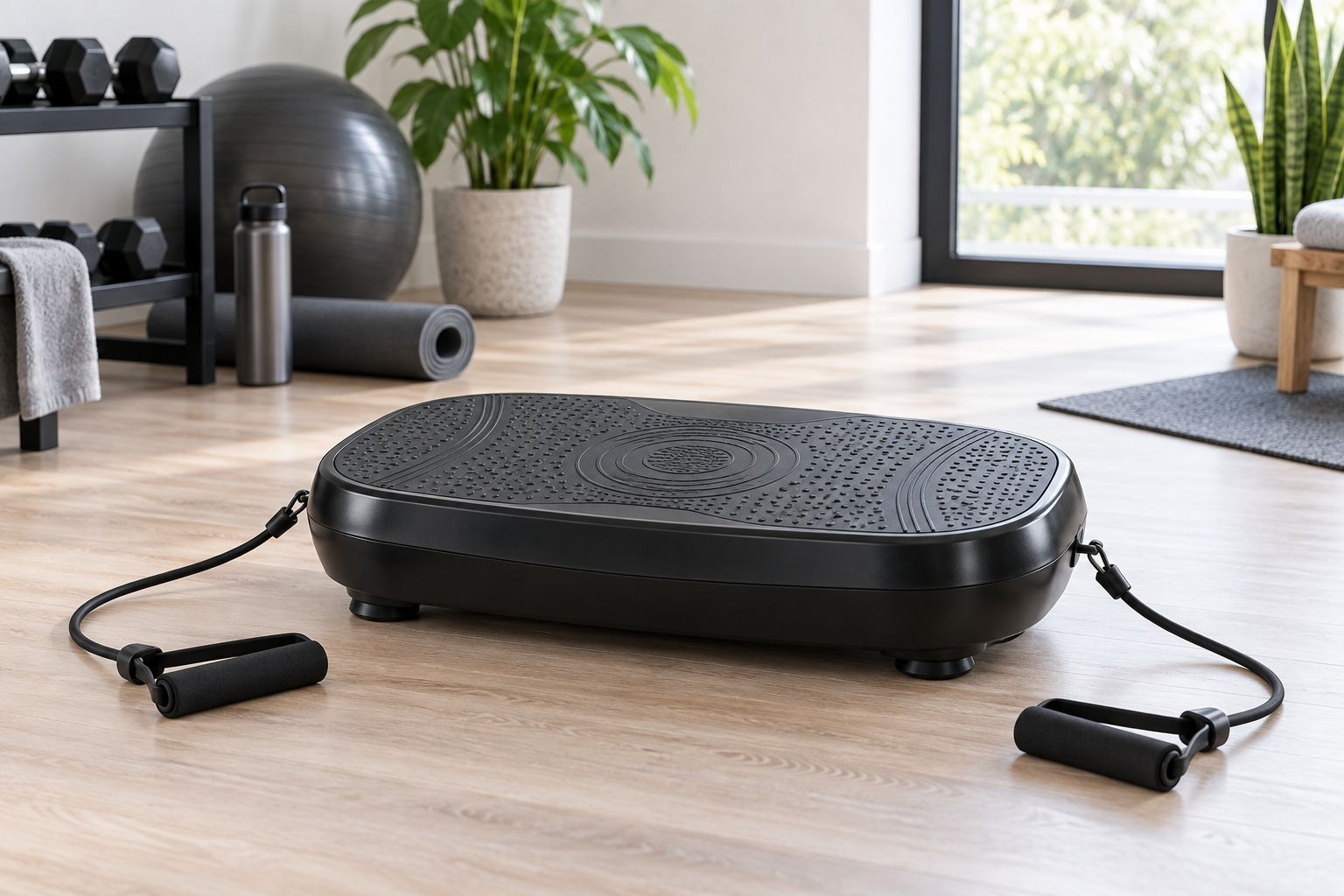
LifePro Waver Mini Compact Vibration Plate
A smaller-footprint LifePro option for short sessions and easier storage.
A first vibration plate workout should teach control. Learn a reliable stance, safe transitions, and a setting that lets you move intentionally. This session uses short bouts and generous resets and takes roughly 12 to 15 minutes. Keep fixed support nearby, and read the manual before placing hands or only one foot on the plate.
Put the unit on an even surface and confirm its feet sit flat. Test the lowest setting with one foot while standing beside it. Once aboard, place feet under hips, distribute pressure across heel and both sides of the forefoot, and soften the knees.
Hold a rail or sturdy counter with relaxed hands. Your support is there to prevent a stumble, not to pull your body upright. A suitable starting intensity allows you to speak, breathe steadily, and keep your head from bouncing. Machine scales vary widely, so a label such as level 10 means little without the model's own instructions.
Complete three rounds of 30 seconds in an athletic stance and 30 seconds off. During work, send hips back slightly and face forward. During rest, stand beside the machine and check your stability.
Next, turn the plate off and rehearse stepping up and down twice with each leading foot. Look at the platform for placement, plant the whole foot, and avoid hopping. If balance is uncertain, this stepping rehearsal can be the entire first session. Progress to live stepping only if the manufacturer allows it and you can hold a fixed support without twisting.
Perform a shallow squat hold for 20 seconds, then rest for 40 seconds. Bend only as far as you can keep the knees lined up with the second and third toes. Imagine sitting toward a chair rather than dropping straight down. Repeat once. To regress, stand almost upright with a small knee bend; to progress later, extend each hold to 30 seconds.
For calf raises, keep both hands on the support and lift both heels slowly for eight repetitions. Pause briefly at the top and lower until the heels are fully supported. Use a small lift if the ankles wobble. A progression is alternating heel lifts, which asks each leg to accept a little more load without requiring a single-leg stance.
For weight shifts, move chest and hips together over the right foot, center, then left. Complete five per side with feet planted. Avoid sending hips sideways while shoulders remain behind.
Finish with a supported hip hinge. Keep a small knee bend, move hips backward with a long spine, then stand. Perform six slow repetitions. Practice on the floor first if the pattern feels confusing.
If your manual permits hands-on-platform exercises, switch the unit off to get into position. Kneel on a pad in front of the plate and place the hands about shoulder-width apart. With the body angled from knees to shoulders, turn on the lowest setting and hold for 15 seconds. Step the hands off, sit back, and rest for 45 seconds. Complete two rounds.
Keep the elbows unlocked and press the floor away so the chest does not sink between the shoulders. The easiest version is a standing wall push held away from the machine. A later progression is an incline plank from the toes, but only after you can maintain the kneeling version without wrist discomfort, shoulder shrugging, or a sagging midsection.
End with 30 seconds in the original athletic stance at the lowest comfortable setting. Then turn the unit off before stepping down. Walk around for a minute and check for normal balance. Record the session length, setting, and which movement required the most support.
Common mistakes are locked knees, excessive settings, and breath-holding during squats. Correct those before adding variety. A few familiar movements performed cleanly build a sound foundation.
During the first several sessions, repeat the same blocks and seek consistency. When the session feels steady, add five seconds to one work interval or one repetition to each moving exercise. You can also reduce your grip from both hands to fingertips while keeping the support close.
Change only one feature per session. If you choose a slightly stronger setting, keep the same positions and durations. If you add deeper squats, retain the familiar low setting. This makes your response easier to judge and keeps the machine from becoming the focus instead of your technique.
As an Amazon Associate, we may earn from qualifying purchases.
A smaller-footprint LifePro option for short sessions and easier storage.
A beginner workout should leave you more confident using the plate. Build a stable stance and repeatable transitions first. Repeat this sequence until you can step on, settle into position, and step off without rushing. Track the setting and support used so progress is visible even when the routine stays the same. Once those basics are automatic, add longer holds, more range, and carefully chosen balance challenges.
Continue the Beginner Vibration Plate Workout: A Conservative First Routine decision in the full product catalog, brand directory, or vibration plate finder.