Power Plate
Power Plate MOVE Professional Vibration Platform
An upright professional-style platform for buyers who value integrated hand support.
The best vibration plate for an older adult is the one that makes getting on, setting the speed, and getting off predictable. We favor a low step-up platform with gentle manual control and dependable support nearby. Full-height handles may be worthwhile when transitions are the main concern, while an open compact plate can work for an independent user who has a stable counter or rail in the room.
Two people of the same age can have very different balance, joint tolerance, bone health, medications, and training experience. Define the intended activity: quiet standing, supported mini-squats, calf raises, or strength exercises. Then note whether the user can step onto a moving surface, operate a remote, and recover from a small loss of balance.
A history of falls, unexplained dizziness, significant osteoporosis, recent joint surgery, implanted devices, or cardiovascular concerns calls for advice from the relevant clinician. A product marketed to seniors is not automatically suitable for those conditions.
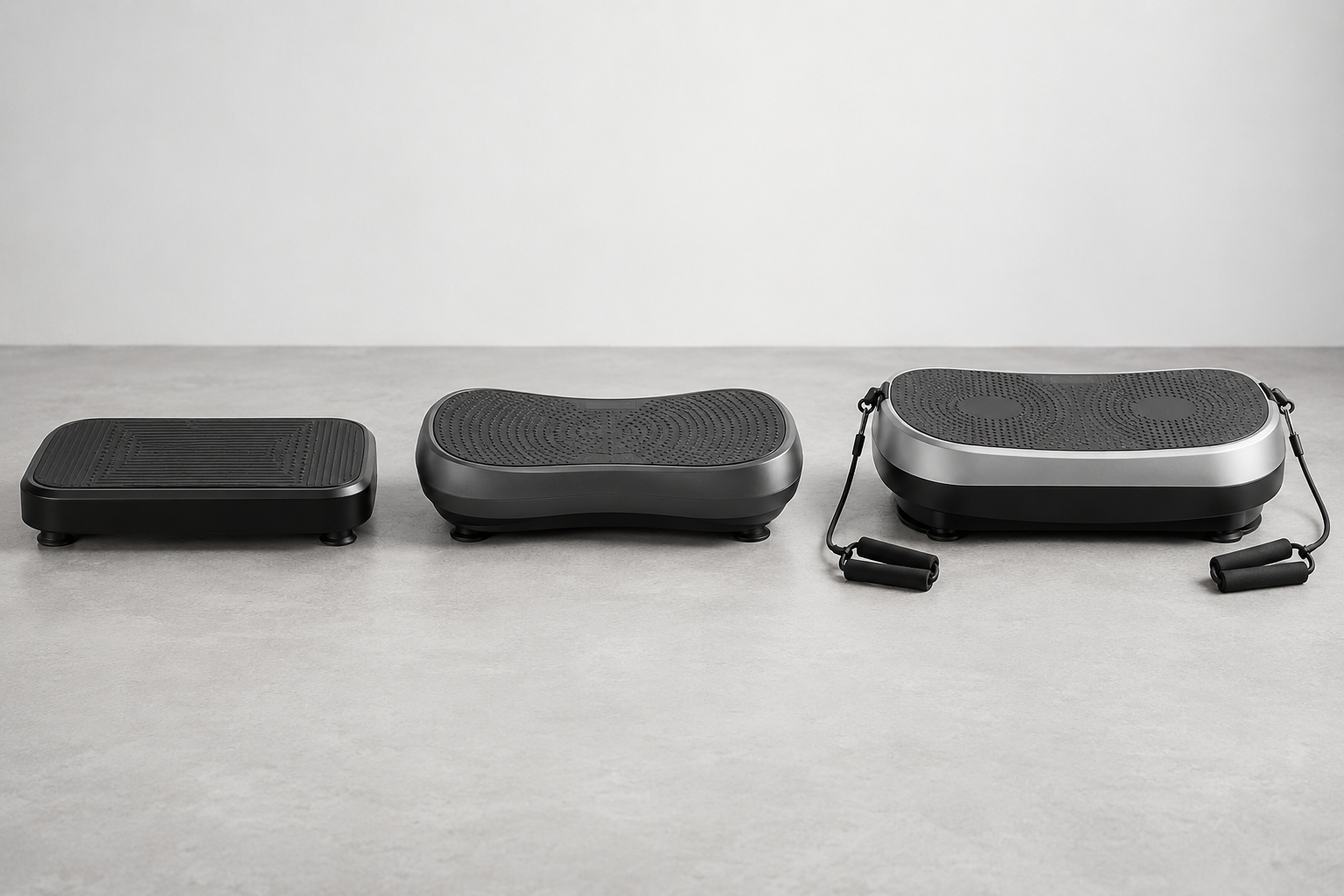
Measure how high the deck sits from the floor and whether its edge is easy to see. A tall rounded housing can make foot placement less certain. Contrast at the edge, a grippy top, and space for the entire shoe matter more than decorative foot outlines.
Built-in rails provide a consistent hand position and can reduce anxiety during entry. They also require permanent floor space and careful assembly. Resistance bands should never be treated as balance supports because they stretch and pull from low anchors.
Large console text, a simple remote, and an obvious stop button reduce unnecessary movement while the platform runs. Test whether the remote requires precise aiming and whether its symbols are understandable. The machine should allow a low manual start instead of forcing the user through a preset with changing intensity.
A session timer is useful, but automatic shutoff does not replace supervision where fall risk is present. Keep the first sessions short enough to observe balance, joint comfort, and how the user feels after stepping off.
Use a firm, level floor with the cord routed away from the approach. Leave room to turn and sit. A dense equipment mat can protect hard flooring, but a soft mat or plush carpet may let the chassis sway. Check that all feet make contact before power is connected.
The plate should not block a walkway when it is off. If it must be stored, confirm the user can move it without lifting from the waist or catching fingers beneath the shell. Wheels are helpful only when they engage easily and travel in the needed direction.
Begin at the lowest comfortable setting with soft knees and both hands near stable support. Progress one item at a time, such as adding a minute or introducing a simple calf raise. Increasing speed, stance width, and exercise difficulty together makes a reaction hard to interpret.
A plate can supplement walking, strength, or balance practice, but it does not replace them. If the user becomes more dependent on the handles or feels unsteady after a session, reduce the challenge and seek qualified guidance rather than chasing adaptation through higher settings.
As an Amazon Associate, we may earn from qualifying purchases.
An upright professional-style platform for buyers who value integrated hand support.
Choose around transitions, support, low-speed control, and the actual room. A modest plate that an older adult can enter and operate confidently is more useful than a feature-heavy model that remains stored. Use the delivery window to test noise, deck grip, remote readability, and post-session steadiness, and keep medical decisions with a clinician who knows the individual. If another person will supervise, rehearse where that person stands and how the machine stops without reaching across the user. Keep the manual beside the plate and label confusing remote buttons if necessary. These ordinary details can matter more than another program or speed level because they reduce hesitation at the start of every session.
Continue the How to Choose a Vibration Plate for an Older Adult decision in the full product catalog, brand directory, or vibration plate finder.