Power Plate
Power Plate MOVE Professional Vibration Platform
An upright professional-style platform for buyers who value integrated hand support.
Handles solve a specific problem: they give the user a consistent place to steady transitions and upright movements. They also turn a compact platform into a larger piece of equipment, so the purchase should begin with support needs and room measurements. Our recommendation is a full rail only when the user will rely on it regularly; otherwise a stable open plate beside an appropriate fixed support may preserve more exercise and storage options.
A waist-high rail can help with stepping on, shallow squats, and changes in foot position. It should not be used to hang body weight or compensate for a deck that rocks. Check whether the grips are positioned naturally for the user’s height and whether the upright flexes when held lightly.
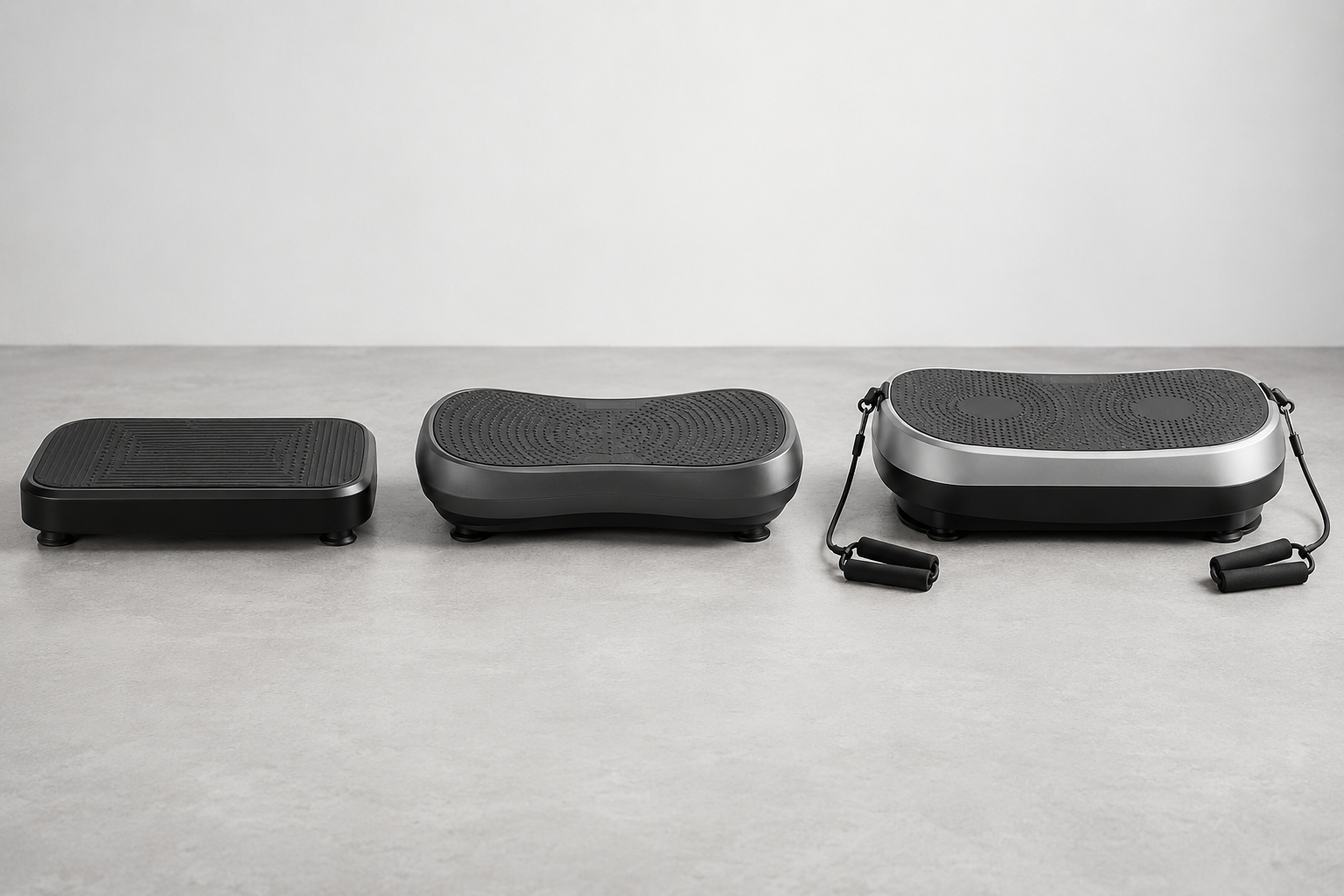
Short side handles and resistance bands are different features. Bands create tension and can pull the user off center; they are not balance aids. Product photos sometimes make a low molded grip look more supportive than it is, so inspect assembly drawings and measurements.
Use the full width, depth, and height with rails installed. Add room behind the deck for stepping on and enough side clearance for hands and elbows. If the machine must pass through a doorway or around a corner, compare those points with the assembled base because disassembling it after every session is rarely realistic.
Some handle models include a raised console or fixed control pod. Confirm that it does not block the user’s stance or require looking down while balancing. A reachable emergency stop and speed buttons matter more than a large program display.
The upright should mount with clearly identified hardware and sit square without improvised spacers. Recheck manufacturer-listed fasteners after initial use according to the manual. A handle can transmit leverage into the base, making solid floor contact and correct assembly especially important.
Check user capacity, machine weight, deck dimensions, and rail limits separately. A high platform capacity does not necessarily mean the handle is designed to bear the same load. If the manual does not explain intended hand support, ask the manufacturer before buying.
Handle-equipped plates are harder to hide, lift, and return. Verify boxed weight, assembly time, ceiling clearance, and where packaging will be kept during the trial. Wheels can help across a level floor, though they do little for stairs and thresholds.
The larger structure may produce rattles at loose joints even when the motor is quiet. During the return window, test every planned setting and listen at the rail connections. Stop and contact support for persistent movement at the upright or damaged hardware.
Begin with the plate off and practice stepping on, finding the grips, and stepping back down. Then use the lowest manual setting with soft knees and a simple stance. The handle should increase confidence without encouraging a rigid locked-arm position.
If the user still requires hands-on assistance, becomes dizzy, or cannot reach the stop control reliably, the plate is not made safe merely by having rails. A clinician or qualified trainer can help decide whether this type of exercise fits the individual.
As an Amazon Associate, we may earn from qualifying purchases.
An upright professional-style platform for buyers who value integrated hand support.
Choose a vibration plate with handles when stable, repeatable hand placement is central to the routine and the assembled equipment can remain accessible. Compare grip height, rail rigidity, step-up height, usable deck, and stop controls before counting programs. The right rail supports entry and light balance assistance; it should never hide poor assembly, an unstable floor, or a mismatch between the exercise and the user. Ask for the installation manual before purchase and confirm whether assembly needs two people. During the first week, mark any loosening fastener and follow the specified inspection schedule. If the rail changes position during normal light contact, stop using the plate until support resolves it. Measure the grip from the deck surface, since floor-to-handle height can mislead when platforms have different step-up heights.
Continue the Vibration Plates With Handles: Who Benefits From the Support decision in the full product catalog, brand directory, or vibration plate finder.