Bluefin Fitness
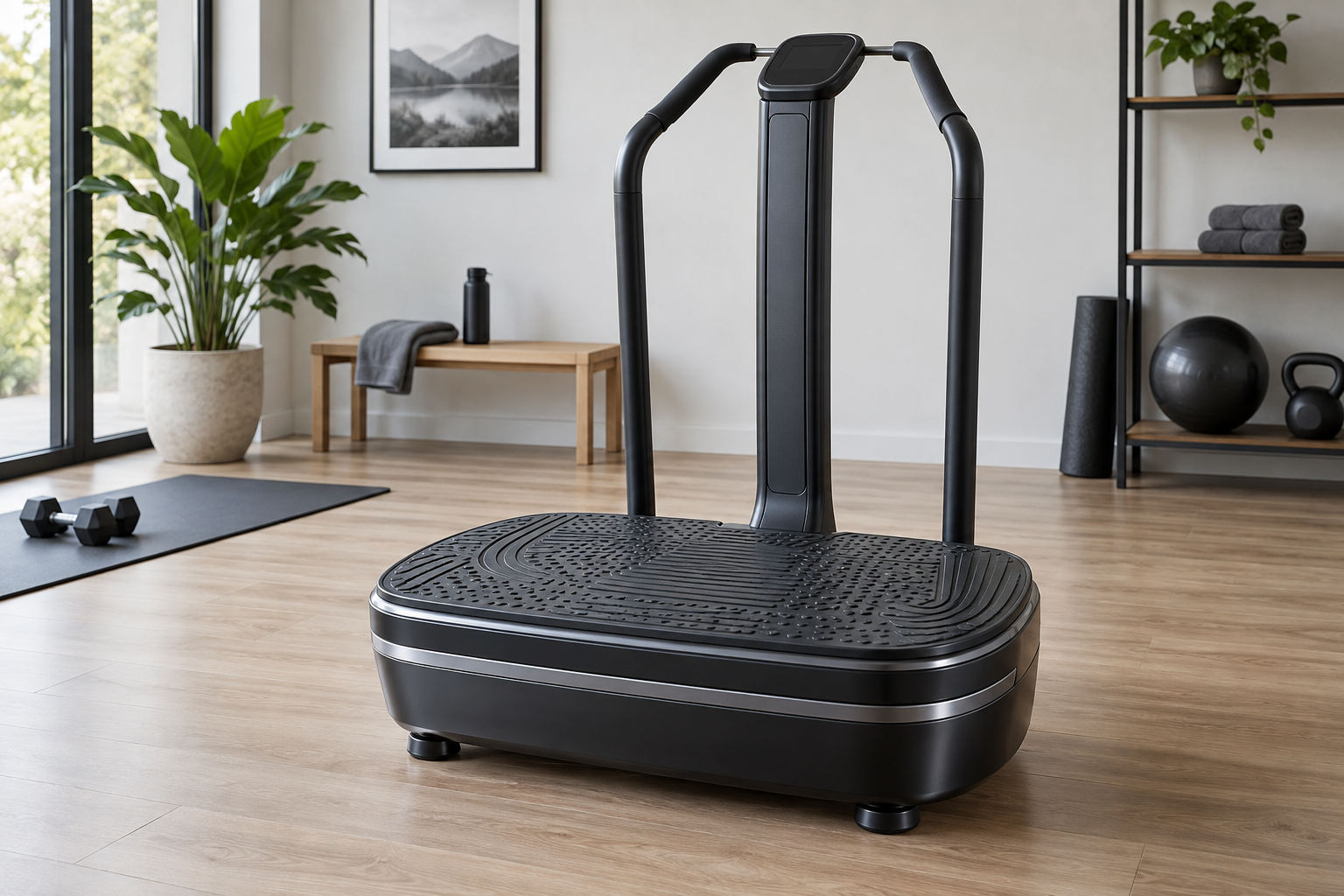
Bluefin Fitness Ultra Slim 3D Vibration Plate
A low-profile Bluefin option aimed at buyers balancing multi-direction motion and storage.
The price gap between entry and premium vibration plates can buy heavier construction, clearer specifications, additional motion modes, longer coverage, or simply branding. A fair comparison starts with one routine and one room. Premium wins only when its extra cost removes a real constraint or adds a feature the owner will repeatedly use.
A basic oscillating plate can handle short standing sessions, shallow squats, calf raises, and band exercises. Budget is the use-case winner for a first-time buyer who wants one predictable motion, a modest footprint, and no need for calibrated protocol settings.
Check low-speed smoothness, deck grip, base stability, cord placement, and remote response. These matter more than bundled accessories.
Higher-priced machines may publish frequency or amplitude, carry more chassis mass, offer separately controlled motors, include better handles, or provide stronger support. Those advantages matter for users following a defined protocol, changing modes often, or leaving the machine in a dedicated gym.
The premium is weak when the listing adds programs, speakers, and a larger speed count but withholds basic motion data.
Include delivery, return shipping, mat, replacement bands, remote batteries, and warranty service. A heavy machine with an expensive return can be risky when comfort is unknown. A cheaper unit replaced quickly may cost more than a supported model kept for years.
Read who pays return freight and whether marketplace sellers honor the manufacturer's warranty.
Budget wins for exploratory home use, simple oscillation, and frequent storage when weight is low. Premium wins for disclosed measurements, multiple independently useful modes, robust handles, higher chassis stability, or dependable service. Neither price tier wins merely through level count or a maximum-power claim.
Compare two exact models in a worksheet so the additional dollars attach to named differences.
Place the two exact models in a table and give every claimed upgrade a dollar-neutral description. Replace “advanced technology” with the actual additional motor direction. Replace “professional power” with published frequency, displacement, and duty cycle. Replace “luxury design” with machine weight, deck material, control type, and handle construction. When the language is stripped away, some premiums become easy to justify and others disappear.
Support quality can be tested before purchase. Look for a downloadable manual, reachable service contact, model-specific replacement parts, and warranty terms naming motors, electronics, labor, and shipping. Send one technical question and judge whether the response addresses it. Premium pricing is more defensible when it buys accessible documentation and a workable service path, especially for a heavy product that is expensive to return.
Budget buyers should protect the basics. The plate needs enough capacity margin, stable feet, a grippy deck, a smooth first setting, and a stop control that works from the intended posture. A dense mat, useful bands, or a good remote can be purchased separately if attachment points are standard. Structural fit cannot be corrected with accessories, so do not sacrifice deck space or stability to obtain Bluetooth audio or additional programs.
Consider the likely ownership period. Divide purchase price by realistic weekly uses over two or three years rather than by the number of features. A premium plate used regularly may have a low cost per session. A bargain stored because it is noisy or awkward is expensive at any price. This calculation turns value into a behavior question instead of a contest between retail labels.
Resale assumptions should remain conservative. Vibration plates are heavy to ship, model names change, and a used buyer cannot always verify motor condition or warranty transfer. Buy on the value of expected use rather than an optimistic resale price. Keep the receipt, serial number, packaging instructions, and service correspondence; those records are more likely to protect the investment if a problem develops during coverage.
As an Amazon Associate, we may earn from qualifying purchases.
A low-profile Bluefin option aimed at buyers balancing multi-direction motion and storage.
Buy the least expensive plate that meets the actual motion, fit, control, and support requirements. Spend more when the upgrade can be named and used. A transparent mid-priced model can be a better value than either an under-documented bargain or a feature-heavy premium unit.
Continue the Budget vs Premium Vibration Plates: Where the Extra Money Goes decision in the full product catalog, brand directory, or vibration plate finder.