MERACH
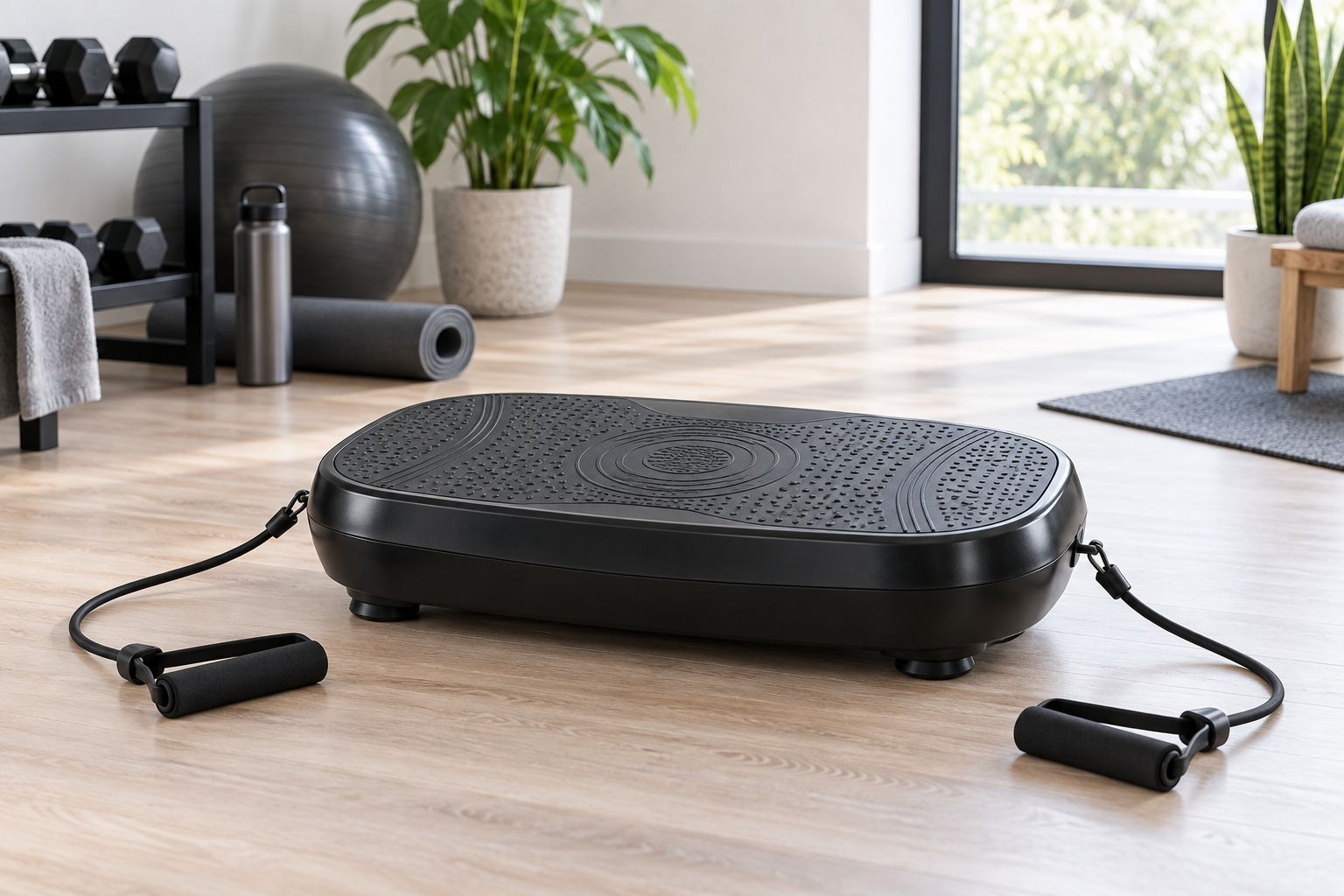
MERACH EvoSpark 7-in-1 4D Vibration Plate
A 4D-listed MERACH platform for shoppers who want multiple motion combinations.
Curved and flat refer to the standing surface, not a standardized motor category. Many curved home plates oscillate, while flat decks appear on oscillating, linear, and multi-axis machines. Shape changes foot angle, usable space, and storage profile. The right comparison holds the motion system constant and asks which surface supports the intended stance.
A curved shell raises the outer foot positions and can make stance zones easy to recognize. On a pivoting plate, wider placement already increases travel, so the changing foot angle can make the outer zones feel more distinct. Some users like that cue; others prefer both feet on one plane.
Curvature reduces the truly flat standing area. Compare usable dimensions rather than the maximum width of the plastic housing.
A flat platform gives predictable contact for varied foot angles, hands during planks, or an exercise mat laid across part of the surface. It is the use-case winner for buyers planning many floor-supported positions or who dislike standing with the ankles angled.
Flat does not mean low travel or linear motion. Verify the motor direction separately.
Curved models often package compact oscillation in a recognizable home format. They can work well for straightforward standing sessions in which marked stance zones guide progression. The winner should still have adequate tread, stable feet, and a gentle low setting.
For wide stances, compare the actual angle under each foot and make sure the user can keep knees tracking comfortably.
Measure height as well as footprint if the plate will slide under furniture. Examine lifting grips, machine weight, control visibility, and whether bands clear the shell. A sweeping curved casing may look slim while occupying more vertical space.
Test both shapes with the planned posture during the return window. Surface preference is hard to settle from photographs.
For standing, trace the intended foot positions and compare them with photographs showing the actual tread rather than the full casing. On a curved deck, note whether the entire sole contacts the surface or whether the outer edge changes ankle angle. On a flat deck, check whether molded ridges or a central hump interrupt the apparently level area. Product width alone can exaggerate how much usable standing room either shape provides.
For floor-supported work, place hands where a plank or push-up would require them. A broad flat section usually makes wrist placement easier, while a strongly curved deck can turn the hands or concentrate pressure. For seated positions with feet on the plate, either shape may work, but the user still needs enough heel support and a setting that can be stopped without leaning into an unstable position. Shape should be evaluated for every planned contact point.
Cleaning and long-term grip also differ. Deeply molded zones can collect dust around their edges; removable mats may be easier to wipe but can shift if poorly secured. Inspect whether replacement deck mats are sold and whether the surface material is covered by the warranty. A visually dramatic curve brings little value if the usable tread wears quickly or makes routine cleaning difficult.
When two candidates use different motor systems, settle motion first and surface second. A flat multi-axis platform and a curved single-motor oscillator are not a pure shape comparison. Narrow the field to machines that produce the desired direction, then let foot comfort, hand placement, footprint, and storage height decide the deck shape.
Remote placement deserves a final check. On some curved designs, the display sits in a raised center where it is easy to see while standing but uncomfortable beneath the hands. On a large flat platform, controls may sit farther from a narrow stance. Simulate standing, sitting, and plank positions and confirm that start, adjustment, and stop remain accessible. A surface is well designed only when its controls work with the positions it claims to support.
As an Amazon Associate, we may earn from qualifying purchases.
A 4D-listed MERACH platform for shoppers who want multiple motion combinations.
Choose flat for a broad, predictable support surface and varied hand or foot positions. Choose curved when its stance cues and compact oscillating design feel natural. Shape is a fit decision; motor direction, measurements, stability, and controls remain separate buying decisions.
Continue the Curved vs Flat Vibration Plates decision in the full product catalog, brand directory, or vibration plate finder.