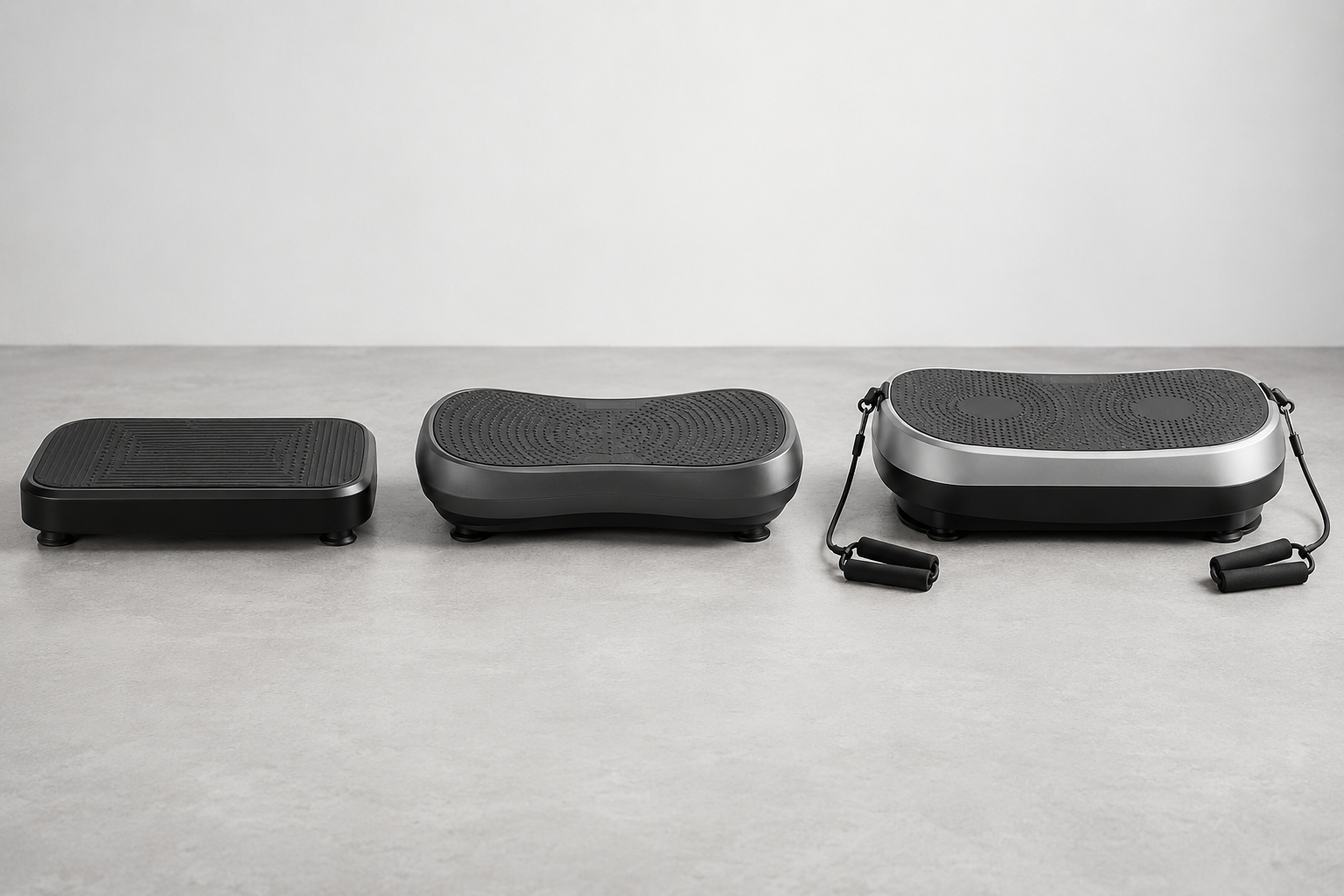
LifePro
LifePro Rumblex Plus 4D Triple-Motor Vibration Plate
A multi-motor platform for buyers comparing more than one movement pattern.
Vibration plates can produce measurable effects, but "do they work?" is too broad to answer with one yes or no. Standing on a moving platform makes muscles contract repeatedly to stabilize the body. That response can make a squat, calf raise, or balance drill feel different and may improve selected outcomes when sessions are repeated for weeks. It does not turn passive standing into the equivalent of a full strength or cardiovascular program. The honest answer depends on the goal, the person using the plate, the exercise performed, and the vibration dose.
Studies of whole-body vibration usually examine narrow outcomes: leg strength, power, balance, walking function, bone measures, body composition, or soreness. Reviews often find small to moderate improvements in some groups, especially older adults or people completing supervised rehabilitation. Results vary widely because the trials use different platforms, frequencies, amplitudes, stances, session lengths, and comparison programs. A positive result for balance in older adults does not prove that the same machine burns meaningful fat in a healthy younger shopper.
Short-term laboratory findings also need context. A plate may increase muscle activation during a squat, but greater activation during one session is not the same as greater long-term muscle growth. Likewise, a temporary increase in blood flow or skin temperature does not establish a lasting circulation benefit. Repeated-training trials matter more than a single exposure when deciding whether a home machine deserves space in a routine.
The strongest practical case is as an add-on to movements a person will actually perform. A supported squat, split stance, calf raise, plank, or balance hold can become more demanding without adding a barbell. That may suit someone who wants short home sessions, needs a low-impact option, or benefits from a stable handhold. A plate can also make warm-ups and light recovery sessions feel engaging, which has value if it improves consistency.
Passive standing has a smaller ceiling. The body still responds to vibration, yet the training stimulus is limited when the knees remain locked and no purposeful exercise is added. Shoppers attracted by claims of effortless weight loss should expect far less than shoppers planning progressive exercises two or three times per week.
Oscillating plates tilt side to side, while linear plates move primarily up and down; multi-motion models combine patterns. The acceleration reaching the body depends on frequency, displacement, stance width, footwear, and knee bend. Two products both labeled "speed 30" may deliver entirely different motion. Brand speed numbers therefore cannot be compared as if they were miles per hour.
A useful home model needs controllable low settings, a surface large enough for the intended stance, and enough stability that the user can maintain good form. Handrails may matter more than maximum speed for a person training balance. A compact platform may be convenient under a desk or bed, but it can restrict exercise positions. Those tradeoffs influence whether the product supports the intended goal.
Define one outcome and a repeatable plan. For example: complete three 12-minute sessions weekly, progress from supported quarter squats to controlled squats, and retest a chair-rise or balance task after six weeks. Keep walking, resistance training, sleep, and nutrition reasonably steady so the result is interpretable. Stop if vibration causes pain, persistent dizziness, numbness, unusual shortness of breath, or loss of balance.
People who are pregnant, recovering from surgery, managing an implanted medical device, or living with a condition affected by balance, clotting, bones, nerves, heart function, or blood pressure should ask their clinician whether whole-body vibration fits their circumstances. A product page cannot resolve those individual risks.
As an Amazon Associate, we may earn from qualifying purchases.
A multi-motor platform for buyers comparing more than one movement pattern.
Vibration plates work best as training equipment, not as a shortcut. They reliably create a stabilization demand and may support strength, balance, or function when paired with suitable exercises and steady practice. Evidence for large weight-loss, cellulite, detox, or disease-treatment promises is much weaker. Buy for a specific routine, compare the platform and controls that routine requires, and judge success with a relevant measure rather than the sensation of shaking alone.
Continue the Do Vibration Plates Really Work? What Depends on the Goal decision in the full product catalog, brand directory, or vibration plate finder.