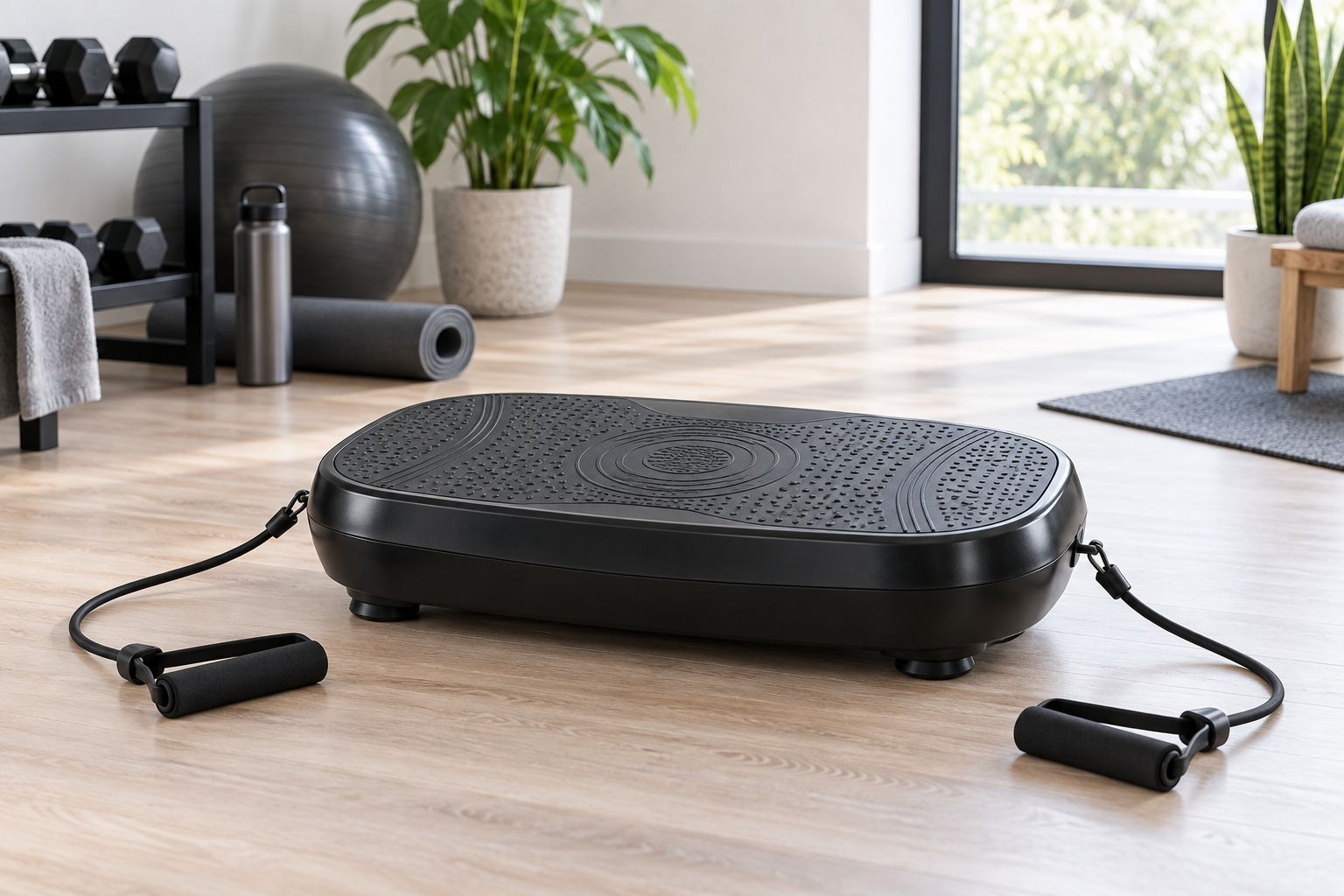
Bluefin Fitness
Bluefin Fitness Ultra Slim 3D Vibration Plate
A low-profile Bluefin option aimed at buyers balancing multi-direction motion and storage.
A second motor is valuable only when it creates a second controllable movement. Some dual-motor plates combine side-to-side oscillation with a separate linear or pulsation mode; others use two motors to drive one motion. Dual motor describes construction, not a guaranteed experience. Buyers should identify each motor's direction, whether modes run separately, and what happens when they run together.
The useful specification is a mode table: motor A alone, motor B alone, and both together. Side-alternating oscillation pivots the deck. Linear vibration generally moves the surface more uniformly. Sellers use terms such as pulsation and micro-vibration inconsistently. A listing that says 3D or dual motor without naming directions leaves the central buying question unanswered.
Independent controls matter. If a user can select either motion and adjust it separately, the plate can support meaningfully different sessions. If it offers only combined presets, the extra motor may add complexity without deliberate control. Download the manual before buying when possible; control diagrams often explain more than the sales title.
Running two axes together creates a more complex deck path. It should not be treated merely as a harder version of oscillation. Sensation changes with foot position, knee angle, and body orientation. A beginner should learn each mode at a low setting before combining them because the balance demand can rise even when neither display number looks high.
More motion is not automatically more productive. Static holds and gentle standing may be easier to control with one predictable axis. Combined modes make sense for a buyer who knows why multiple directions belong in the planned exercises.
Two motors and their electronics can increase chassis weight, height, heat, and potential service points. That mass may help a plate feel planted, but it makes storage harder. Check assembled weight, ventilation clearance, duty-cycle instructions, warranty coverage, and access to replacement remotes or bands. Motor count alone does not establish quality.
The outlet and cord deserve attention. The cord should reach without crossing a walking path, and the emergency stop or main switch should remain accessible from the intended position.
List the three exercises most likely to be repeated. For each, note the desired mode, stance, and control method. Verify that the deck is large enough and the mode can be started, adjusted, and stopped without breaking position. If every planned exercise uses the same oscillating mode, a well-built single-motor plate may be the cleaner purchase.
A dual-motor model earns its premium when both patterns are clearly described, independently usable, stable in combination, and relevant to the owner's routine. Test low settings first and compare return policies because comfort cannot be inferred from motor count.
Ask the manufacturer to name the physical direction created by each motor and the available combinations. A useful answer might describe side-alternating oscillation on one circuit and a second uniform or pulsating movement on another. A weak answer merely repeats 3D, 4D, turbo, or massage language. Also ask whether the display shows a separate setting for each motor. Without independent selection, the owner may be unable to recreate the platform feel that worked best.
Compare the plate with a simpler single-motor alternative using the same exercises. If a shallow squat, calf raise, and band row all feel most controllable in oscillation-only mode, the second motor has not improved the routine. If the owner prefers one direction for standing and another for floor-supported positions, the dual system has a clear job. This exercise-by-exercise test prevents variety itself from becoming the reason for spending more.
Pay attention to the transition between modes. The machine should not lurch unexpectedly when a second motor joins, and the stop command should end all movement promptly. Check whether combined operation has a shorter recommended session or duty cycle in the manual. Finally, confirm which components the warranty covers. A long frame warranty can sound reassuring while motors, control boards, remotes, or labor receive much shorter protection.
As an Amazon Associate, we may earn from qualifying purchases.
A low-profile Bluefin option aimed at buyers balancing multi-direction motion and storage.
Buy the movement system rather than the headline. A dual-motor plate is compelling for someone who will use its separate axes. A shopper who mainly wants straightforward oscillation should prioritize deck fit, low-setting control, noise, and support before paying for unused hardware.
Continue the Dual-Motor Vibration Plates: When the Extra Motor Matters decision in the full product catalog, brand directory, or vibration plate finder.