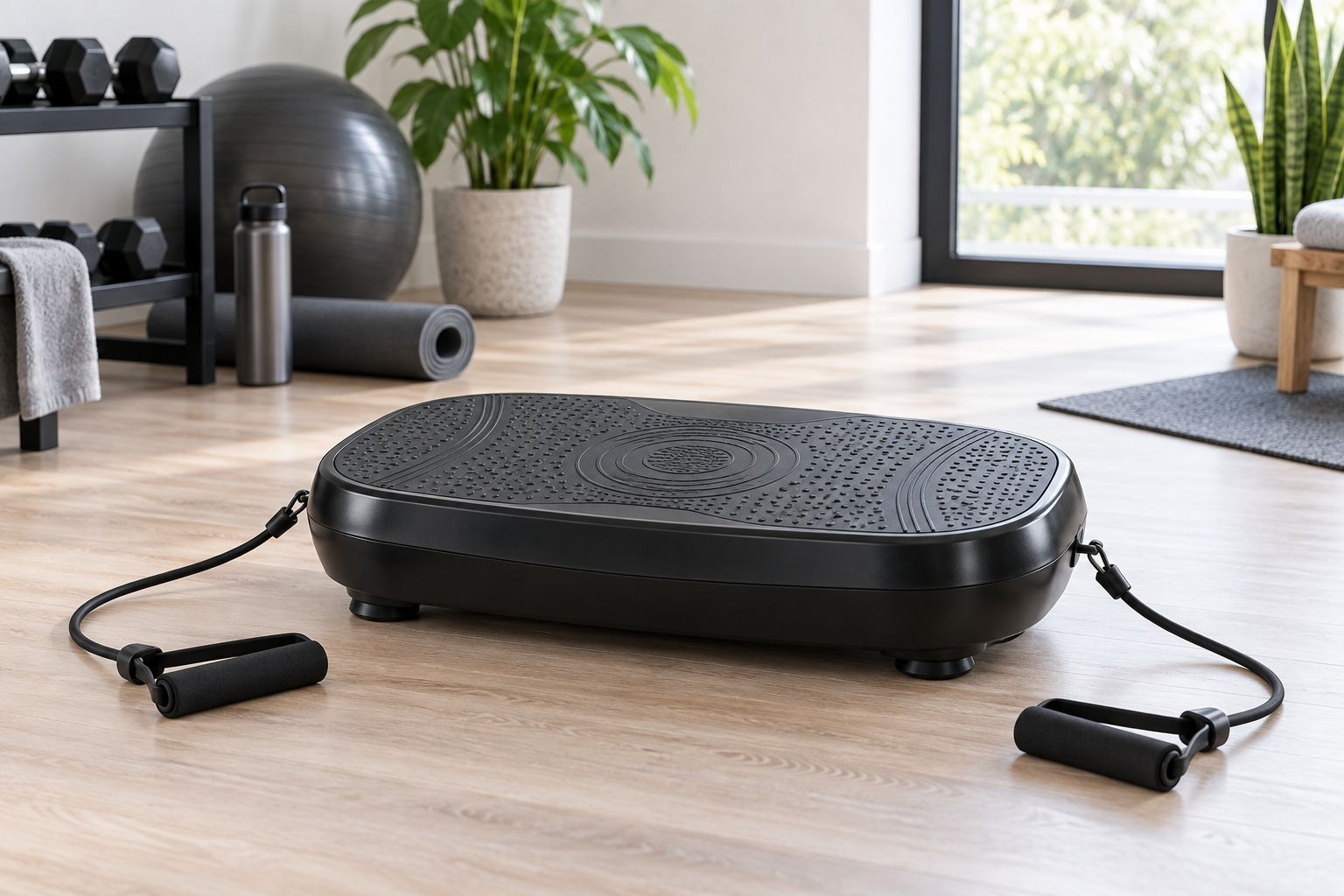
LifePro
LifePro Waver 99-Speed Oscillating Vibration Plate
A broad home platform for shoppers who want straightforward oscillation and resistance-band anchors.
For most beginners, five to ten minutes of total vibration exposure is enough for a first session. A longer number on the clock does not automatically produce a better workout because stance, exercise difficulty, amplitude, speed, and recovery all change the demand. Treat time as a dosage to build gradually. Short rounds with a stable posture are more useful than standing until the legs are numb or form starts to drift.
Begin with three to five rounds of thirty to sixty seconds at the lowest comfortable setting. Step off or pause for roughly the same amount of time between rounds. This creates only three to five minutes of vibration exposure, but it is enough to notice how your feet, calves, knees, balance, and head respond. Keep the knees soft and hold a stable support if balance is uncertain.
A session includes both work and recovery. Five one-minute rounds with one-minute rests take about nine minutes from start to finish, yet provide five minutes on the moving platform. Track exposure separately from total workout time so that increases are clear. Do not count warm-up time on the floor or strength work performed beside the plate as vibration exposure.
If the first two or three sessions cause no unusual dizziness, joint discomfort, headache, or lingering soreness, add one round or fifteen to thirty seconds to selected rounds. Keep the machine setting and exercises unchanged while increasing time. Changing speed, stance, load, and duration together makes it impossible to identify what caused a poor response.
Many general routines fit within ten to fifteen minutes of actual exposure. More experienced users may divide that time among squats, calf raises, planks, or recovery positions. Continuous standing for twenty or thirty minutes is rarely necessary for a purposeful home session. Follow the limit in the machine manual because some plates have programmed cycles or duty limits that should not be overridden.
For an introductory balance session, use short bouts of twenty to forty seconds with full control. For lower-body strength exercises, forty-five to sixty seconds can feel long because the muscles are already working. A cooldown or gentle mobility session may use easier positions for one to two minutes at a time, provided the setting remains comfortable and circulation is not restricted.
Exercise position changes how vibration travels. Locked knees while standing upright may transmit more sensation toward the hips and head. A shallow knee bend generally lets the legs absorb more movement. Hands-on positions such as a plank can load the wrists and shoulders quickly, so those rounds are often shorter than standing rounds. Session length should therefore be assigned by exercise, not copied from a single universal timer.
Stop when posture becomes hard to maintain, the feet repeatedly shift, or you feel sharp pain, dizziness, nausea, unusual tingling, or a headache. Step off carefully, sit or stand on a stable floor, and allow symptoms to settle. Persistent or concerning symptoms deserve medical advice before another attempt. Fatigue that changes alignment is also a valid stopping point even when the planned time remains.
Keep a simple log with date, machine setting, exercises, seconds per round, and how you felt later that day. If five minutes leaves you pleasantly worked and recovered by the next session, there is no requirement to double it. Progress can come from a more demanding exercise or better control as well as additional minutes.
As an Amazon Associate, we may earn from qualifying purchases.
A broad home platform for shoppers who want straightforward oscillation and resistance-band anchors.
Use five to ten minutes as a cautious starting range, divided into brief rounds. Increase only one variable after several comfortable sessions and stay within the manufacturer’s instructions. The right duration is the shortest session that supports the intended exercise while preserving steady breathing, balance, and clean form. A preset ending does not require you to finish when your posture has already deteriorated. Conversely, an easy five-minute session can be completely successful when it matches the day’s goal. Review the log after several weeks and keep the duration that repeatedly leaves you ready for normal activity and the next planned workout.
Continue the How Long Should You Stand on a Vibration Plate decision in the full product catalog, brand directory, or vibration plate finder.