MERACH
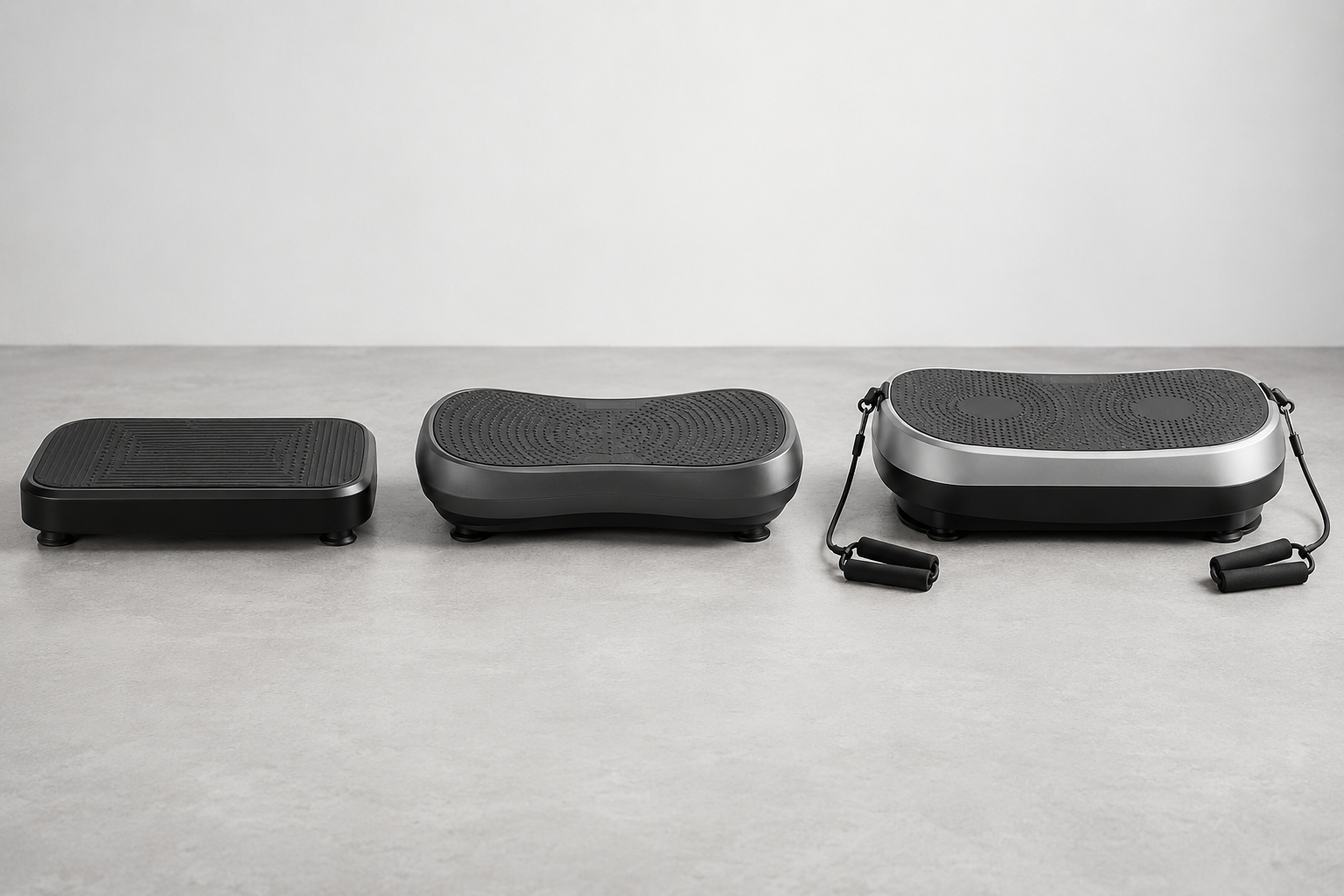
MERACH CV30 Curved Vibration Plate with Calorie Display
A curved MERACH model whose display and platform shape are central comparison points.
Linear and oscillating plates move the body differently. A linear platform rises and falls more uniformly, while an oscillating platform pivots so opposite sides travel in opposite directions. That changes stance, transmission, and the relevance of protocols. Choose the movement matching the intended use rather than treating one as a stronger version of the other.
On a pivoting deck, the center moves least and edges travel farther. A narrow stance feels gentler; widening the feet increases travel. The pelvis alternates side to side, and soft knees absorb movement. Stance width becomes a built-in adjustment.
Oscillation is a practical winner for many compact home routines because it supports standing work, shallow squats, calf raises, and bands with intuitive weight shifting.
A linear plate moves both feet in the same general direction at the same time. Position still affects posture, but it does not change travel through distance from a central pivot in the same way. Users often describe a more direct vertical sensation.
Linear is the use-case winner when a chosen training or supervised protocol calls for vertical movement at known frequency and displacement. The model must publish and reproduce those values for the match to mean anything.
Frequency, amplitude, and acceleration interact. On oscillating equipment, ask where amplitude was measured. On either type, do not substitute proprietary levels for hertz. A claimed maximum g-force without a test method gives little basis for comparison.
An honest head-to-head includes direction, frequency range, displacement convention, deck space, mass, capacity, and controls. Comparing maximum level count mixes unrelated scales.
Compact oscillating plates are widely available with remotes and storage grips. Linear and commercial-style machines may be heavier or include uprights, though designs vary. Measure entry space and operating clearance. Consider whether the user will stand, plank, sit with feet on the deck, or use bands.
For a first home plate without a protocol demanding linear motion, oscillation often wins on selection and intuitive adjustment. For a buyer reproducing a specific vertical method, linear wins when specifications match.
People often compare sensations while using different knee angles or stance widths, which gives the motion type credit for a posture change. Begin with the same footwear, session length, support, and soft-knee stance. On the oscillating plate, record distance from the center. On the linear plate, record the published frequency and displacement if available. The goal is to decide which movement is controllable for the planned task, not which creates the most dramatic first impression.
Transmission toward the head deserves attention on both designs. Locked knees can allow more movement upward, particularly during same-direction vertical motion. A user who cannot maintain a relaxed, aligned stance at the lowest useful setting should reduce the input or stop. Handles can assist entry and balance, but pulling rigidly on them can alter posture. Comfort during a brief showroom test is not enough; evaluate several conservative sessions within the return period.
Research-driven buyers should preserve the distinction in their notes. If a protocol used side-alternating vibration, a generic linear machine is not equivalent; if it used vertical synchronous movement, an oscillating home plate is not equivalent. Match direction first, then match measured settings and posture as closely as the documentation permits. When a listing omits direction entirely, ask before buying rather than inferring it from a photograph or a 3D label.
The choice can also affect accessory use. Resistance-band anchors need to stay stable as the deck moves, and handles must not flex when the user enters position. A side-alternating plate may feel natural during a staggered stance, while a uniform vertical plate can feel more direct through both feet. Try accessory exercises independently from standing so a comfortable first impression does not conceal poor fit elsewhere in the routine.
As an Amazon Associate, we may earn from qualifying purchases.
A curved MERACH model whose display and platform shape are central comparison points.
Oscillating plates offer stance-dependent side-alternating travel; linear plates provide more uniform same-direction movement. Pick oscillation for versatile compact home sessions and linear for a defined vertical-motion requirement. In both cases, favor disclosed measurements, low-end control, stable construction, and useful return terms.
Continue the Linear vs Oscillating Vibration Plates decision in the full product catalog, brand directory, or vibration plate finder.