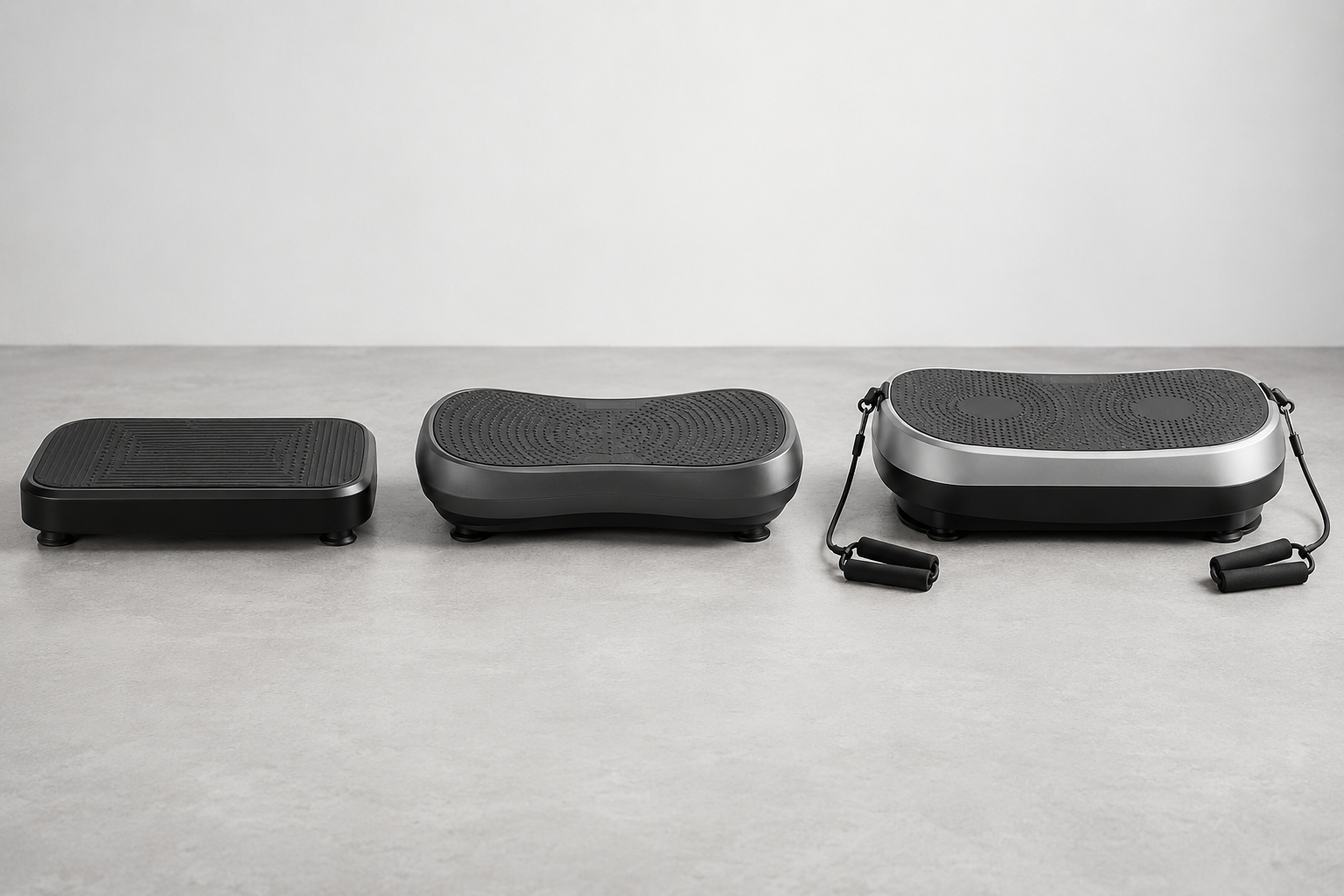
MERACH
MERACH 440-Pound Capacity Vibration Plate
A higher-capacity MERACH choice for shoppers who need more margin in the stated limit.
A quiet vibration plate must control two different problems: airborne sound from the motor and structural vibration traveling through the floor. Product decibel claims address only part of that experience and are often measured under unknown conditions. For an apartment, we recommend a compact, well-footed machine with a smooth low range, placed on a hard level floor and tested with a dense equipment mat during the return window.
A soft hum heard in the room is airborne sound. A buzz in a downstairs ceiling or rattle in nearby furniture is structure-borne vibration. A plate can seem quiet beside the user while still bothering a neighbor because floors and joists carry low-frequency energy efficiently.
Listen in the next room while another person runs the machine. If possible, check below it. Phone sound meters can support consistent comparisons in the same home, but they do not replace a calibrated test or predict how another building will respond.
Use a firm, level spot where every rubber foot bears weight. Avoid contact with walls, baseboards, shelves, and loose cords. Moving the plate a few feet nearer a supported wall or away from a flexible floor span can change transmission.
A dense rubber mat may reduce contact noise and protect flooring. Thick yoga mats, stacked foam tiles, or plush carpet can let the chassis rock, which adds noise and affects control. Follow the manufacturer’s placement guidance before introducing a mat.
Machine weight, foot design, chassis stiffness, motor balance, and motion type all shape the sound. Higher speed is not always louder in a straight line; some combinations can excite a floor or loose panel. A useful review reports behavior across settings instead of one vague quiet label.
Look for complaints about rattling, fan noise, clicking, and floor travel, then check whether they refer to the exact revision. A removable rail or loose accessory may make more sound than the platform itself.
Choose a model that supports the routine at moderate settings if early or late workouts are likely. Automatic programs that surge through speeds can create unpredictable peaks. Manual control makes it easier to find and repeat a setting the room tolerates.
Consider storage noise as well as operating noise. Dragging a heavy plate from beneath a bed can disturb a household even when the motor is refined. Wheels, a real handhold, and a permanent mat can make setup quieter.
With power disconnected, check exterior feet, accessory contact, band clips, and manual-listed fasteners. Remove nearby objects that could resonate. Do not open the motor housing or bypass a shutoff to chase a sound.
Stop for grinding, electrical odor, intermittent power, internal impacts, or a sudden change in sound. Record a short video and contact support while return and warranty options are active. A faulty unit should not be normalized as an apartment compromise.
As an Amazon Associate, we may earn from qualifying purchases.
A higher-capacity MERACH choice for shoppers who need more margin in the stated limit.
For apartment use, shortlist by stable construction, good feet, predictable manual control, and manageable weight, then test in the actual building. Place the machine carefully and use a dense mat only when it remains stable. No manufacturer can guarantee silence on every floor, so return terms and an early whole-home sound test deserve as much attention as the product’s advertised decibel figure. Schedule the first test at a considerate daytime hour and repeat it at the settings planned for normal workouts. Note any cabinet buzz, picture-frame rattle, or floor movement; those clues identify transmission paths that a product review in another building could never predict. Keep a log of acceptable settings and times so every household user follows the same limits. If floor transmission remains strong after careful placement, a quieter routine or different equipment category may be the better neighbor-friendly choice. Recheck the feet periodically because accumulated dust can change grip and introduce movement.
Continue the How to Choose a Quiet Vibration Plate for an Apartment decision in the full product catalog, brand directory, or vibration plate finder.