AXV
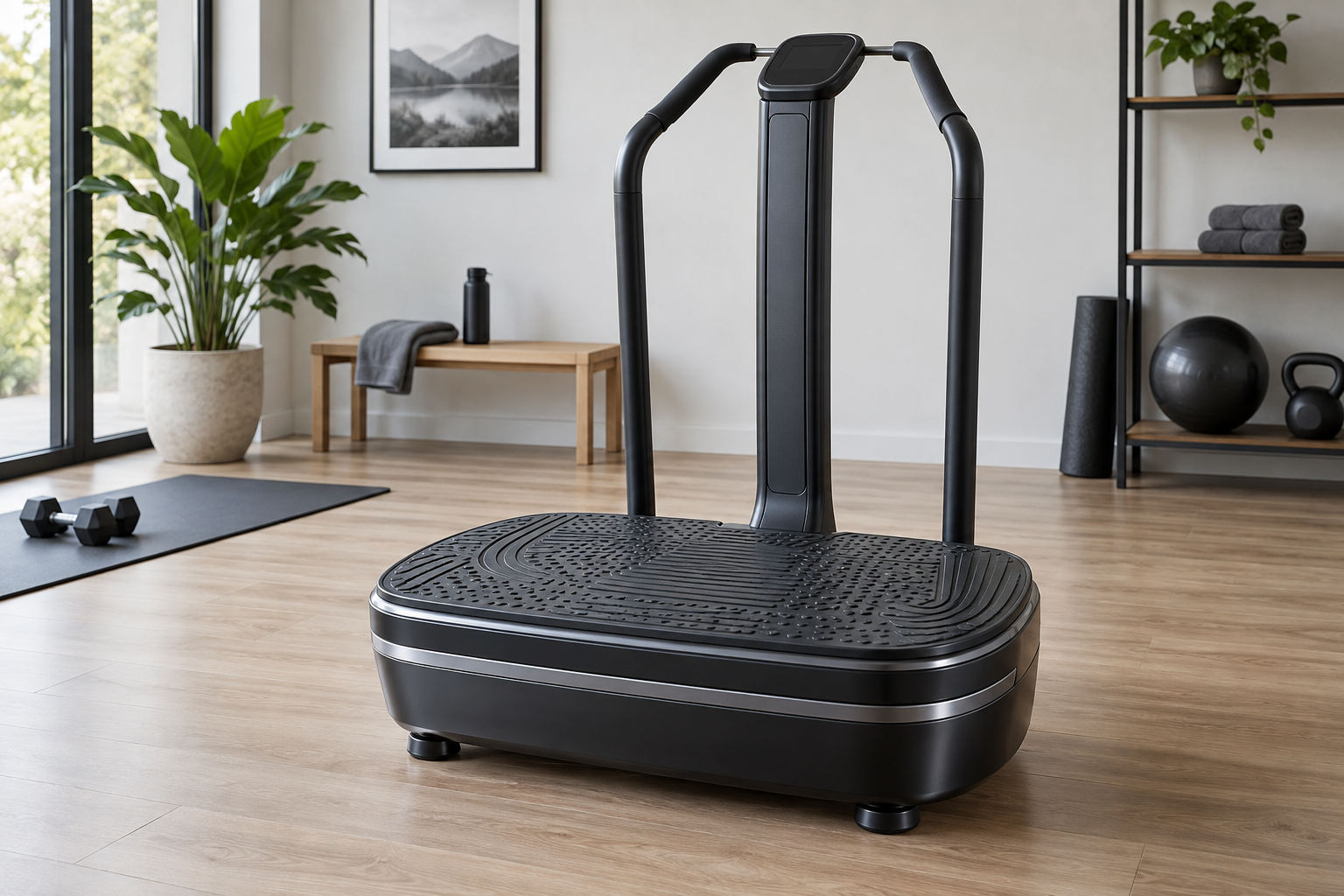
AXV Curved 200W Bluetooth Vibration Plate
A curved compact plate with a 200-watt motor and Bluetooth-listed configuration.
A vibration plate adds a changing surface beneath the hands, but the arms benefit only when you actively press, pull, or stabilize. Standing on it during curls remains primarily a regular curl. These exercises use the plate for support demand and add off-platform resistance for pulling. Confirm that your model permits upper-body positions, begin low, and pad the knees when needed.
Before starting, circle the wrists, open and close the hands, and perform six wall push-ups. On the platform, spread the fingers and press through knuckles and palm heel. Align shoulders slightly behind or over the wrists.
If a flat palm is uncomfortable, manufacturer-approved push-up handles can keep the wrist closer to neutral. Confirm that the handles cannot slide. The vibration setting should allow your elbows to stay softly unlocked and your shoulder blades to remain controlled. Numbness, sharp wrist pain, or tingling is a reason to stop.
Place both hands on the stopped platform and walk back until the body forms one line. Start low. With little elbow bend, let the chest move slightly down as shoulder blades draw together, then press away. Complete eight slow repetitions.
This movement trains shoulder-girdle control rather than a large pressing range. Move the feet closer for a more upright regression. To progress, walk the feet a little farther back or pause for two seconds in the pressed-away position. Do not round the whole back or crane the neck to manufacture extra movement.
Kneel with hands just wider than shoulder-width and align knees, hips, and ears. Lower by bending elbows 30 to 45 degrees from the body, then press up for five to ten controlled repetitions. Stop the machine before repositioning.
For a triceps-focused variation, bring the hands slightly closer and hold the top of the kneeling push-up for 15 to 25 seconds while actively pressing down. Keep a small bend in the elbows instead of locking them. A wall push-up is the regression. A full incline push-up from the toes is the progression; floor-level push-ups with feet elevated are a separate advanced exercise and are unnecessary for most users.
Set up with hands on the plate and knees padded on the floor. Brace, tuck the toes, and hover knees one or two inches for 10 to 15 seconds. Push the platform away and keep hips level. Rest twice as long; repeat two or three times.
Leave the knees down for the easier version. A modest progression is alternating a light hand release for one second, but only if the torso stays square and the supporting arm does not buckle. Rocking the hips, holding the breath, and letting the shoulders rise toward the ears are signs to return to the kneeling hold.
For pulling, stand on the floor and anchor a band according to its instructions. Row the elbows back and pause when hands reach ribs. Complete two sets of eight to twelve to balance the pressing positions.
You may also perform curls while standing in a shallow stance on the plate, provided the dumbbells are light enough to control and your manual permits external weights. Keep the elbows near the ribs and complete six to ten smooth repetitions. The safer regression is to step onto the floor. Progress resistance only when the platform does not alter the path of the weights. Never set dumbbells on a moving plate.
Use 30 seconds to work and 30 seconds to reset through incline shoulder presses, kneeling push-ups, a kneeling plank hold, and band rows. Repeat the four-minute circuit twice. Then complete two minutes of alternating curls and two minutes of rest or gentle arm movement. Switching the plate off for every transition keeps hands and knees from chasing a moving target.
Keep a note of push-up angle, band resistance, hold duration, and machine level. Progress one of those measures at a time. A higher vibration setting is not a substitute for gradually increasing the arm's actual pressing or pulling demand.
Avoid passive joint stacking: locked elbows, shrugged shoulders, and weight hanging through wrists. Press actively and keep the neck long. Lower any setting that makes hands slide or the head shake.
Avoid turning every exercise into a race. Slow repetitions reveal whether the elbows track consistently and whether one arm carries more load. If you cannot pause at the hardest point, shorten the range or use an easier body angle.
As an Amazon Associate, we may earn from qualifying purchases.
A curved compact plate with a 200-watt motor and Bluetooth-listed configuration.
An arm session can combine platform support with pulling work. Start with incline planks, earn kneeling push-ups, and use rows for balance. Stable wrists and shoulders matter most. Leave at least one clean repetition in reserve instead of continuing until the elbows buckle. When every set follows the same path, progress the body angle, hold time, or resistance band one step at a time.
Continue the Arm Exercises Using Platform Bands and Body Weight decision in the full product catalog, brand directory, or vibration plate finder.