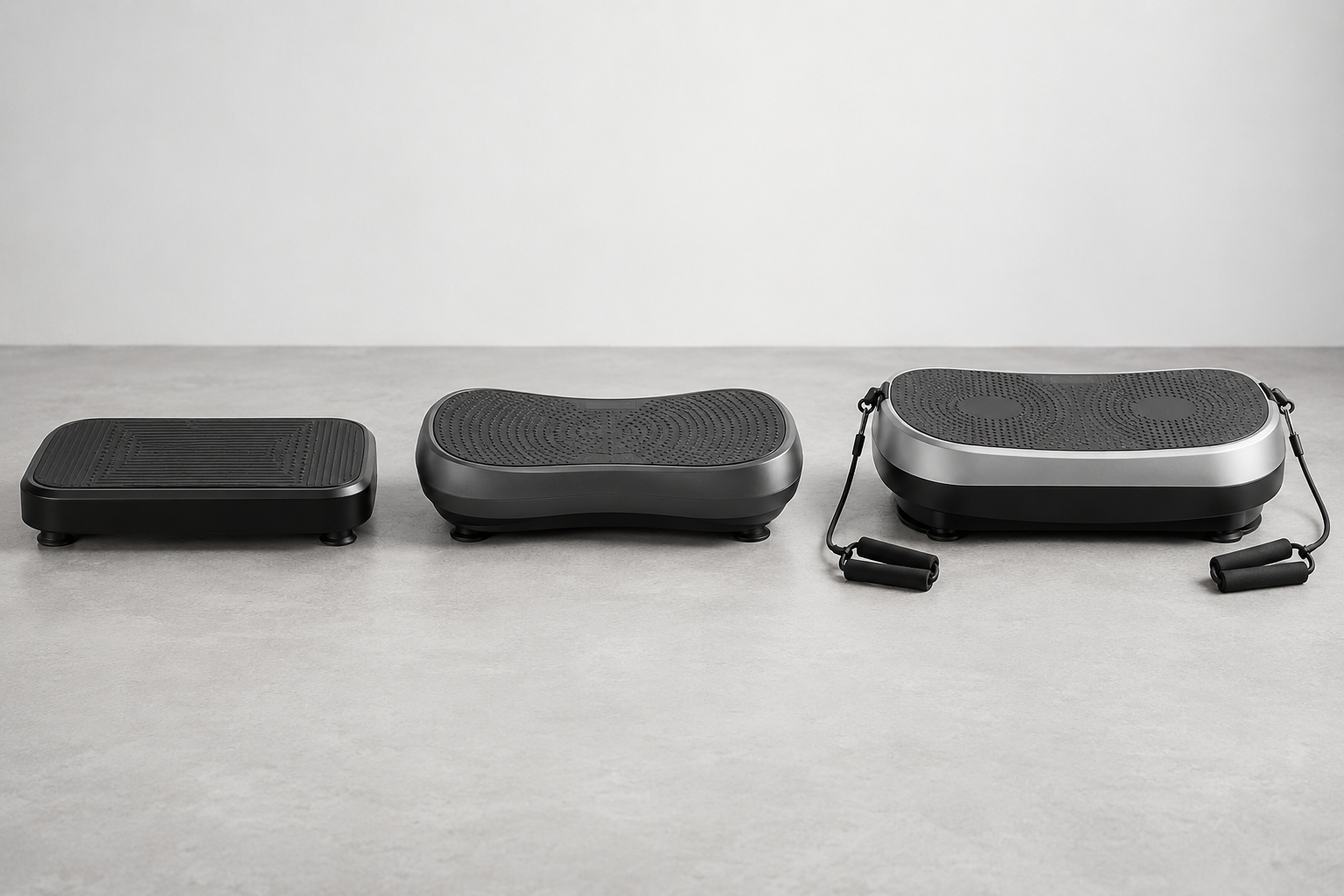
Power Plate
Power Plate MOVE Professional Vibration Platform
An upright professional-style platform for buyers who value integrated hand support.
Balance training on a vibration plate begins with controlling pressure under two feet. The platform already demands small corrections, so one-leg poses are rarely the right start. Use a fixed rail, wall, or counter. Begin at the lowest practical setting and keep the head quiet. These drills progress from supported positions to brief reductions in support.
Stand shoulder-width and map three points under each foot: heel and both sides of the forefoot. Keep them in contact with knees slightly bent. Hold 20 seconds, step off for 20, and repeat three times.
The regression is to widen the feet and hold the rail with both hands. The first progression is to lighten the grip to fingertips. Closing the eyes removes a major source of balance information and is a large jump on a moving surface; it is unnecessary for this sequence.
With feet planted, move right until that leg carries about two-thirds of your weight. Pause three seconds, center, and travel left for six cycles. Keep shoulders above pelvis.
To make the drill easier, move only an inch and use two-hand support. To progress, hover the heel of the lighter foot during the pause. Do not peel up the toes or roll onto the outside edge of the loaded foot. The plate should remain quiet beneath a stable tripod foot.
Place one foot a few inches ahead, keep hips forward, and distribute weight roughly 60 percent forward and 40 back. Hold 20 seconds, rest, then switch. Complete two holds per side.
Progress by narrowing the side-to-side distance between the feet while keeping some front-to-back separation. A further progression is five shallow knee bends in the staggered stance. If the rear heel lifts or the hips rotate, restore a wider track. A true heel-to-toe tandem stance can be practiced on the floor before attempting it on an active plate.
Near fixed support, shift left and tap the right toes to the floor beside the plate, then return. Repeat five times before changing sides. Keep the supporting knee soft and the tapping foot light.
The regression is a heel hover while both feet remain on the plate. To progress, tap slightly forward and slightly to the side in alternating directions. Keep each target close enough that you do not lean or reach with the pelvis. Turn the machine off when practicing the step path for the first time.
Hold the rail, lift one foot one or two inches, pause one second, and replace it before lifting the other. Continue 20 to 30 seconds. Keep the pelvis level without pulling on the support.
If lifting a foot creates a wobble, alternate heel raises instead. Progress by holding each low march for two seconds or moving from a full-hand grip to fingertips. Do not combine reduced hand support, longer holds, and a higher setting in the same session.
Settle into a shallow squat with one hand near the support. Reach the free hand forward six inches, return it, then reach slightly right and slightly left. Complete two rounds with each arm. The knees continue to track over the toes while the rib cage turns only a small amount.
Shorten the reach and stand taller for the regression. For progression, hold a light object and place it on three stable targets positioned within easy reach. Never put a loose object on the moving platform. If the knees cave inward as the arm moves, remove the reach and rebuild the squat hold.
Choose base stance, lateral shifts, staggered stance, and supported marching. Work 20 seconds and rest 40 after each. Complete two rounds, switching lead sides. Generous rest keeps fatigue from becoming the challenge.
Record how much hand contact you used and whether one direction felt less steady. Repeat the same circuit until the difference narrows. A good progression looks like a lighter touch and smoother foot placement, even if the machine setting never changes.
Gripping with curled toes, staring down throughout the drill, and holding the rail hard enough to pull the shoulders sideways are common compensations. Reset the stance, lower the level, and make the task smaller. Keep the gaze on a fixed point ahead after checking foot placement.
Balance work should feel attentive rather than chaotic. Stop the set when you begin hopping, crossing the feet, or making large arm swings to recover. Step off only after the plate stops if that is what your model's instructions require.
As an Amazon Associate, we may earn from qualifying purchases.
An upright professional-style platform for buyers who value integrated hand support.
Vibration plate balance improves as you learn to manage foot pressure, stance, and support with smaller corrections. Master two-foot shifts and staggered holds before adding brief foot lifts. Practice near the same stable support each time. The clearest measure of progress is controlled movement with less hand assistance, not a dramatic pose.
Continue the Balance Exercises Near a Vibration Plate decision in the full product catalog, brand directory, or vibration plate finder.