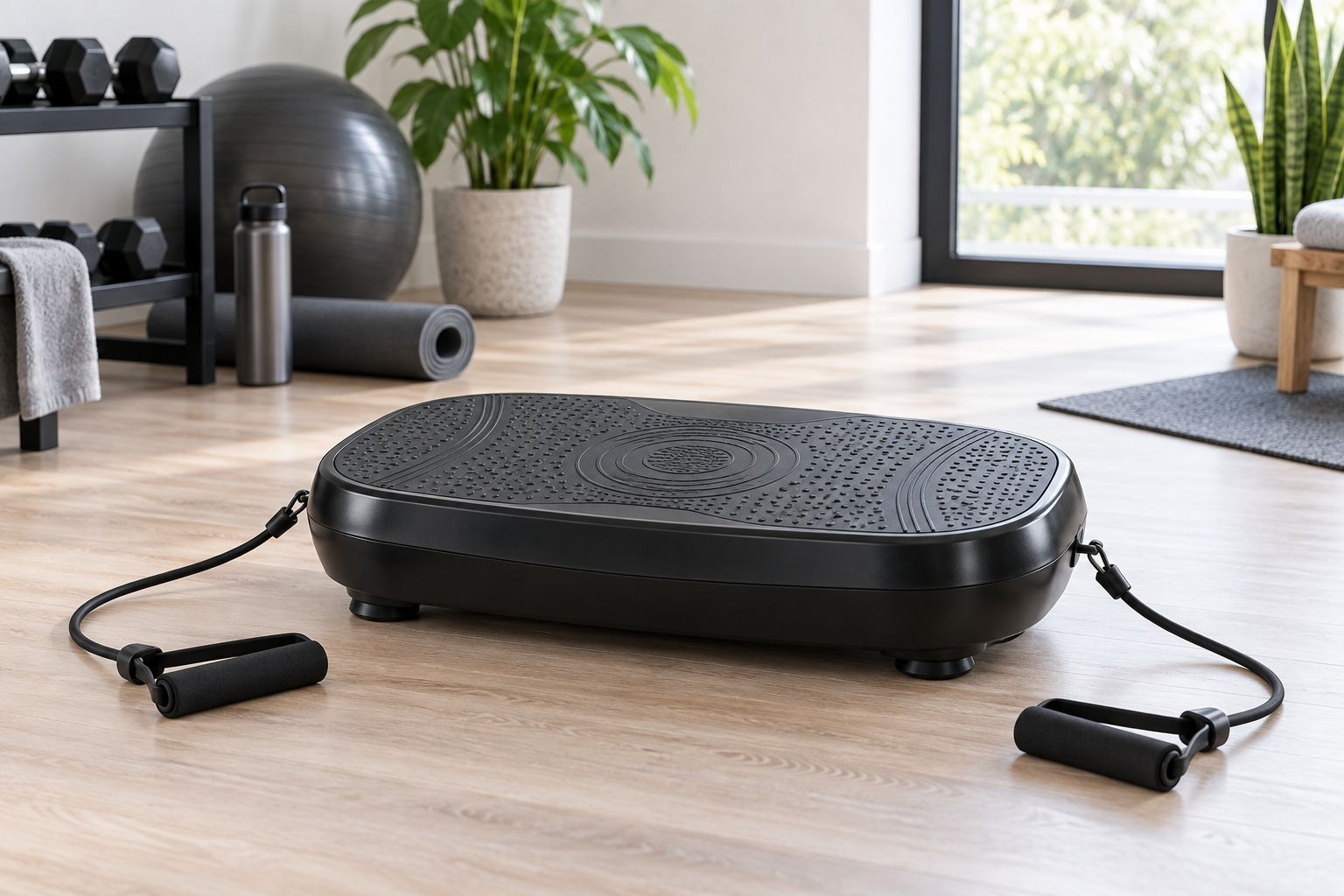
Power Plate
Power Plate MOVE Professional Vibration Platform
An upright professional-style platform for buyers who value integrated hand support.
Whole-body vibration can support balance training because the moving surface creates small, rapid disturbances that the ankles, knees, hips, and trunk must control. Research in older adults and some clinical groups reports improvements in balance tests after repeated programs, but the effect is not automatic. The safest and most productive sessions use a low setting, a stable stance, and exercises matched to the user’s current ability. Anyone with frequent falls or unexplained dizziness needs professional guidance before treating a vibrating platform as a balance tool.
Balance depends on sensory information from the eyes, inner ear, joints, and feet, followed by a coordinated muscular response. A plate changes pressure under the feet many times per second. With knees slightly bent, the body makes continuous corrections rather than receiving the motion through locked joints. This can train postural control in a way that differs from standing on a motionless floor.
The challenge can be adjusted without chasing a high speed. A wider stance on an oscillating platform often increases movement; narrowing the stance, reducing hand support, or adding a slow weight shift changes the task. Only one variable should progress at a time. Removing both hands while increasing speed makes it hard to know what caused a loss of control.
Systematic reviews have found that whole-body vibration programs can improve selected balance and mobility measures in older adults, though studies are inconsistent and often small. Programs differ in duration, platform type, and whether vibration is combined with squats or conventional exercise. This makes it difficult to name a universal best setting. The more defensible interpretation is that vibration can be one form of balance practice, especially when it is progressive and supervised, rather than a replacement for walking, strength work, or fall-prevention care.
A test result also has to matter outside the study. Better sway scores are encouraging, but shoppers usually care about stepping over a curb, standing from a chair, or feeling steady while turning. A useful program includes those real-world movements off the plate as well.
Place the machine beside a counter or use a model with secure handles. Begin in athletic shoes with both feet flat, knees soft, eyes open, and both hands available. Try brief bouts at the lowest comfortable setting. Progress to light fingertip support, gentle side-to-side weight shifts, small knee bends, and eventually a staggered stance only when each earlier step is controlled.
Single-leg work on a vibrating surface is an advanced drill, not an entry point. So are closed-eye exercises. A person who cannot stand steadily for 30 seconds on the floor without grabbing support should build that foundation first or work with a physical therapist. Fatigue changes balance, so the session should end before form deteriorates.
Prioritize predictable low settings, gradual controls, a non-slip deck, and enough usable width for a comfortable stance. A remote can prevent bending down, though controls mounted on a handrail are easier to reach without breaking posture. Check the machine’s weight limit and the stability of any rail; a cosmetic handle that flexes is not meaningful support.
Platform motion matters less than safe control for many beginners. Oscillating machines are common and create alternating movement under the feet. Linear and multi-direction machines feel different and may cost more. If possible, choose a return policy that allows the intended user to judge comfort and control at home.
As an Amazon Associate, we may earn from qualifying purchases.
An upright professional-style platform for buyers who value integrated hand support.
A vibration plate can add a useful, scalable disturbance to balance practice. The likely benefit comes from repeated, well-controlled training, not simply standing through a preset program. Start near support, keep the knees unlocked, progress one challenge at a time, and measure skills that affect daily life. For someone with falls, vertigo, neuropathy, major weakness, or a recent injury, a clinician or physical therapist should shape the plan before a machine is purchased safely.
Continue the Can Whole-Body Vibration Support Balance Training decision in the full product catalog, brand directory, or vibration plate finder.