MERACH
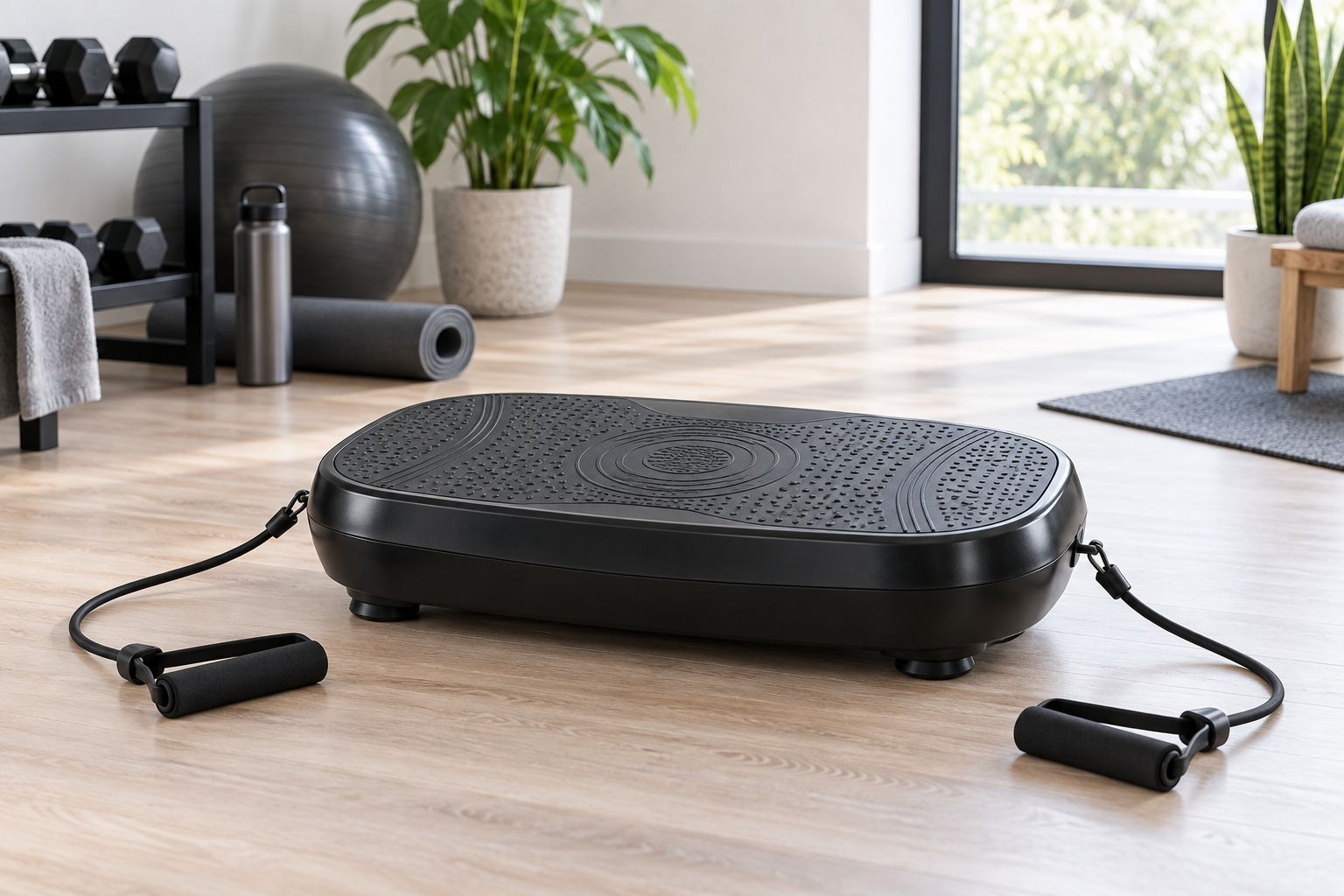
MERACH EvoSpark 7-in-1 4D Vibration Plate
A 4D-listed MERACH platform for shoppers who want multiple motion combinations.
Whole-body vibration is being studied as a way to expose the skeleton to repeated mechanical signals, but a vibration plate is not a proven stand-alone treatment for low bone density. Trials have produced mixed results: some report small changes at particular skeletal sites or in particular populations, while others find no meaningful advantage. For a shopper with osteopenia or osteoporosis, the central issue is not finding the strongest motor. It is deciding with a clinician whether vibration can safely complement a complete bone-health plan.
Bone responds to mechanical loading. A vibrating platform sends rapid forces through the legs, and researchers have asked whether those signals can stimulate bone formation when high-impact activity is difficult. The concept is plausible, but the delivered dose changes with frequency, amplitude, acceleration, stance, knee angle, footwear, and body position. A consumer speed number does not reveal the skeletal load.
Bone also changes slowly. A short study may detect shifts in laboratory markers without demonstrating a durable improvement in bone mineral density or fewer fractures. Fracture reduction is the outcome that matters most, yet most vibration trials are far too small or short to establish it.
Reviews of postmenopausal women and older adults have sometimes found modest benefits at the hip, lumbar spine, or other measured sites, but results are not uniform. Differences in platform motion, training schedule, baseline health, medication, and comparison exercise make pooled findings difficult to translate into one home protocol. A benefit at one site cannot be assumed throughout the skeleton.
The evidence therefore supports a cautious possibility, not a guarantee. A plate may be considered when it makes supervised exercise accessible or adds a tolerable stimulus. It should not delay treatments with stronger evidence, and a normal feeling during use cannot show whether bone density is improving.
Osteoporosis raises the consequences of a fall and may make some spinal positions inappropriate. Getting on and off a low platform, losing balance during a preset program, or performing loaded trunk flexion can create risk independent of vibration. A model with solid support, a low step-up height, and controllable starting intensity may be more suitable than a compact plate with dramatic high settings.
Anyone with a recent fracture, unexplained bone pain, spinal compression fracture, recent joint or spine surgery, severe balance impairment, or restrictions from a clinician should not experiment alone. A physical therapist can select posture and exercises that respect fracture precautions. Pain during or after a session is a reason to stop and seek advice, not evidence that the bone is being strengthened.
Bone care may include progressive resistance exercise, weight-bearing activity, balance training, adequate protein, calcium and vitamin D assessment, medication when indicated, and steps to prevent falls. The right combination depends on diagnosis and medical history. Whole-body vibration, if approved, occupies one small part of that plan.
Track outcomes that can answer the question. A dual-energy X-ray absorptiometry scan ordered at an appropriate interval provides clinical information; a bathroom scale or before-and-after photo does not. Functional measures such as chair-rise ability and confidence may improve sooner, but they should be labeled as functional progress rather than proof of denser bone.
Ask whether your fracture history, implants, medications, blood pressure, balance, and joint conditions change the recommendation. Bring the machine’s actual motion type and manufacturer specifications if available. Ask what stance, duration, and exercises are appropriate, which symptoms require stopping, and how the plate will fit with resistance and balance work.
If the seller only provides levels such as 1 through 99, request frequency and amplitude information. Lack of transparent specifications makes research-based dosing impossible. A generous return period is useful because tolerance and stability cannot be judged from a product photograph.
As an Amazon Associate, we may earn from qualifying purchases.
A 4D-listed MERACH platform for shoppers who want multiple motion combinations.
Vibration may eventually prove helpful for selected bone-health programs, but current evidence does not justify replacing standard osteoporosis care with a home plate. The safest purchase follows a diagnosis, a clinician-approved role, and a plan for supported exercise. Judge the device by whether it helps the user follow that plan, not by claims that shaking alone rebuilds fragile bone.
Continue the Vibration Plates and Bone Density: Questions to Ask First decision in the full product catalog, brand directory, or vibration plate finder.