MERACH
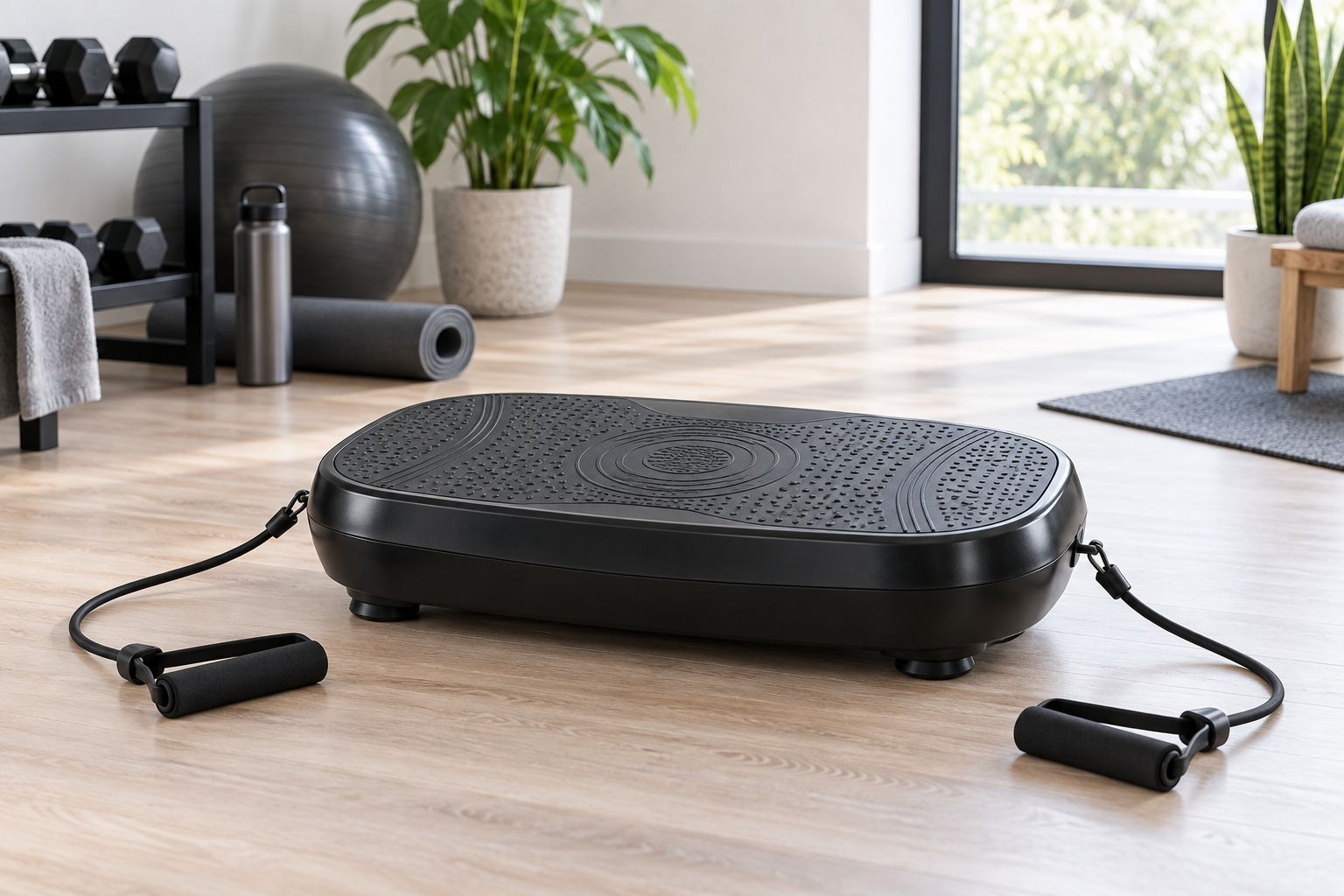
MERACH CV30 Curved Vibration Plate with Calorie Display
A curved MERACH model whose display and platform shape are central comparison points.
The calf raise scales from a tiny supported lift to a slower, longer-range repetition. It trains ankle control while the plate changes the surface beneath the forefoot. Results depend on foot placement and tempo. A setting that makes the ankles wobble removes the control the exercise should develop.
Stand hip-width with both feet supported. Keep heel and both sides of the forefoot connected. Place fingertips on fixed support. Soften the knees and keep the torso tall.
Select a low setting and spend 15 seconds standing still. If your feet slide, your head shakes, or you cannot keep pressure even across the forefoot, reduce the intensity. Some platforms produce a stronger effect with a wider stance, so follow the position markings and instructions for your specific unit.
Press through the inner forefoot while lifting both heels over two counts. Pause one count, then lower over three until the heel rests. Begin with six to eight repetitions and keep ankles vertical.
The knees remain soft but do not bob up and down to create momentum. Imagine the crown of the head rising as the heels lift. If the movement becomes jerky, stop the set, rest, and use a smaller range. A smooth half-inch rise has more training value than a high, uncontrolled one.
If the heels lift unevenly, shift pressure toward the forefeet without leaving the platform, return flat, and repeat eight times. Or raise the heels slightly, hold five seconds, and lower with both hands supported.
You can also practice the full calf raise on the floor beside the machine. This reveals whether the difficulty comes from the basic movement or from the vibrating surface. Once ten floor repetitions are steady, return to the lowest plate setting and cut the range in half.
First extend the lowering phase to four seconds for six repetitions. Next, add a two-second top hold while maintaining inner-forefoot pressure. Then reduce hand contact from a full grip to fingertips.
For an alternating version, lift both heels, shift a little more weight to the right forefoot, return to center, then shift left before lowering. This increases side-to-side demand without requiring a full single-leg calf raise. A true single-leg version is an advanced balance exercise and is better learned on stable ground first.
A bent-knee calf raise changes the position of the lower leg. Hold a shallow squat, keep the heels under the hips, and raise them a small distance for six repetitions. The knees stay at the same height instead of rising with the heels. Use a lower setting than you would for standing work because fatigue accumulates quickly in this position.
Set one is eight repetitions with a two-count rise and three-count lower. Rest off-plate for 45 to 60 seconds. Set two is six repetitions with a two-second top hold. After resting, do six bent-knee repetitions or repeat set one if alignment falters.
Complete the session once or twice per week at first, leaving time to judge how your calves respond. Write down stance width, machine setting, support used, and total repetitions. Add one or two repetitions before raising the setting. The platform number alone cannot show whether the calves handled more useful work.
Heels drifting outward signal too much pressure on the little toes. Lower, spread forefoot pressure, and reduce the lift. Pause at the bottom instead of bouncing. Use only enough rail contact for balance.
Another error is treating the edge of the platform like a stair step and letting the heels drop below it. Unless the manufacturer explicitly shows that setup, keep the entire foot supported. A moving plate is not the place to improvise an elevated calf stretch.
Stop when the ankles begin to roll, the knees lock, or you can no longer control the lowering phase. Calf burning from muscular effort and sharp pain are different signals; pain is a reason to finish and reassess. Step off carefully after the platform stops according to the machine instructions.
Afterward, walk on the floor for a minute and let the ankles move normally. Aggressive stretching is unnecessary. If you want a gentle calf stretch, perform it off the plate with the heel supported and no bouncing.
As an Amazon Associate, we may earn from qualifying purchases.
A curved MERACH model whose display and platform shape are central comparison points.
A vibration plate calf raise works best as a precise ankle exercise: balanced forefoot pressure, a quiet knee position, and a slow return to the heel. Compare the right and left heel paths from the front or use a mirror placed safely away from the machine. If one side drifts, reduce the height and match the slower side. Record clean repetitions rather than attempted repetitions, and end each set before the lowering phase becomes a drop. Build range and tempo before attempting reduced support or single-leg variations. Those details make the movement measurable and repeatable.
Continue the How to Do Calf Raises on a Vibration Plate decision in the full product catalog, brand directory, or vibration plate finder.