Bluefin Fitness
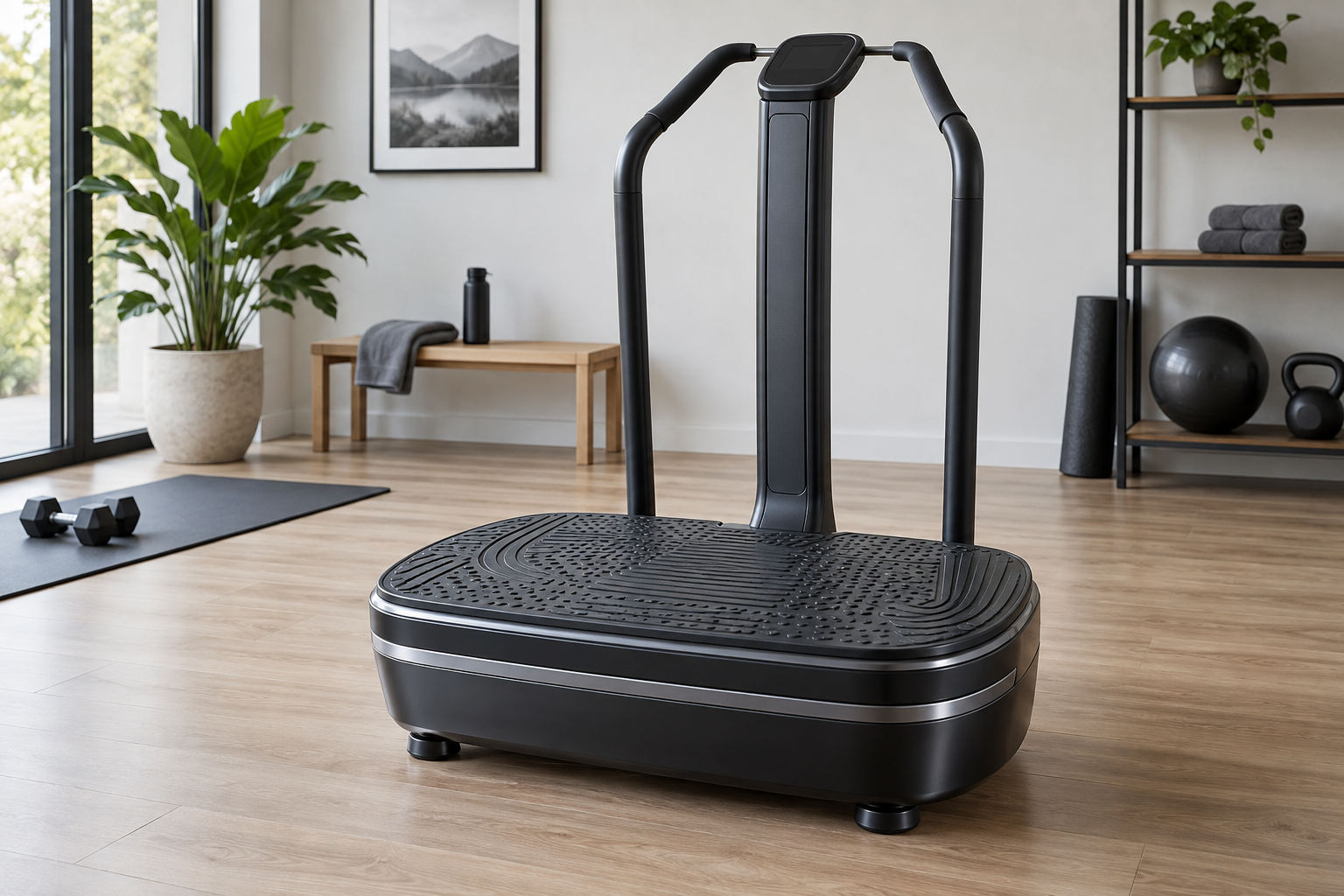
Bluefin Fitness Ultra Slim 3D Vibration Plate
A low-profile Bluefin option aimed at buyers balancing multi-direction motion and storage.
A vibration plate cool-down creates a gradual return to normal standing and walking. Lower the setting, choose stable positions, and finish on the floor. This six- to eight-minute sequence suits workouts using standing, squatting, or supported upper-body positions and can be shortened after a brief session.
Return to a hip-width stance at the easiest comfortable level. Keep knees soft and touch the rail lightly. Breathe naturally for 30 seconds, then make slow side-to-side shifts for 30.
The purpose is to regain a quiet posture, not to add another exercise set. If the workout ended with a strong setting, do not stay there for the cool-down. If you feel unsteady, stop the machine, step down according to the manual, and continue the entire sequence on the floor.
Near support, alternate small heel lifts for 30 seconds, returning each fully. Follow with 30 seconds of ankle bends: move both knees slightly forward while heels stay down, then return.
Use a range that keeps the arches from collapsing and the knees aligned with the toes. These are mobility movements, so avoid bouncing or pushing into a stretch. If the calves are tired, perform the same motions after stepping onto the floor.
Perform five shallow hip hinges, moving hips back with a long spine and pressing the feet down to stand. Then take five slow shoulder rolls with soft knees.
People often continue holding a squat after the work portion has ended, which keeps the thighs working during what should be a recovery interval. Let the knees straighten toward neutral without snapping them into a locked position. Keep the shoulders loose rather than bracing against the rail.
Turn the machine off and wait for it to stop if required. Walk for one to two minutes, swing the arms, look forward, and use normal heel-to-toe steps. Notice whether balance feels ordinary again.
If you prefer to remain in one place, march with low foot lifts beside a wall. Hold the wall if needed. Avoid moving straight from a vibrating surface into a demanding balance drill, a treadmill, or stairs before you know you feel steady.
For the calf, face a wall, step one foot back, and keep its heel down while the front knee bends. Hold 15 to 20 seconds per side with back toes forward. Shorten the step to regress.
For the front hip, use a short split stance and gently tuck the pelvis. Shift forward to a mild stretch in the rear hip for 15 to 20 seconds per side. Use a chair and avoid back arching.
If the workout emphasized the upper body, add a doorway chest stretch instead of one lower-body stretch. Place the forearm against the frame below shoulder height and turn the body away slightly. The cool-down does not need to cover every muscle used; select the areas that feel most restricted.
Finish standing or seated. Take four unforced breaths, letting the exhale lengthen slightly. Relax the jaw and hands without chasing a slow count or holding your breath.
Ask three practical questions: Has normal balance returned? Is there any sharp or unusual pain? Do you feel clear-headed? If the answer to the first or third question is no, remain seated or supported and do not rush into another activity. Persistent or concerning symptoms deserve appropriate medical attention.
After a short session, use one minute low, one minute walking, and one stretch. After longer leg work, walk two minutes and use both lower-body stretches. After hand-supported work, add wrist circles and hand opening on the floor.
A progression is unnecessary because a cool-down is not a performance test. You can improve it by making transitions smoother and choosing movements that match the session. Extending time is reasonable when you enjoy it, but harder vibration and deeper stretches do not make recovery more effective by default.
Skip a final high-speed interval. Avoid static stretches on the active platform when they require gripping or twisting. Keep loose equipment off the running machine.
The final mistake is stepping away immediately because the workout timer ended. Reserve at least two minutes to lower the setting, stop the plate, and walk. That small buffer makes the end of the session as deliberate as the beginning.
As an Amazon Associate, we may earn from qualifying purchases.
A low-profile Bluefin option aimed at buyers balancing multi-direction motion and storage.
A useful cool-down lowers the machine input and finishes on stable ground. Use gentle ankle motion, a short walk, and one or two relevant stretches for a calm transition out of the workout. Keep the same basic ending for several sessions so you learn how normal recovery feels after this particular routine. Note any movement that consistently restores your steadiness or any position that feels awkward, then adjust the next cool-down rather than adding more intensity.
Continue the A Calm Vibration Plate Cool-Down Routine decision in the full product catalog, brand directory, or vibration plate finder.