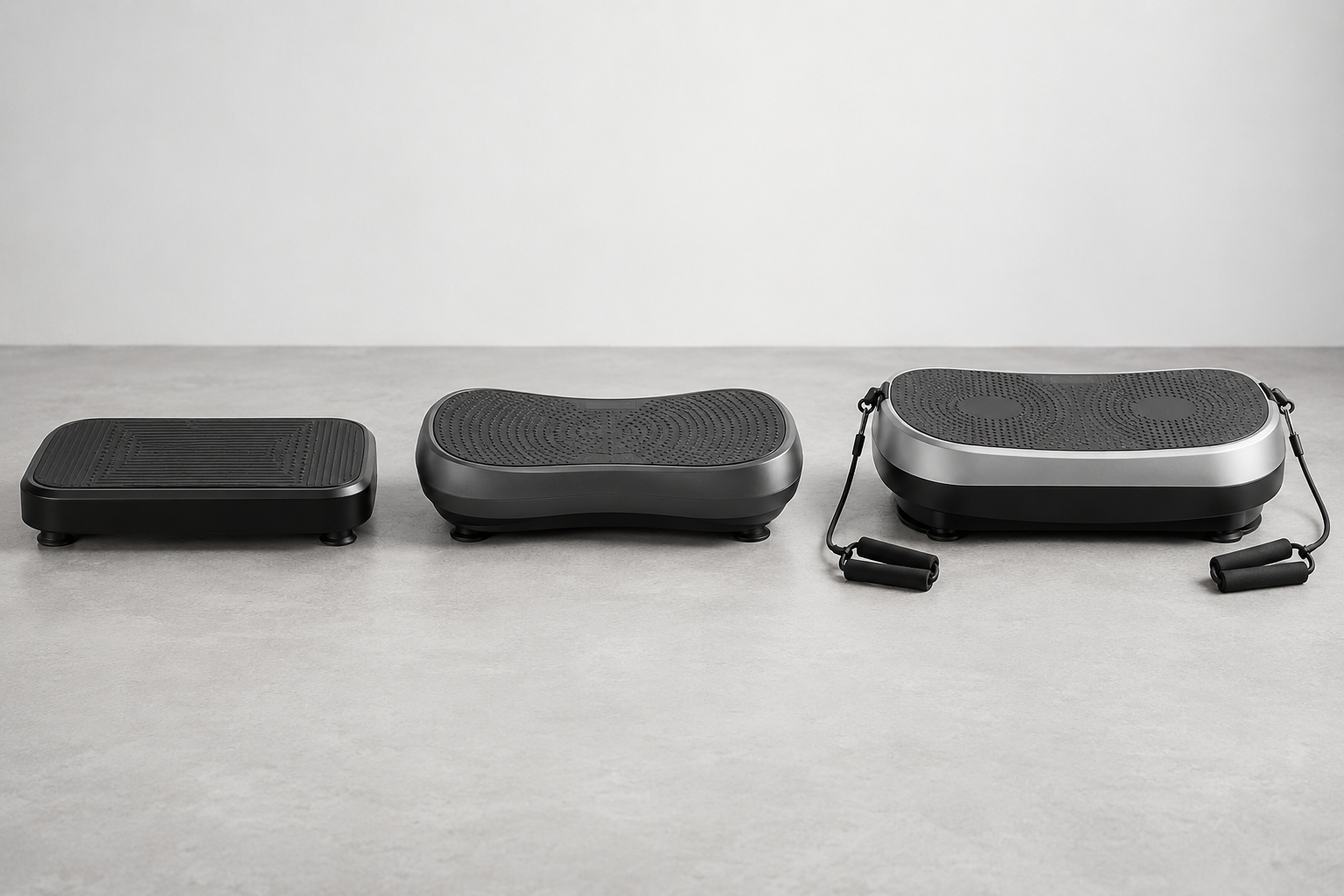
FEIERDUN
FEIERDUN 200W 120-Level Oscillating Vibration Plate
A 200-watt oscillating model with a broad listed control range.
Core work on a vibration plate is most useful when the movement stays controlled. The platform adds small, rapid changes under the hands or feet, so the trunk must keep adjusting while you hold a stable position. That does not mean the fastest setting creates the best workout. Start low enough that you can breathe normally, keep your ribs stacked over your pelvis, and stop the set before shaking changes your posture. The sequence below moves from supported bracing to harder positions and can be shortened to match your experience.
Place the machine on a firm, level floor with clear space on every side. Use a low setting for the first round and stand beside the platform while it starts. Shoes generally provide more predictable traction than socks. If an exercise puts your hands on the deck, use the supplied mat when the manufacturer allows it and check that your palms cannot slide toward an edge.
The key position is a gentle brace rather than a hard stomach vacuum. Exhale, let the front ribs settle, and tighten the midsection as if preparing to carry a grocery bag in one hand. Keep that tension while taking short breaths. If the vibration travels into your jaw, if your lower back repeatedly arches, or if you cannot keep your head still, reduce the setting or choose the easier version.
Start with a narrow athletic stance on the plate: knees soft, hips unlocked, and hands hovering near a wall or rail. Hold for 20 seconds while keeping the belt line level. Next, shift slightly more weight into one foot without lifting the other. Alternate sides for two or three controlled rounds. The goal is to prevent the torso from leaning as the load changes, which makes this a practical entry-level core drill.
A standing march is the next step. Lift one heel only, pause, then replace it before switching sides. Progress to raising the whole foot a few inches if you can keep the pelvis quiet. Do not race the machine with quick steps. A slower march exposes unwanted rocking and gives you time to correct it. Beginners can perform the same drill beside the plate with only one foot on the deck.
For a forearm-supported drill, kneel behind the machine and place both forearms on the platform. Keep the knees on the floor, elbows under the shoulders, and hips slightly forward until the body forms a straight line from head to knees. Hold 15 to 25 seconds. This shortened lever is a useful regression because it trains the brace without asking the shoulders and lower back to manage a full plank.
To progress, extend one leg at a time into a full forearm plank. Keep the feet wider than usual at first. Once that is steady, move them closer or add a slow shoulder tap from a high-plank position, provided the deck is large enough for safe hand placement. Three sets of 15 to 30 seconds are plenty. Longer holds are only valuable while the same alignment and breathing remain intact.
Sit on the switched-off plate first to find a secure position, then turn it on at a low level. Keep both feet on the floor and hold your hands together at chest height. Lean back only until the abdominals engage, and make a small turn of the ribcage to one side. Return to center before turning the other way. Six slow repetitions per side can be more demanding than a large, hurried Russian twist.
For a standing option, hold a light resistance band anchored to the side and face forward on the plate. Press the band away from the chest and prevent it from rotating you toward the anchor. This anti-rotation press requires adequate clearance and a stable anchor; skip it if the band could contact the machine. Increase difficulty by lengthening the press or narrowing the stance before raising vibration speed.
A simple session is two rounds of a 20-second standing march, a 20-second knee plank, six seated turns per side, and a 15-second full or elevated plank. Rest for 30 to 45 seconds between movements as needed. Two sessions a week give you room to judge how your shoulders, back, and hips respond before adding a third day or another round.
The most common mistakes are locked knees while standing, sagging hips in a plank, holding the breath, and using a setting that makes control impossible. Another is treating every vibration plate number as universal; speed scales differ among brands. Record the model, setting, stance, and hold time instead. That creates a useful progression record without assuming that level 20 on one machine equals level 20 on another.
As an Amazon Associate, we may earn from qualifying purchases.
A 200-watt oscillating model with a broad listed control range.
A good vibration plate core workout feels like repeated stabilization, not a contest to tolerate the strongest shake. Master the standing brace and knee-supported plank, then earn the full plank, small rotations, and narrower stances. Use clean breathing and consistent body position as the standard for progression. When those begin to fade, the set is finished even if the timer still has seconds left.
Continue the Core Exercises Using a Vibration Plate decision in the full product catalog, brand directory, or vibration plate finder.