LifePro
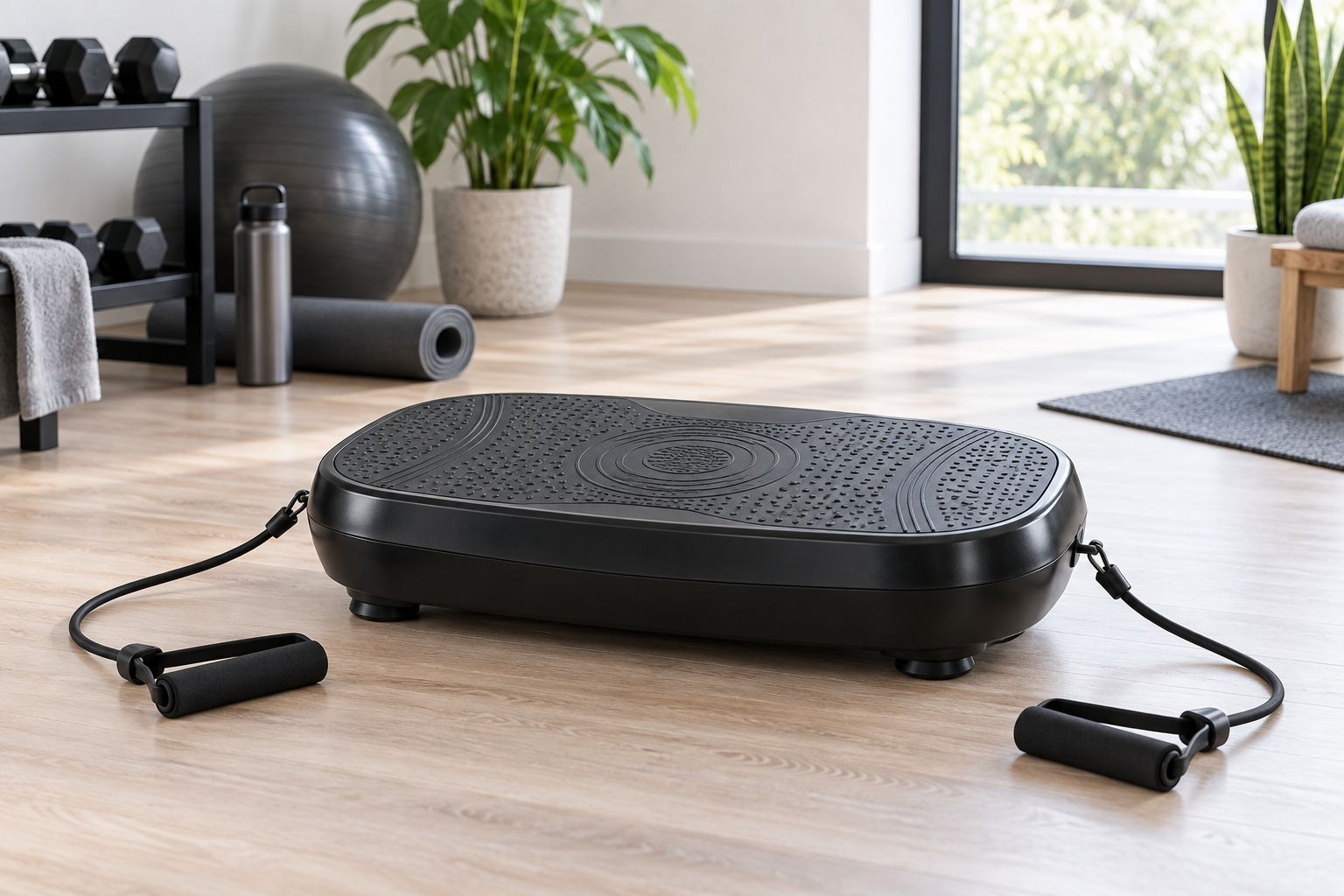
LifePro Waver Mini Compact Vibration Plate
A smaller-footprint LifePro option for short sessions and easier storage.
A vibration plate can support several kinds of movement in one compact session, from a warm-up stance to squats, calf raises, upper-body holds, and cooldown work. The machine does not choose the right exercise or fix poor form; the useful part comes from matching each position to your ability and keeping the dose manageable. This beginner-friendly routine explains where to place your body, how long to work, what to change when a movement feels too difficult, and when a stronger variation makes sense.
Stand near a wall or the machine's handles and begin on its lowest practical setting. Place both feet near the center, bend the knees slightly, and notice where you feel the movement. A rigid stance often sends more sensation toward the head, while soft knees and relaxed shoulders help keep it in the lower body. Try 20 seconds on the plate followed by 20 seconds off for three rounds.
Then test foot spacing. A wider stance can feel more intense on side-to-side oscillating models because the feet travel farther from the center. Other machines behave differently, so follow the model's instructions and treat its speed labels as unique. You should be able to step off normally, speak a sentence, and maintain balance before beginning loaded exercises.
For a supported squat, face the controls and lightly hold the rails if present. Push the hips back, bend the knees, and lower only as far as you can keep the heels down and knees tracking with the toes. Pause briefly, then stand without snapping the knees straight. Complete eight to twelve repetitions. A shallower range is the regression; a slower three-second descent is a sensible progression.
Follow with calf raises. Keep the knees soft, rise onto the balls of the feet, pause, and lower with control for ten to fifteen repetitions. Finish the lower-body group with alternating split-stance holds: one foot on the plate, the other on the floor, hips facing forward, 15 seconds per side. Progress that hold into a small split squat only after the stationary version feels balanced.
Kneel behind the plate for an incline push-up. Put the hands securely on the deck, slightly wider than the shoulders, and create a straight line from the head through the knees. Lower the chest between the hands and press away for six to ten repetitions. If the platform is too small for stable hand placement, place the hands on a sturdy bench instead and use the plate for another movement.
A high-plank hold is the next level, with hands on the deck and feet on the floor. Start at 10 to 20 seconds. Keep the shoulders away from the ears and the hips level. Moving the feet farther back increases the challenge; bringing them closer reduces it. Avoid rapid push-ups until you can keep the hands planted and the trunk steady throughout the hold.
After the orientation, perform 40 seconds of work and 20 seconds to change position: supported squat, calf raise, split-stance hold on the right, split-stance hold on the left, incline push-up, and a centered athletic stance. Rest one minute, then repeat. Use repetitions rather than the full 40 seconds if your form reaches its limit sooner. Two rounds create a practical first session.
For a lower-impact version, shorten each station to 20 seconds and keep both hands supported during standing movements. For a harder circuit, add a third round or slow the squats and push-ups. Change only one variable at a time. Raising speed, extending work intervals, adding resistance, and choosing harder exercises all at once makes it difficult to tell what caused a loss of control.
Use the final two minutes for a low-setting standing hold and an easy calf stretch with one foot on the stopped platform. The cooldown does not need to be elaborate. Let breathing return to normal, then step away and walk for a minute before sitting. If you feel lightheaded or unusually unsteady, stop the session and use a stable support.
Watch for four recurring errors: locked joints, gripping the handles hard enough to pull the body forward, bouncing through repetitions, and chasing high display numbers. The best setting is the one that lets the targeted muscles work while your position stays recognizable. The plate should add a training stimulus; it should not erase the movement you intended to perform.
As an Amazon Associate, we may earn from qualifying purchases.
A smaller-footprint LifePro option for short sessions and easier storage.
The strongest all-purpose vibration plate routine uses a small group of movements performed well. Learn how your machine responds, practice squats and calf raises, add a stable upper-body hold, and organize them into short rounds. Progress through time, range, or exercise difficulty one step at a time. That approach makes the plate easier to use consistently and gives each workout a clear purpose.
Continue the Vibration Plate Exercises: A Practical Movement Library decision in the full product catalog, brand directory, or vibration plate finder.