LifePro
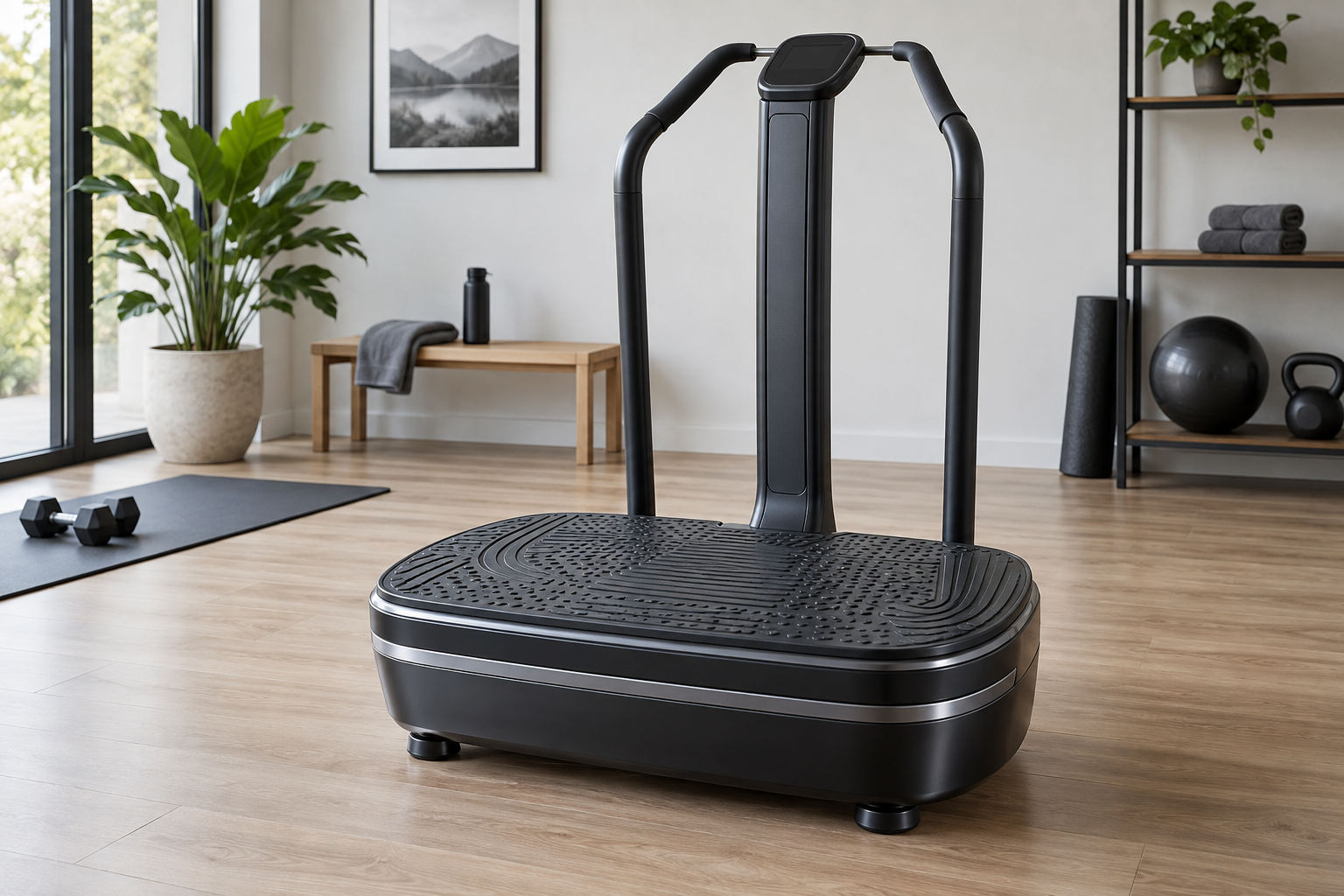
LifePro Waver Mini Compact Vibration Plate
A smaller-footprint LifePro option for short sessions and easier storage.
Frequency and amplitude best describe a repeating platform movement. Frequency tells how often the cycle repeats; amplitude tells how far the deck travels. They work together but are not interchangeable. Understanding both prevents a shopper from mistaking 99 proprietary speed levels for 99 comparable doses of vibration.
Frequency is measured in hertz: one hertz means one complete cycle each second. A range of 5 to 15 Hz means five to fifteen cycles per second. The speed number on a consumer display is usually a step in the manufacturer's controller. Unless the manual maps those steps to hertz, the number cannot be compared across brands or translated into a research protocol.
The motor may behave differently under load, and automatic programs can change frequency during a session. Buyers interested in a specific value should seek a technical sheet that states it directly.
Amplitude describes displacement from a reference position. Sellers may report one-way amplitude, peak-to-peak travel, or an unexplained millimeter figure. Those are different conventions. On a pivoting plate, travel grows toward the outer edges, so foot position changes input. A single number may represent maximum edge travel rather than what both feet experience near the center.
This is why stance is an adjustment on oscillating equipment. A narrow stance near the fulcrum generally receives less travel; a wider stance receives more. Change one variable at a time instead of widening stance and raising the control level together.
A deck that travels farther and reverses direction more often creates greater acceleration. The relationship rises quickly because frequency has a squared effect in the basic sinusoidal model. Real plates depart from a perfect sine wave, but the principle explains why a small frequency increase can feel substantial when amplitude stays high.
Manufacturers sometimes advertise g-force without publishing frequency, displacement, test point, or load. Treat an isolated maximum-g claim cautiously. Transparent measurements and repeatable modes are more useful than the largest number.
Identify the motion type, then record hertz range, amplitude convention, measurement location, and whether modes are independently controlled. Add deck size because foot placement changes the experience. If those facts are absent, the return policy becomes more important because the product cannot be selected precisely from its specification sheet.
For home use, low-end control matters as much as maximum output. The machine should start gently, accept a stable stance, and allow an immediate stop. A broad range helps only when the user can select it predictably.
When a listing gives millimeters of movement, determine whether the number is amplitude from center to one extreme or total peak-to-peak displacement. A platform described as moving two millimeters each side travels four millimeters from its lowest to highest point. Sellers sometimes use those conventions interchangeably. On an oscillating plate, also find out whether the measurement was taken at the outer edge, where travel is greatest, or at a standard foot position.
Frequency ranges can be equally incomplete. A broad range may apply only to one motor, while another mode operates within a narrower band. Automatic programs may sweep through several frequencies without identifying them. If a routine or study specifies a value in hertz, select a machine that exposes and documents that value in manual mode. A proprietary level chosen because it feels similar is not a faithful match to a measured protocol.
A practical comparison table should keep raw facts and interpretations separate. Record motion direction, hertz, displacement definition, measurement point, available manual modes, and source document. Then add deck dimensions, capacity, and return terms. Mark unknown specifications as unknown rather than estimating them from motor wattage or level count. This approach may produce fewer impressive numbers, but it gives the buyer a defensible basis for choosing between actual machines.
As an Amazon Associate, we may earn from qualifying purchases.
A smaller-footprint LifePro option for short sessions and easier storage.
Use frequency to understand repetition rate and amplitude to understand travel. Ask how each value was defined, especially on an oscillating deck. Ignore cross-brand comparisons based on level count and favor machines that publish their movement clearly.
Continue the Frequency and Amplitude: The Specifications That Change the Feel decision in the full product catalog, brand directory, or vibration plate finder.