AXV
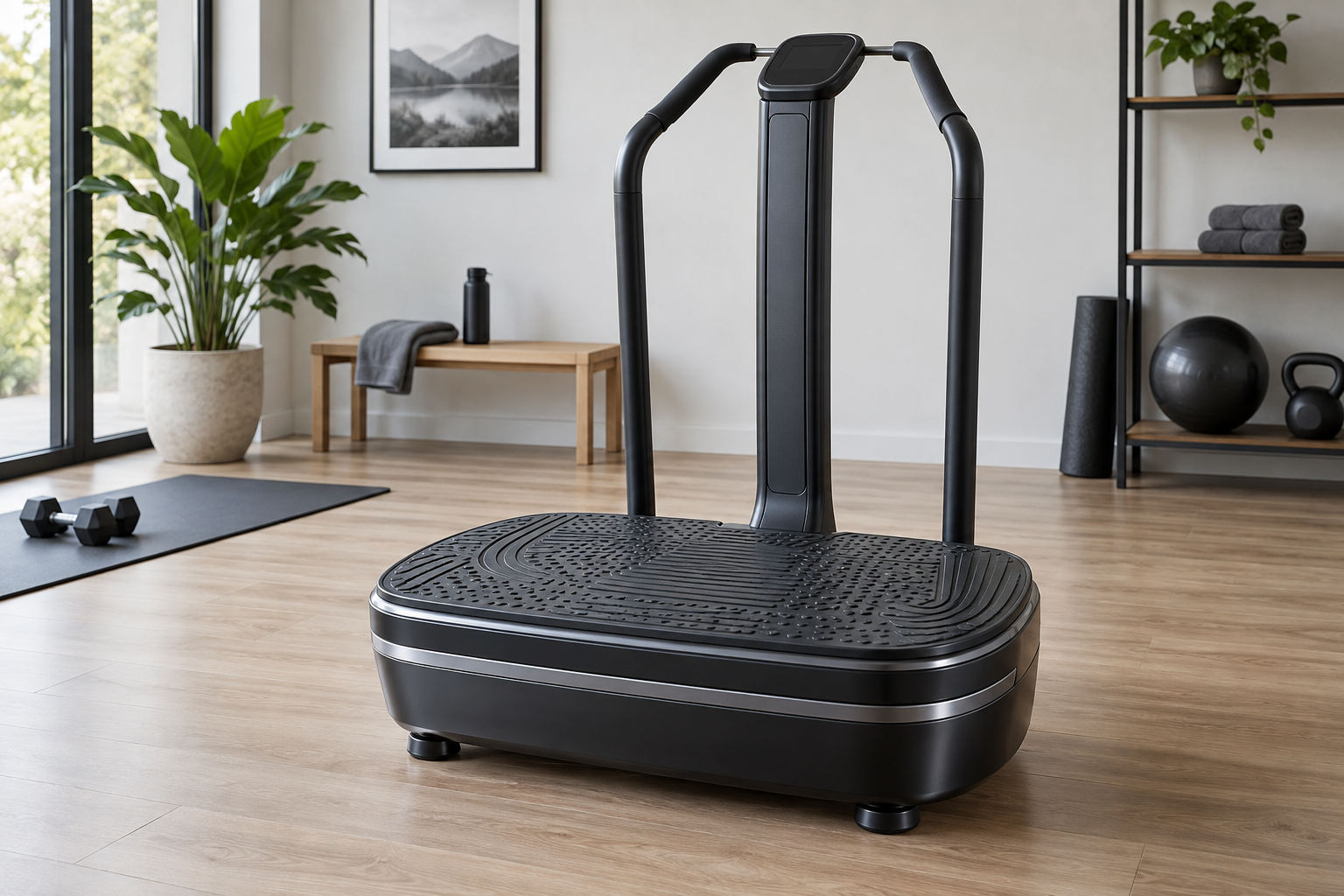
AXV Curved 200W Bluetooth Vibration Plate
A curved compact plate with a 200-watt motor and Bluetooth-listed configuration.
The vibration plate glute bridge places the feet on the moving surface while the shoulders remain on the floor. That setup can make a familiar hip-extension exercise feel different, but it also magnifies loose foot placement and overextended lower backs. The objective is still simple: drive through stable feet and finish by tightening the glutes, with the ribs and pelvis controlled. Learn the position while the plate is off, then use short sets at a modest setting.
Place an exercise mat behind the platform so your upper back and head are supported. Lie down with the knees bent and set both feet on the plate about hip-width apart. The heels should be far enough from the hips that the shins approach vertical at the top of the bridge. Check that the feet sit fully on the usable deck and cannot drift toward an edge.
Test two unpowered repetitions first. Press through the whole foot, lift the hips, and stop when the torso and thighs form a long line. If you feel mostly hamstrings, bring the heels slightly closer. If the knees feel crowded or move far beyond the toes, move them away. Individual proportions differ, so a secure position matters more than copying an exact distance.
Turn the machine to a low setting while seated, then lower yourself into place carefully. Exhale and gently bring the belt buckle toward the ribs before lifting. Drive the platform away, raise the hips for about two seconds, and squeeze the glutes at the top without forcing the hips higher. Lower for two or three seconds until the pelvis reaches the mat.
Begin with two sets of eight repetitions and rest 45 to 60 seconds. The movement should remain smooth even though the surface is moving. Keep the knees roughly in line with the second and third toes. If they repeatedly fall inward, reduce the setting, shorten the set, or loop no band at all until you can control the basic version.
The easiest regression is an isometric heel press. Stay on the mat with feet on the active plate, keep the hips down, and press both heels into the surface for 10 to 15 seconds. This teaches foot pressure and abdominal bracing without moving the pelvis. Repeat three times, breathing throughout each hold.
Next, lift the hips only a few inches and return. A reduced range lets you practice the route without losing rib position. You can also perform a conventional bridge with feet on the floor, then use the plate only for the final heel-press hold. Do not solve instability by gripping the floor with the toes; that usually changes the foot position without improving hip control.
Before trying a one-leg bridge, make the two-leg version harder with a three-second lowering phase or a 10-second hold after the last repetition. Another progression is a bridge march: hold the hips up, unload one foot just enough to lift the heel, replace it, and switch. The pelvis should remain level. Start with four deliberate shifts per side.
A full single-leg bridge on a moving platform demands much more balance and should come last. Keep one foot centered on the deck and extend the other leg without letting the working knee drift. Use five or six repetitions per side at a low setting. If the pelvis rotates, return to the march. A harder variation has value only when the glute remains the main driver.
Try this sequence after a brief warm-up: 12 bodyweight squats beside the plate, eight vibration plate bridges, a 15-second bridge hold, and eight supported standing hip hinges on the plate. Rest one minute and complete two more rounds. The bridge comes after the squat so the hips are warm, while the hinge reinforces a similar hip-driven pattern in standing.
Common mistakes include pushing the stomach upward instead of extending the hips, flaring the ribs, placing only the toes on the deck, and turning the speed up until the feet slide. Cramping hamstrings often signals that foot distance or pelvic control needs adjustment. Reset between repetitions rather than forcing a set that has shifted away from the glutes.
As an Amazon Associate, we may earn from qualifying purchases.
A curved compact plate with a 200-watt motor and Bluetooth-listed configuration.
A productive vibration plate glute bridge looks almost quiet above the waist. The feet stay planted, the knees track steadily, and the hips rise through glute tension instead of a lower-back arch. Begin with heel presses or partial bridges when needed, then add slower lowering, longer holds, marching, and eventually single-leg work. Let position determine the level, not the number shown on the machine.
Continue the Glute Bridges With Feet on a Vibration Plate decision in the full product catalog, brand directory, or vibration plate finder.