FLYBIRD
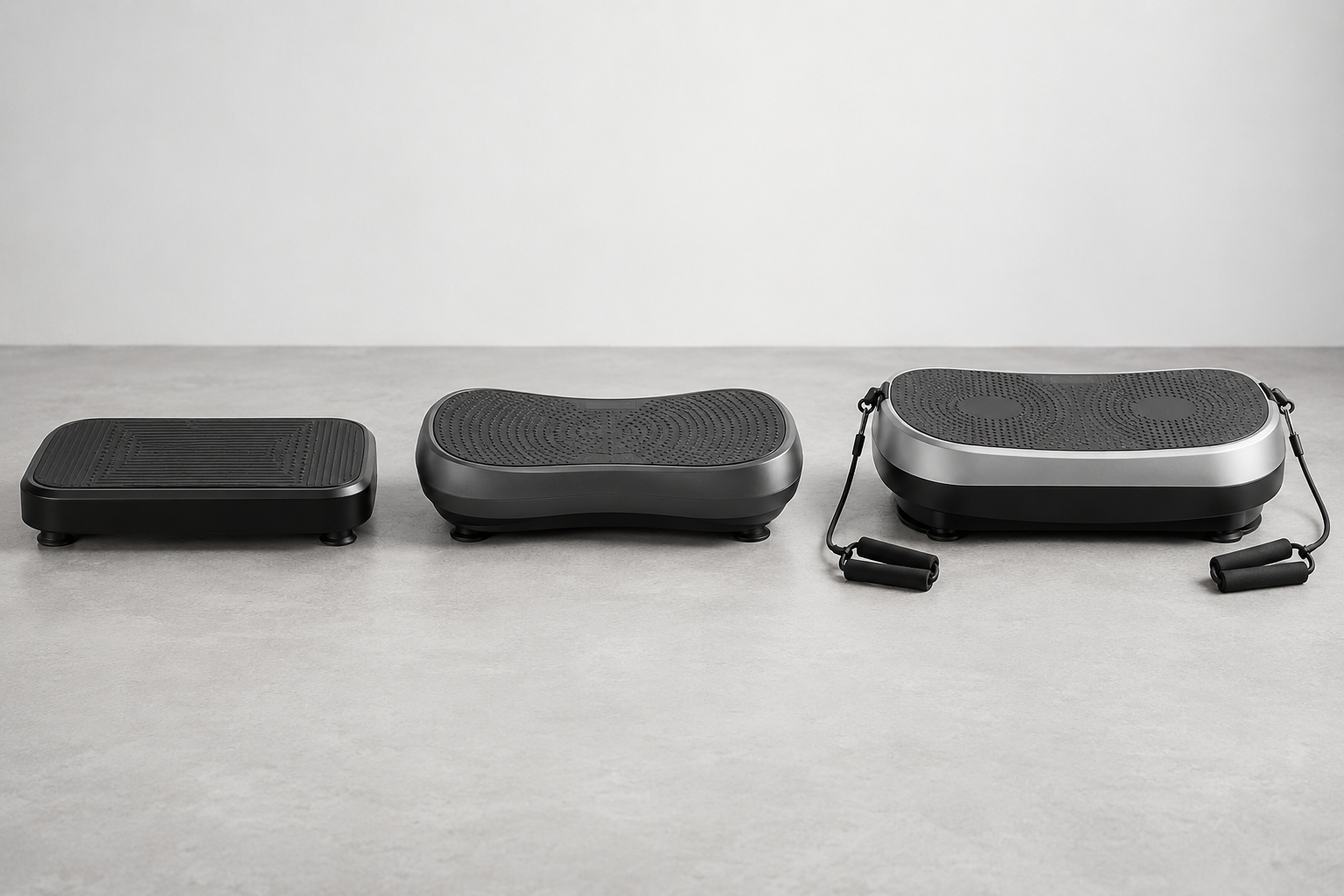
FLYBIRD Curved 120-Level Vibration Plate
A curved platform for shoppers comparing a wide control range in a compact chassis.
Leg training on a vibration plate can include knee-dominant, hip-dominant, calf, and single-leg patterns. The platform makes balance and joint position more important, so a useful session needs more than a list of exercises. The order below starts with stable bilateral movements, introduces staggered positions, and finishes with calves. Use the lowest setting that produces a noticeable challenge while still allowing steady feet, aligned knees, and controlled repetitions.
Stand in the center with feet about hip-width apart, knees bent slightly, and weight spread across heels and forefeet. Hold for 20 to 30 seconds, step off, and repeat. During the second hold, shift a little more weight to the right without moving the shoulders, return to center, then shift left. These small transfers prepare the ankles and hips for later single-leg work.
Keep a hand near a rail or wall during the first session. The aim is light assistance, not hanging from the support. If your knees straighten each time the platform changes direction or your heels lift unexpectedly, reduce the intensity. Complete the warm-up at a setting you could comfortably maintain for another round.
For the squat, set the feet securely, send the hips back, and let the knees bend in the same direction as the toes. Descend to a comfortable depth, pause, and stand tall without locking out sharply. Use eight to twelve repetitions. Holding the rails and using a quarter squat makes it easier; slowing the descent or holding the bottom for two seconds makes it harder.
For the hip hinge, soften the knees and push the hips backward while keeping the spine long. Stop when the hamstrings tighten, then press the feet down and bring the hips forward. The torso tips more than it does in a squat while the shins remain fairly vertical. Practice eight slow repetitions. This difference matters because turning every hinge into another squat leaves the back of the legs undertrained.
Place the front foot on the plate and the back foot on the floor. Keep both feet facing generally forward and bend both knees a few inches into a stationary split squat. The front heel stays down and the torso remains tall. Start with six repetitions per side while holding a stable support. Switch the machine off before changing sides if stepping around it feels awkward.
A reverse lunge is the progression. Begin with both feet on the deck only if the platform is large enough and the manufacturer permits the movement. Step one foot back to the floor, lower under control, and drive through the front foot to return. A safer alternative is to keep the front foot on the stopped plate, establish the split stance, then start the machine and perform the repetitions without stepping.
Calf raises fit naturally near the end of the session. Rise slowly, pause at the top, and lower the heels without bouncing for 10 to 15 repetitions. Keep the knees softly extended for a straighter-leg version. Then bend the knees a little more and repeat with a smaller range to change the demand on the lower leg.
For a balance progression, shift most of the weight to one leg while the other toes remain on the plate as a kickstand. Perform six calf raises, then change sides. A true single-leg calf raise comes later and should use a hand support. More platform speed is rarely needed; the reduced base of support already increases the difficulty substantially.
Complete three rounds of 10 squats, eight hip hinges, six split squats per side, and 12 calf raises. Rest 30 seconds between exercises and 60 to 90 seconds between rounds. Beginners can do two rounds and keep the split squat shallow. Experienced users can add a slow lowering phase or hold light dumbbells at the sides if the machine's manual and weight limit allow it.
Avoid letting fatigue decide your technique. Knees collapsing inward, heels losing contact during squats, a rounded hinge, and rushed foot changes are signs to pause. Also avoid comparing speed numbers across brands because their scales and vibration patterns differ. Track exercises, stance, repetitions, and perceived effort so the next session can progress from a known baseline.
As an Amazon Associate, we may earn from qualifying purchases.
A curved platform for shoppers comparing a wide control range in a compact chassis.
A complete vibration plate leg workout does not require dozens of variations. Squat, hinge, split-stance, and calf patterns cover the major jobs while giving you clear ways to progress. Begin with stable two-foot positions, add one-sided work after balance improves, and increase range or tempo before reaching for a higher setting. Consistent alignment is what turns the machine's movement into useful leg training.
Continue the Vibration Plate Leg Exercises Without Rushing the Session decision in the full product catalog, brand directory, or vibration plate finder.