MERACH
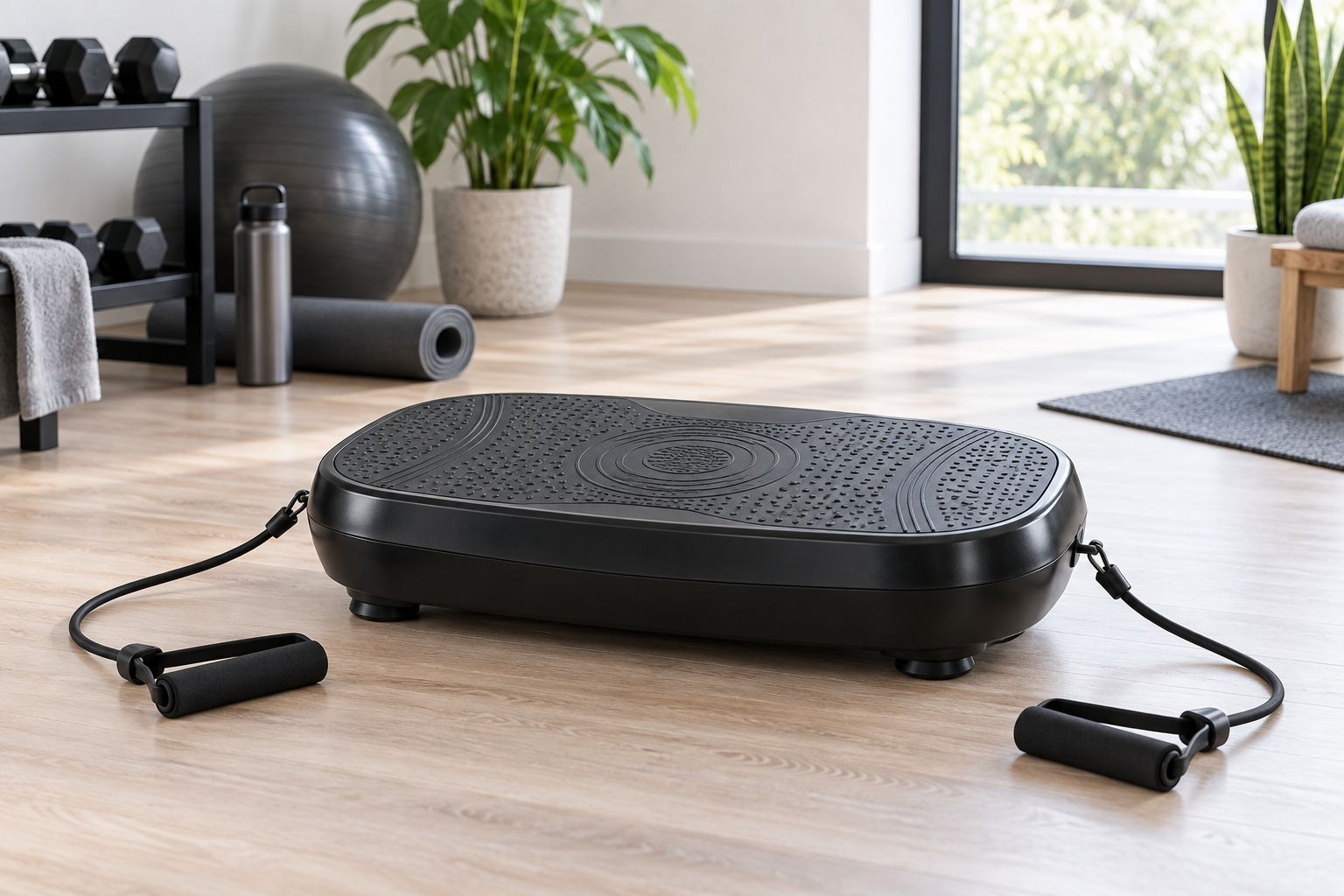
MERACH CV30 Curved Vibration Plate with Calorie Display
A curved MERACH model whose display and platform shape are central comparison points.
Lunges on a vibration plate can be performed as a fixed split squat, a reverse lunge, or a forward-foot-elevated variation. The fixed version is the best place to begin because neither foot has to land on a moving target. Once you can keep the front foot planted, the knee aligned, and the pelvis facing forward, you can add a step. This guide uses that progression and explains how to set the distance, choose a work interval, and correct the mistakes that commonly make the exercise feel unstable.
Put the front foot near the center of the unpowered platform and step the other foot back onto the floor. Use a stance long enough that both knees can bend without the back heel needing to come down. Keep some width between the feet, as though each foot rests on its own railroad track. A tightrope stance makes side-to-side balance unnecessarily difficult.
Lower a few inches and check three points: the front heel remains planted, the front knee follows the toes, and the hips stay directed forward. Adjust the back foot until those conditions feel natural. Use a wall, rail, or sturdy chair for fingertip support. Once the position is repeatable, return to standing and start the machine at a low setting.
Bend both knees while letting the back knee travel toward the floor. Keep most of the pressure through the front whole foot, then stand by driving that foot into the deck. The torso may lean slightly forward as one unit, but the spine should not fold. Begin with five to eight repetitions, stop the plate, and set up the other side.
Use two or three sets per leg with about 45 seconds of rest. A 15-second isometric hold is an effective alternative if repeated movement disrupts your balance. Choose a shallow depth first and increase it gradually. The working leg should feel loaded without the front heel lifting or the knee being pushed inward by the platform.
For the most supported version, hold both rails and use a short split-stance dip. Keep the back toes on the floor and lower only one or two inches. Another option is to keep the plate off while learning the full range, then use it for a static split-stance hold. Both choices preserve the lunge pattern while removing a layer of difficulty.
If front-foot elevation changes the exercise too much, place the front foot on the floor and the back toes on the plate only when the manual permits that setup. Many people will find the moving rear contact more demanding, so it is not automatically an easier option. Select the version in which the front knee and pelvis remain easiest to control.
A reverse lunge usually offers more control than stepping forward onto the deck. Stand with the working foot secure on the plate, step the other foot backward to the floor, lower, and return. Start with four repetitions per side and reset the stance each time. Use nearby support until every backward step lands in the same place.
Forward lunges onto an active platform require enough deck area, traction, and familiarity with the machine. If you choose them, practice the landing with the plate off first. Step to the center rather than the edge and pause before lowering. Holding dumbbells, adding rotation, or increasing speed belongs much later; first increase from five clean repetitions to eight.
Try two rounds of a 20-second athletic-stance warm-up, six stationary lunges per side, eight squats, and a 15-second split-stance hold per side. Rest for one minute between rounds. On the next week, add one repetition to the lunges or five seconds to the hold. This keeps the progression measurable without changing the whole workout at once.
Frequent errors include placing the feet on one narrow line, bouncing out of the bottom, pushing off the back leg, and letting the front foot creep toward the platform edge. Looking down through the whole set can also pull the torso out of position. Check the foot before starting, then focus on a fixed point ahead and use the support when needed.
As an Amazon Associate, we may earn from qualifying purchases.
A curved MERACH model whose display and platform shape are central comparison points.
The fixed split squat is the foundation for every vibration plate lunge variation. Set the feet with enough length and width, keep the front foot anchored, and use a range that preserves knee alignment. Build repetitions and depth before adding stepping versions. A stable six-repetition set provides a better path forward than a longer set in which every landing and knee position changes.
Continue the How to Use a Vibration Plate for Supported Lunges decision in the full product catalog, brand directory, or vibration plate finder.