FLYBIRD
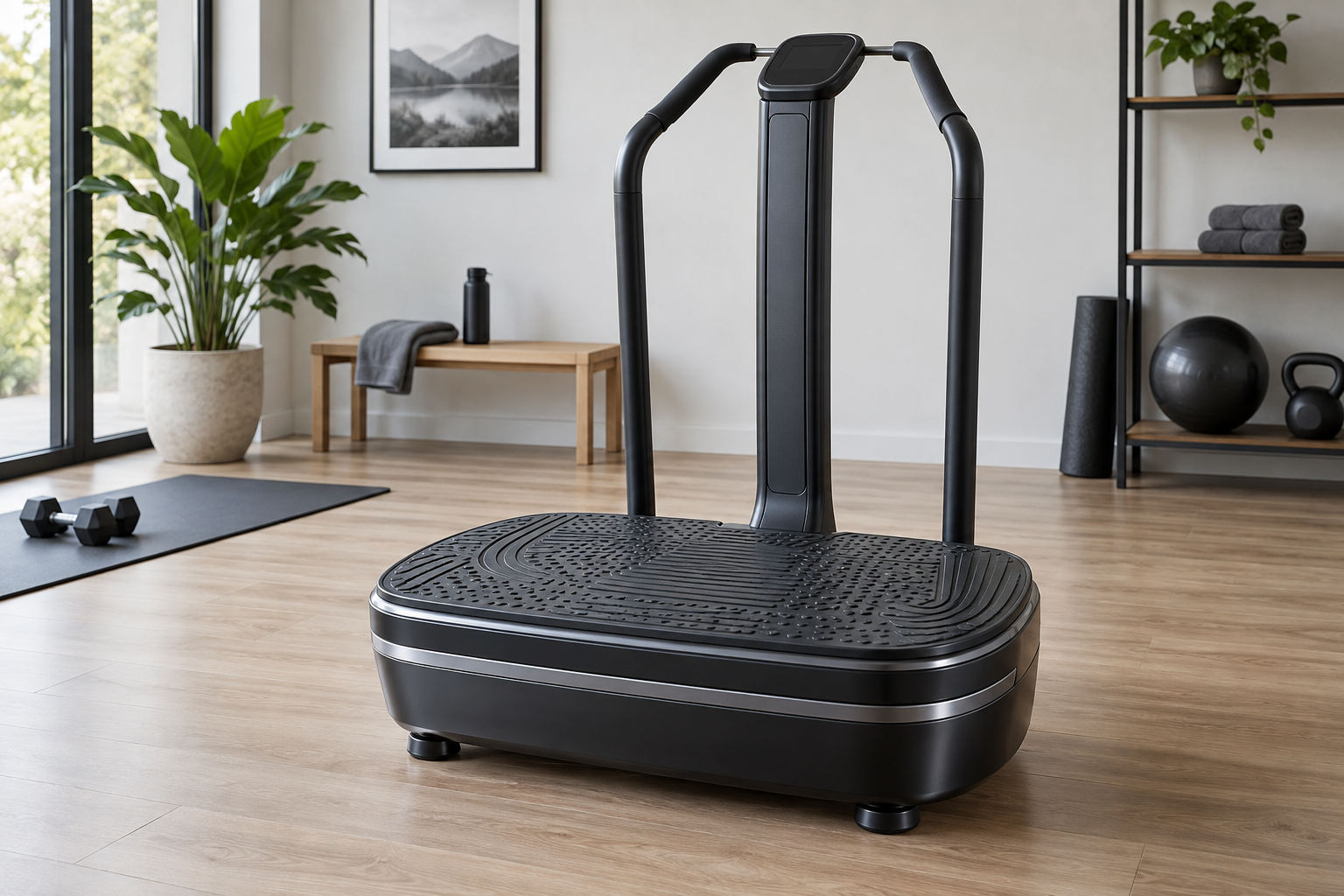
FLYBIRD Curved 120-Level Vibration Plate
A curved platform for shoppers comparing a wide control range in a compact chassis.
A mat is useful when a vibration plate needs floor protection, extra grip, or modest reduction of transmitted vibration. It cannot correct an uneven floor or repair a machine that wobbles. The best mat is dense, flat, and only large enough to support the entire base with a small border. Thick, soft exercise foam often makes a plate less stable, which defeats the reason for putting anything underneath it.
On finished wood or vinyl, a mat can prevent rubber feet from marking the surface and catch grit before it scratches. On tile, it may reduce the tendency to creep and soften some high-frequency buzz. In an upstairs room, it can reduce a portion of structure-borne sound, though location and floor construction usually matter more than the mat alone.
A plate that rocks when it is off has a leveling problem. Check for debris beneath the feet, an uneven seam in the flooring, or a damaged foot before shopping for padding. A new clunk, scrape, or strong vibration through one corner may indicate a machine issue that should be inspected rather than hidden with a thicker layer.
Look for dense rubber or similarly firm equipment mat material that rebounds little under thumb pressure. Roughly one-quarter to three-eighths of an inch is a practical starting range for many compact plates, subject to the manufacturer’s guidance. Soft interlocking foam tiles can separate, compress unevenly, or let a heavy machine sway during a wide stance.
Measure the machine at its widest feet rather than measuring only the deck. Add two to four inches of border on every side so all contact points remain on one piece. An oversized loose mat creates extra edges to trip over, while a mat narrower than the base leaves some feet at a different height. Select a non-staining product approved for the specific flooring, especially on light vinyl or sealed wood.
Clean and dry the floor, unroll the mat, and let it relax until the corners lie flat. With help for a heavy machine, lift the plate into place instead of dragging its feet across the mat. Center every foot on the same flat surface, keep ventilation openings clear, and route the power cord beyond the walking path.
Before plugging in, press down on opposite corners. If the plate tips or the mat bunches, stop and correct it. Run the empty machine briefly at its lowest setting only if permitted, then perform a low-speed stance test. Mark the plate’s position with removable tape and check after a session. Any walking or rotation means the surface, feet, or mat choice needs another look.
Once a month, unplug and lift the plate to check for moisture, trapped grit, floor discoloration, or compressed areas. Clean both sides of the mat and let them dry fully. Rotate a reversible mat if the maker allows it. Replace one that curls, cracks, becomes sticky, or develops permanent depressions that leave the feet uneven.
People in apartments should test sound with a helper in the room below when possible. Compare the same short, low-speed round with and without the mat, then try moving the setup near a more supported part of the room. This direct test is more reliable than assuming the thickest pad will be quietest.
As an Amazon Associate, we may earn from qualifying purchases.
A curved platform for shoppers comparing a wide control range in a compact chassis.
Use a mat when it has a defined job: protecting the finish, improving grip, or trimming transmitted noise. Pick one firm piece that supports every foot, then verify that the plate remains level and stationary. A good mat disappears beneath a stable setup; it should never add bounce or conceal a fault. Save the mat’s material information in case the flooring manufacturer asks about compatibility. Recheck it after the first week because new rubber can settle or creep. If the machine becomes less stable, remove the mat and return to the original firm surface while you reassess the size, density, and foot contact.
Continue the Do You Need a Mat Under a Vibration Plate decision in the full product catalog, brand directory, or vibration plate finder.