MERACH
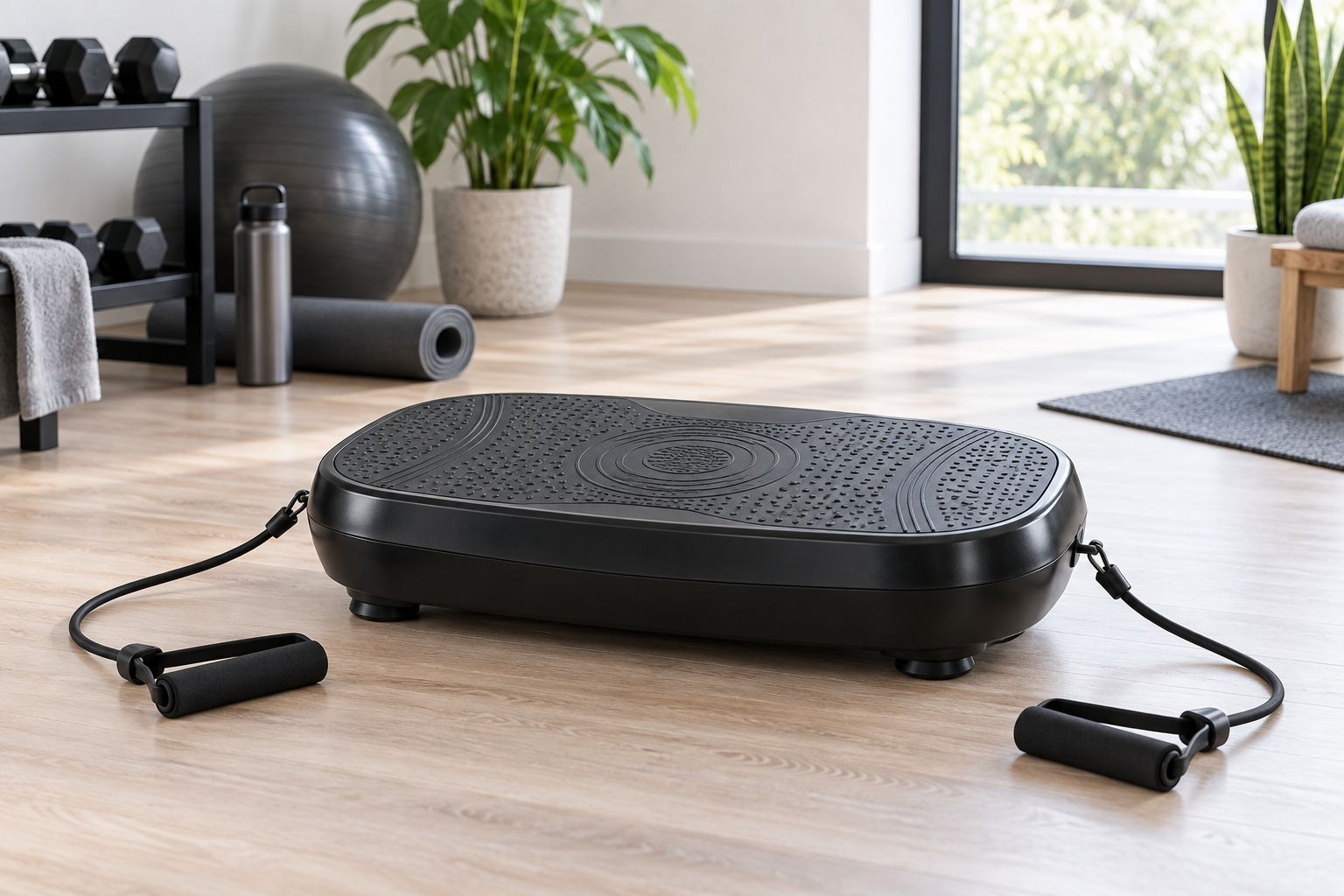
MERACH EvoSpark 7-in-1 4D Vibration Plate
A 4D-listed MERACH platform for shoppers who want multiple motion combinations.
A vibration plate can sometimes be used on carpet, but the carpet and machine must pass a stability test first. Low-pile, tightly woven carpet over a firm subfloor is the most workable case. Deep pile and thick padding let the feet sink unevenly, restrict airflow on some models, and increase rocking. The manual may require a hard surface, so check it before treating a board or mat as a universal solution.
Press a flat hand into the carpet and note how far it compresses. Walk across the proposed area and feel for soft spots, seams, or sloped flooring. Check for nearby walls, furniture, and a grounded outlet that allows the cord to stay out of the footpath. Vacuum thoroughly because grit under heavy feet can work into the fibers.
Inspect the underside of the plate for vents and foot shape. Bottom vents need the clearance stated by the maker. Small or narrow feet sink more readily than a broad continuous base. If the manufacturer specifies tile, concrete, or another hard level surface, relocate the machine instead of improvising on carpet.
For low-pile carpet, a dense equipment mat may be enough if it does not curl or compress unevenly. For softer carpet, a rigid equipment board can spread the load, but it must be thick enough to remain flat, finished without splinters, and larger than the machine on every side. Put a non-slip layer only where it cannot block ventilation or create a soft hinge.
Place the base on one continuous carpet area rather than bridging a threshold or seam. Lift the plate onto it with help if necessary; dragging can bunch carpet and damage rubber feet. Center all feet well inside the edge. The board itself should not tip when opposite corners are pressed.
With power off, push down on each corner and then lightly from each side. Any rocking, sliding, or tilting means the setup is not ready. If the manual allows an unloaded test, run ten seconds at the lowest setting and watch the relationship between the plate and base. Stop if either one walks.
Next use a centered, soft-knee stance for twenty seconds at the lowest setting. Keep a stable support nearby without allowing the machine to touch it. Step off after the platform stops and inspect the position. Repeat only if it remained level and centered. Do not advance to a wide stance or faster program until several low tests remain stable.
Carpet and padding can settle after repeated loading. Mark the base corners with removable tape for the first few sessions and look for movement. Every week at first, unplug and lift the setup to check for compressed patches, heat, trapped moisture, frayed fibers, or discoloration. Let the carpet recover and clean the area.
Move the plate to a hard floor if it begins to sway, produces new noise, shifts on the base, or leaves deep uneven impressions. A stable-looking top does not compensate for a foundation that changes under load. Carpet suitability is an ongoing observation, not a one-time installation decision.
As an Amazon Associate, we may earn from qualifying purchases.
A 4D-listed MERACH platform for shoppers who want multiple motion combinations.
Carpet use depends on three things: manufacturer approval, a base that stays firm, and successful stability tests under load. Low pile offers the best chance of meeting those conditions. If the surface compresses, blocks airflow, or lets the plate move, a hard level floor is the better location. Photograph the initial position and the impressions beneath the base after the first session. Compare them after a week. Increasing dents, fraying at the edges, or a board that has bowed are early signs to relocate. Do not wait for visible walking during a workout to decide that the carpet setup has changed beneath you. Recheck carefully after anyone moves the machine for cleaning or storage.
Continue the Can You Use a Vibration Plate on Carpet decision in the full product catalog, brand directory, or vibration plate finder.