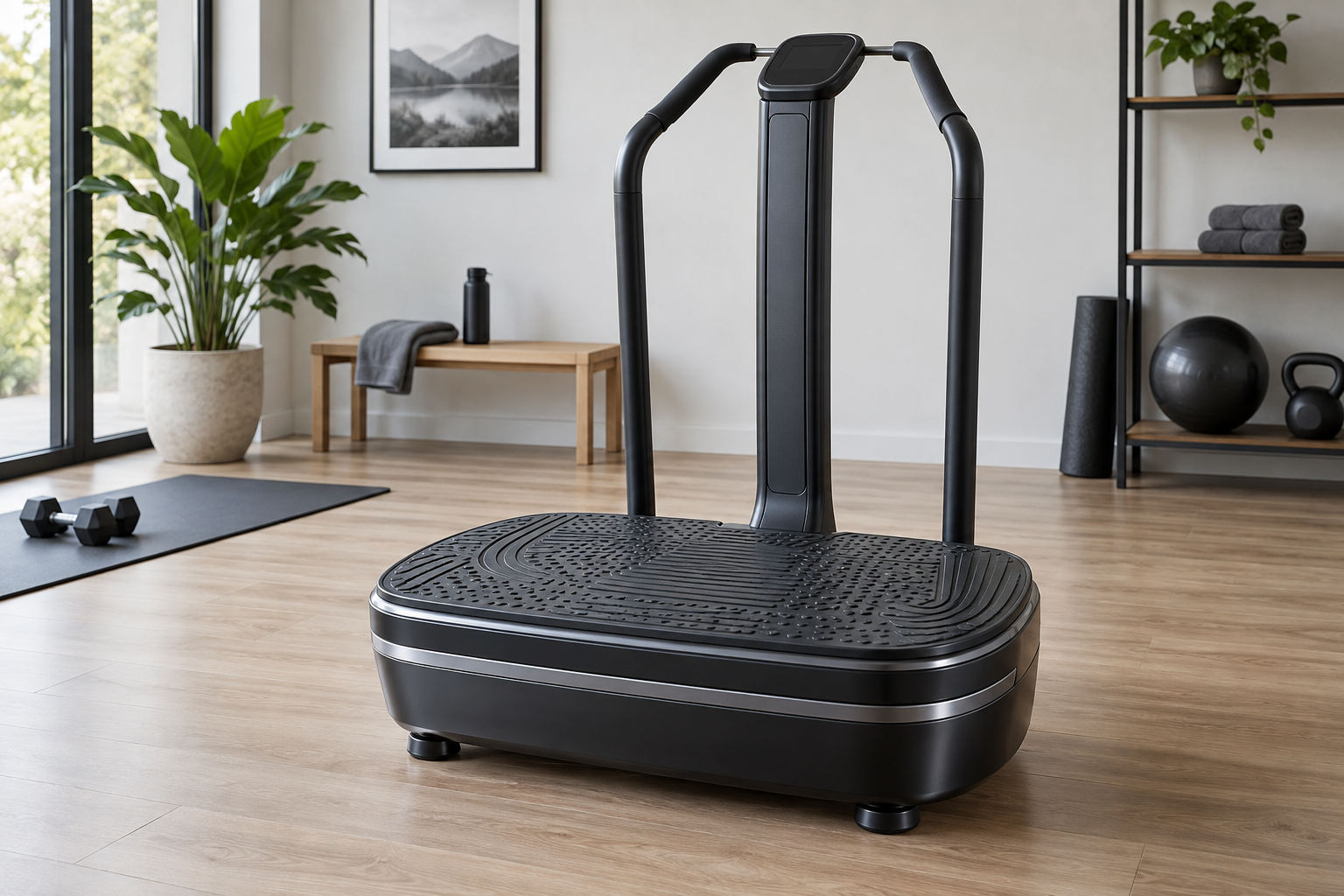
Bluefin Fitness
Bluefin Fitness Ultra Slim 3D Vibration Plate
A low-profile Bluefin option aimed at buyers balancing multi-direction motion and storage.
An upstairs vibration plate can be workable when the floor is firm, the machine is placed near stronger structural support, and sound is tested from the room below. The main concern is often transmitted vibration rather than the motor’s airborne noise. Floor framing can carry a low hum into walls and ceilings far from the machine, so a setup that sounds quiet beside the plate may still bother someone downstairs.
Start near an exterior or load-bearing wall rather than in the center of a room, where floor deflection is often greater. Avoid placing the machine beside shelves, radiators, shared walls, loose doors, or plumbing that can resonate. Keep enough clearance that the housing and mat cannot touch the baseboard.
Walk and gently bounce on the proposed spot before moving equipment. A floor that feels springy, slopes, squeaks heavily, or has damaged boards deserves another location. Renters should check building or lease rules, and anyone uncertain about the floor’s capacity should ask the property owner or a qualified building professional rather than estimate from machine weight alone.
Confirm that all machine feet are clean and intact. A single foot on a floorboard edge or tile lip can create rocking and noise. Use one dense equipment mat if the manual allows it, sized so every foot stays on the same layer. Thick soft foam can increase sway and should not be stacked in an attempt to trap sound.
Route the power cord so it does not tap a wall or furniture. Remove nearby objects that may chatter, including framed art on the wall below if practical. Close loose closet doors and move glass or metal accessories before evaluating the machine itself.
Ask another person to stand in the room below while the plate runs through three short tests: empty at the lowest setting if allowed, occupied in a narrow soft-knee stance, and occupied at the moderate setting you expect to use. Keep each test twenty to thirty seconds. The listener should note hum, rattles, and where they are strongest.
Change only one factor after the baseline. First add the dense mat, then retest. If needed, shift the setup a few feet closer to a supporting wall and repeat. This sequence shows whether the mat or location actually improves sound. A phone recording can document large differences, but direct listening is better for low-frequency vibration that small microphones may miss.
Choose hours when downstairs rooms are not used for sleep, calls, or quiet work. Keep sessions concise and avoid dropping weights or stepping heavily from the platform. A low or middle setting that meets the exercise goal can be more neighbor-friendly than a high program that makes the structure resonate.
Recheck after moving furniture, replacing the mat, or changing to a wider stance. Stop and inspect a setup that develops new shaking, a knock, or visible movement. If noise remains intrusive after location and contact changes, the ground floor is the practical answer; more layers of padding can make operation unstable without solving the path through the structure.
As an Amazon Associate, we may earn from qualifying purchases.
A low-profile Bluefin option aimed at buyers balancing multi-direction motion and storage.
Upstairs use succeeds through placement and testing. Put the plate on a firm spot near structural support, use a dense single mat, and listen from below under realistic load. A short, agreed schedule and moderate settings can prevent conflict, while persistent structural hum is a reason to relocate downstairs. Recheck the downstairs sound whenever stance, speed, or exercise changes, since a wide squat and a centered recovery stance can excite the floor differently. Keep the agreed hours visible to everyone who uses the machine. That turns noise control into a predictable household routine rather than a fresh negotiation at every workout. Check the mat and floor monthly for movement or compression as well. Repeat the listening test whenever the plate is relocated within the room.
Continue the Using a Vibration Plate Upstairs Without Annoying the House decision in the full product catalog, brand directory, or vibration plate finder.