Bluefin Fitness
Bluefin Fitness Ultra Slim 3D Vibration Plate
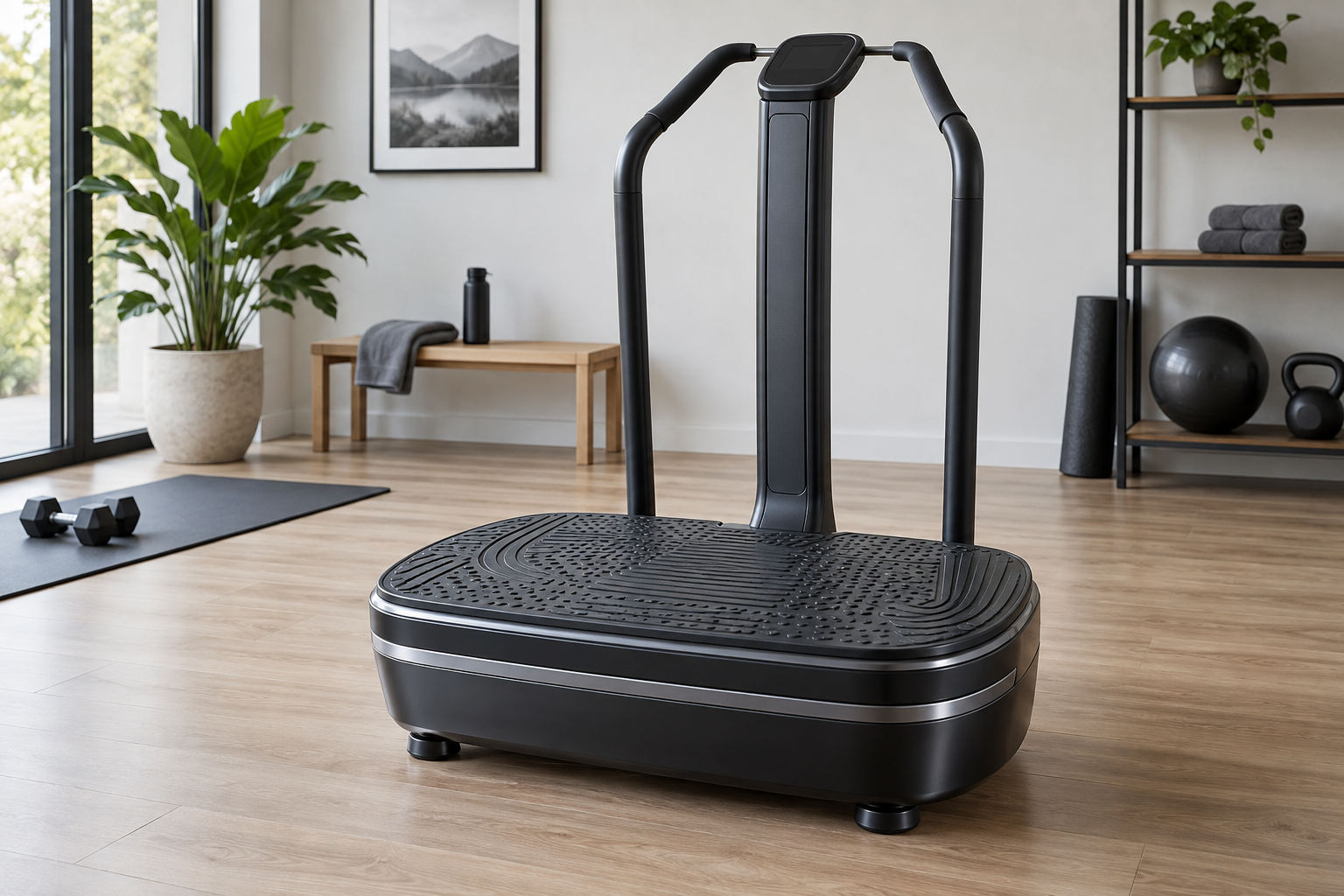
A low-profile Bluefin option aimed at buyers balancing multi-direction motion and storage.
A vibration plate plank usually places the forearms or hands on the moving deck while the feet remain on the floor. The vibration can make the shoulders and trunk work harder to maintain position, which is why brief, precise holds are a better starting point than a long endurance test. The safest progression changes the lever length and points of support before it changes machine intensity. Set up with the plate off, confirm that your arms fit securely, and begin with a low setting.
A forearm plank spreads pressure across a larger area and often feels more secure, but only if both forearms fit without crowding the controls or edges. Position the elbows beneath the shoulders and keep the hands relaxed. A high plank uses the palms under the shoulders and may suit a smaller deck. In either case, the contact points must remain fully inside the usable surface.
Use the machine's mat or a compatible nonslip layer only as directed by its manufacturer. Kneel behind the plate, place the arms first, and then move the knees or feet back. Starting from standing and reaching down toward an active platform creates an awkward transition. Establish the exercise position before the timer or work interval begins.
Keep both knees on a floor mat and bring the hips forward until the ears, shoulders, hips, and knees form a straight line. Gently push the plate away, draw the ribs down, and tighten the glutes. Hold for 10 to 20 seconds while taking quiet breaths. Rest at least as long as you worked, then repeat for three sets.
If the lower back dips, move the knees closer to the machine and shorten the lever. If the shoulders shrug, reduce the hold and think about widening the upper back without rounding the whole spine. Progress when all three sets look alike. A longer final set does not compensate for losing position in the first two.
From the kneeling setup, extend one leg and plant the toes, then extend the other. Begin with feet wider than hip width to create a larger base. Keep the hips approximately level with the shoulders and press backward through the heels. Hold 10 to 15 seconds, lower the knees, and step away before changing the controls.
Build toward three holds of 20 to 30 seconds. Bring the feet closer together to increase the balance demand, or move them slightly farther from the plate to lengthen the body lever. Make one change at a time. If vibration reaches the head strongly, if the elbows slide, or if breathing becomes strained, end the hold and lower the setting for the next attempt.
A high-plank shoulder tap is a useful anti-rotation progression. Widen the feet, shift as little as possible, lift one hand to tap the opposite shoulder, and replace it before switching. Start with three taps per side. The hips should not swing farther than they do during a normal weight shift. Reduce the movement to briefly unweighting one palm if a full tap is too difficult.
Another option is a slow plank walk between forearms and hands, but it requires ample deck space and firm traction. Most users will get a cleaner progression from a longer lever, closer feet, or shoulder taps. Avoid fast mountain climbers on a small platform; hurried foot action does little to improve the plank if the trunk and hands cannot stay controlled.
Place vibration plate planks after a warm-up and before fatiguing push-ups. A concise block is three 15-second holds with 30 seconds of rest. Add five seconds per hold only when the shoulders, ribs, and hips remain consistent. Two sessions per week are enough to establish a baseline; a third can be added if recovery is comfortable.
Common faults are sagging through the middle, lifting the hips high to escape the load, locking the elbows aggressively in a high plank, and choosing a setting that makes the hands travel. Another mistake is staring at the controls. Keep the neck long and look toward the floor just beyond the plate. Stop for sharp wrist, elbow, shoulder, or back discomfort rather than adjusting through it mid-set.
As an Amazon Associate, we may earn from qualifying purchases.
A low-profile Bluefin option aimed at buyers balancing multi-direction motion and storage.
Treat the vibration plate plank as a quality hold with a clear beginning and end. Fit the arms securely on the deck, learn the knee-supported line, and extend to the toes only when you can keep breathing and maintain the same shape. Later, use closer feet or slow shoulder taps for progression. Short sets with stable contact give you a far better core exercise than an ambitious timer paired with sliding hands and a sagging back.
Continue the How to Do a Plank With Hands on a Vibration Plate decision in the full product catalog, brand directory, or vibration plate finder.