FEIERDUN
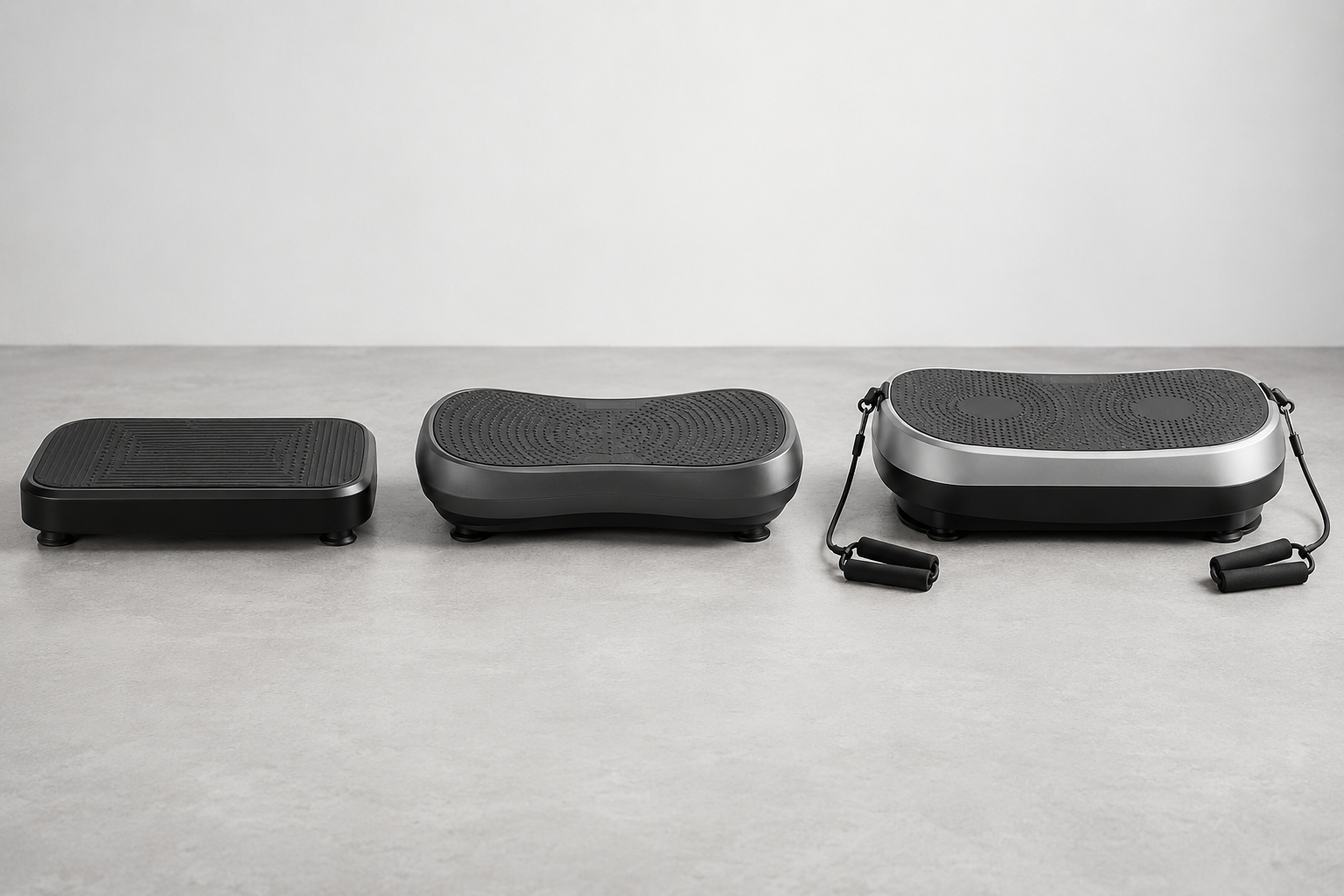
FEIERDUN 200W 120-Level Oscillating Vibration Plate
A 200-watt oscillating model with a broad listed control range.
A vibration plate push-up changes a familiar upper-body exercise in two ways: the hands rest on a moving surface, and the platform raises them above the floor. The elevation can make the pressing load more manageable, while the vibration asks the shoulders, trunk, and hands to make constant small adjustments. Good results depend on treating the plate as unstable equipment rather than simply turning it to a high number. Begin with a low setting, build a rigid line from head to heel, and choose a version you can control without locking the elbows or shrugging toward the ears.
Place the plate on a firm, level floor with enough open space behind it for your legs. Start at the lowest comfortable intensity. Kneel in front of the platform, set your palms slightly wider than shoulder width, and point the middle fingers mostly forward. Keep the heel of each hand fully supported; letting a palm hang over a rounded edge can make the wrist feel less secure. Step the feet back only after the hands feel planted.
In the top position, stack the shoulders roughly over the wrists, press the floor away, and tighten the abdomen as though preparing for a light punch. Squeeze the glutes and keep the back of the neck long. The body should move as one unit. If the hips sag before the first repetition, shorten the lever by dropping to the knees or use a stationary countertop until the plank position is reliable.
Inhale as you bend the elbows about 30 to 45 degrees away from the ribs. Lower the chest toward the center of the plate for two counts, pause just above the surface, and exhale while pressing back up for two counts. Stop the descent when the shoulders begin to roll forward or the trunk loses its straight line. Depth is earned through control; touching the plate is not required.
Use the first session to test three sets of five repetitions with 45 to 60 seconds of rest. Switch the motor off between sets if stepping around an active plate feels awkward. A smooth five-repetition set is more useful than a hurried set of twelve. Stop if vibration causes hand numbness, wrist pain, dizziness, or a headache rather than ordinary muscular effort.
The knee-supported version is the most direct regression. Place a folded mat under the knees, move them far enough back that the body forms a straight line from knees through hips to shoulders, and use the same slow lowering tempo. Avoid placing the knees directly beneath the hips, which turns the movement into a small shoulder dip. Another option is to leave the plate switched off while learning hand placement, then add low vibration later.
People with sensitive wrists can grip stable push-up handles placed securely on a platform only when the manufacturer permits accessories and the handles cannot slide. Otherwise, use a wall push-up or a solid bench. Vibration should never be used to push through joint pain. A regression is working when the chest, triceps, and trunk share the effort and every repetition looks similar.
First add repetitions, moving from three sets of five to three sets of eight. Next, lengthen the lowering phase to three seconds or add a one-second pause at the bottom. Only after those versions remain clean should you experiment with a modest increase in plate intensity. Change one variable per week so you can tell whether the new demand improves training or merely makes the position harder to hold.
A more advanced option is an offset push-up with one hand on the plate and the other on a stable block of equal height. Alternate sides each set and keep the breastbone centered between the hands. This version adds anti-rotation work and should follow, not replace, mastery of the symmetrical push-up. Feet-elevated push-ups sharply raise the load and are unnecessary for most home sessions.
Fast bouncing is the most common error. It reduces muscular control and can drive the shoulders toward the ears. Other warning signs include flared elbows, a chin reaching toward the platform, fingers lifting, and hips arriving before the chest. Reset by lowering the speed, widening the feet for balance, and performing fewer repetitions. Film one set from the side if you cannot tell whether the torso is staying rigid.
Do not place the feet on the moving platform and the hands on the floor simply because it looks harder. That arrangement sends vibration through the lower body but does little to improve the intended pressing pattern, and the elevated feet can make the exit clumsy. Keep the setup predictable, leave room to kneel down safely, and finish the set while you still control the last inch of the press.
As an Amazon Associate, we may earn from qualifying purchases.
A 200-watt oscillating model with a broad listed control range.
The useful vibration plate push-up is a deliberate press performed on a low, manageable setting. Establish stable hands, a braced trunk, and a repeatable two-count descent before adding repetitions, pauses, or speed. Three short sets once or twice a week can fit naturally into an upper-body or full-body session. Choose the knee version whenever alignment breaks, and let clean mechanics determine the progression rather than the number shown on the remote.
Continue the Vibration Plate Push-Ups: Setup and Progressions decision in the full product catalog, brand directory, or vibration plate finder.