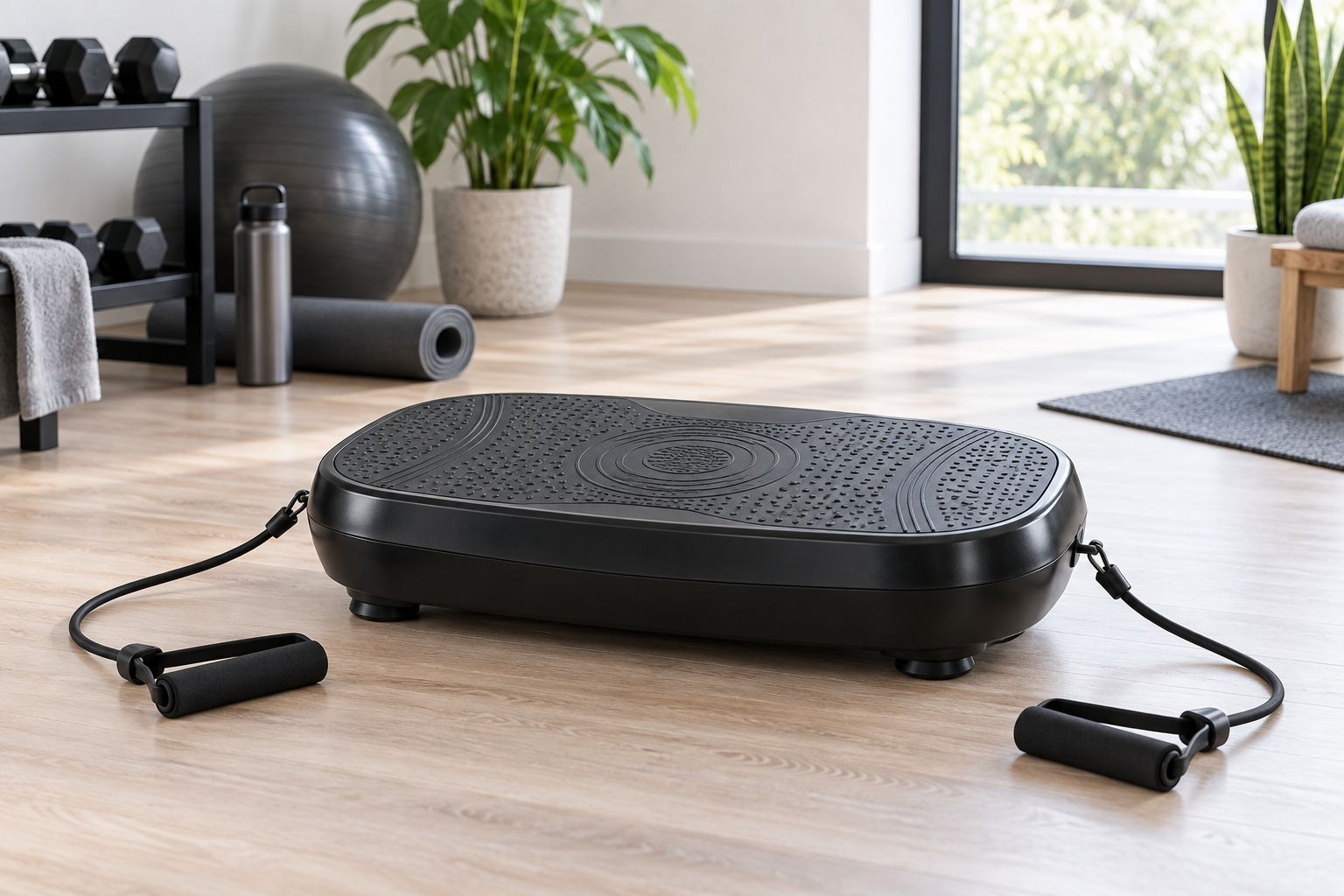
LifePro
LifePro Waver Mini Compact Vibration Plate
A smaller-footprint LifePro option for short sessions and easier storage.
Built-in resistance bands can turn a vibration plate into a compact strength station, but the bands and platform create separate demands. The band supplies directional resistance; the moving deck challenges the standing position. A productive workout keeps both manageable. Check the attachment points, begin with the plate at low intensity, and rehearse each band movement with the motor off. The session below uses a squat, row, press, hinge, and curl so the whole body works without constant clipping and unclipping of handles.
Use only the bands and anchor locations approved for the machine. Look for cracks near the handle, fraying around the clip, or a stretched section that feels thinner than the rest. Tug each connection while standing beside the switched-off plate. Replace damaged bands rather than shortening them with knots. Set the handles where you can reach them without bending under tension, and clear furniture from the arc a loose band could travel.
Stand with the feet about hip width near the center of the platform and keep a soft bend in the knees. Shorter users may need to hold lower on an adjustable handle; taller users may need longer tubing. The band should become taut through the working range but should not pull the shoulders down at the starting position. Wear shoes with a reliable rubber sole, especially during standing pulls and presses.
Warm up for three minutes off the plate with marching, shoulder circles, and six bodyweight hinges. Then complete three rounds. Work for 40 seconds and take 20 seconds to change position: band squat, two-arm row, standing chest press if your machine supports the correct rearward anchor, Romanian deadlift, and alternating curl. Rest one full minute after each five-movement round. The work totals 15 minutes, followed by a three-minute easy cool-down.
For the squat, hold the handles at shoulder height and sit between the heels. During the row, hinge slightly and pull the handles toward the lower ribs. For the deadlift, send the hips backward while the spine stays long, then stand by driving the floor away. Curl with the elbows pinned near the sides. If the approved anchor arrangement cannot provide a chest press, substitute a slow overhead press only if you can keep the ribs down.
Choose a plate setting that lets you keep the feet planted and the voice steady enough to speak a short sentence. More shaking does not make a band heavier. If the knees collapse inward in the squat or the handles bounce at the end of a row, lower the machine intensity first. If the motion remains sloppy with the motor off, reduce band tension or shorten the work interval to 25 seconds.
Keep the wrists straight and maintain light tension at the start and finish of each repetition. Allowing the band to snap slack creates an abrupt change in load. Exhale through the hard part of the movement and return for two controlled counts. The last five seconds of an interval should look like the first five. Stop the timer when technique changes instead of racing to fit in one more repetition.
Complete two rounds with the plate switched off or at its lowest setting. Use 30 seconds of work and 30 seconds for transitions. Remove the chest or overhead press if shoulder mobility is limited, and perform the row seated on a stable chair beside the inactive platform if standing balance is uncertain. A supported squat can be done with one hand on a rail and one band handle, alternating hands in the next round.
Muscle fatigue in the legs, back, or arms is expected; joint pain, tingling, loss of balance, or lightheadedness calls for an immediate stop. People new to both bands and vibration should learn the bands first. Two sessions separated by at least a day are enough for the opening week, because the unfamiliar stabilization work can create more fatigue than the brief workout suggests.
After all three rounds feel controlled, add five seconds to each work interval or choose a slightly stronger band. Keep the original plate setting during that change. In a later week, a small increase in vibration can become the single progression. Another useful advance is a staggered stance for the row and press, switching the forward foot halfway through, which adds trunk control without requiring faster movement.
Avoid combining a heavier band, higher speed, deeper squat, and longer interval in the same session. That makes it difficult to identify what caused grip failure or poor balance. Record the band color, machine setting, and completed rounds. Progress when two consecutive workouts finish with stable feet, quiet shoulders, and at least two technically sound repetitions still available.
As an Amazon Associate, we may earn from qualifying purchases.
A smaller-footprint LifePro option for short sessions and easier storage.
A vibration plate resistance-band workout succeeds when the platform supports a clear strength plan. Inspect the bands, learn each path while the machine is still, and then run the five-movement circuit at an intensity that preserves control. The squat, row, press, hinge, and curl cover more useful ground than a long list of improvised moves. Repeat the workout twice weekly and progress only one variable after the complete sequence feels steady.
Continue the Resistance-Band Workout With a Vibration Plate decision in the full product catalog, brand directory, or vibration plate finder.