AXV
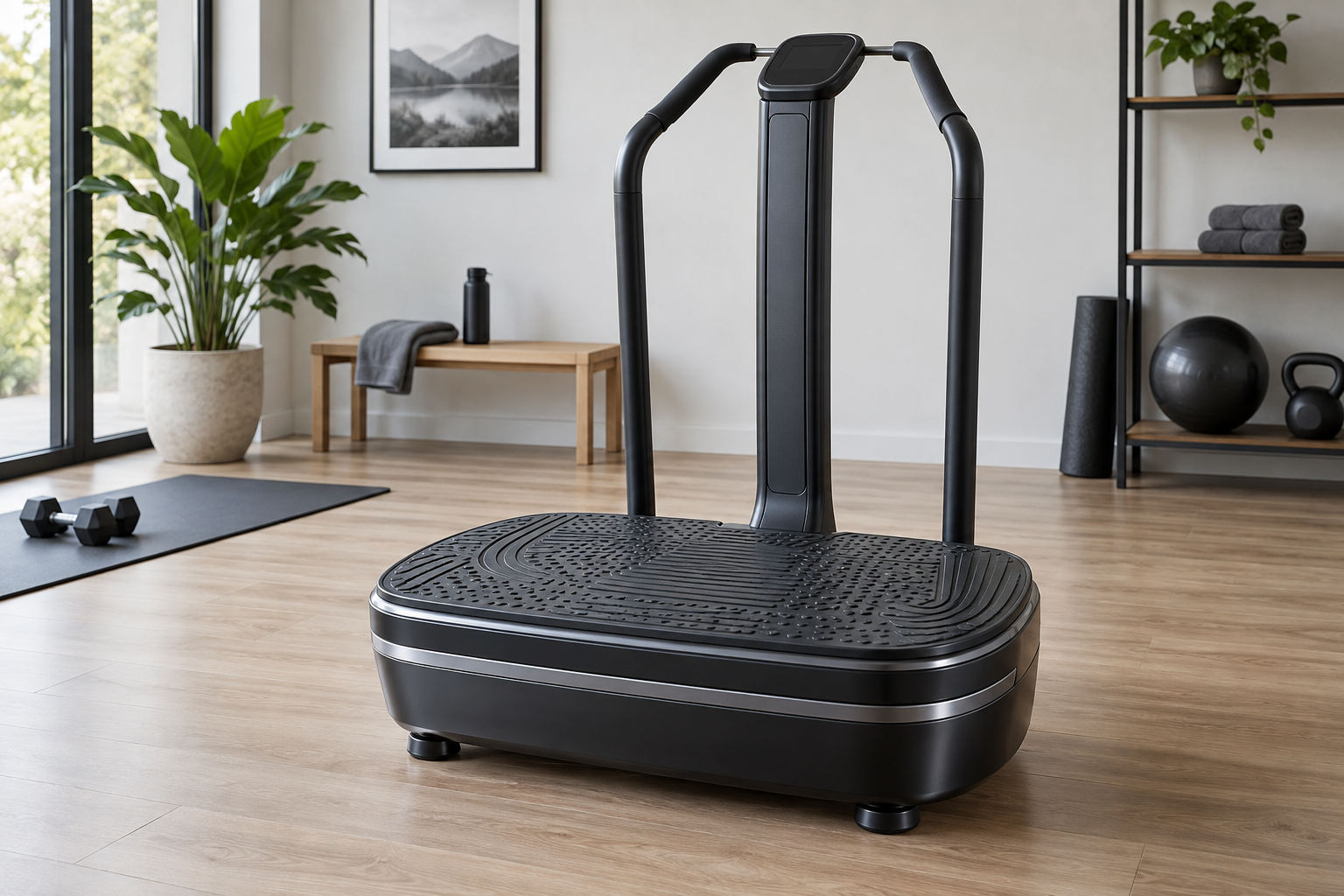
AXV Curved 200W Bluetooth Vibration Plate
A curved compact plate with a 200-watt motor and Bluetooth-listed configuration.
The vibration plate squat is a stance and control exercise before it is a depth challenge. The moving surface can make the thighs work hard even when the knees bend only partway, so a deep squat is rarely the right starting point. Foot placement also matters because oscillating platforms often feel stronger near the outer edges. Learn a shallow, centered squat at low intensity, then adjust stance, duration, and depth in small steps while keeping the knees aligned with the feet.
Step onto the switched-off plate and place the feet about shoulder width apart, with the toes turned out only slightly. Spread pressure across three points: the heel and the mounds beneath the big and little toes. Stand tall, look forward, and unlock the knees. If your platform has marked foot zones, begin near the center where movement is usually milder rather than assuming the widest mark is best.
Turn on the lowest comfortable setting while standing upright with a hand near a wall or sturdy support. Notice whether one foot carries more weight. Shift until pressure feels even, then bend the knees a few inches. The vibration should feel distributed through the legs, not concentrated as harsh rattling in the jaw or head. If it travels upward strongly, bend the knees a little more or reduce the setting.
Inhale, send the hips slightly back, and bend the knees over the second and third toes. Descend for three counts until reaching a depth you can hold without the heels lifting or the lower back rounding. Pause for one count, then exhale and stand over two counts. Finish tall without forcefully locking the knees. Keep the chest facing forward and let the arms reach ahead as a counterbalance.
For the first workout, perform eight slow squats, step off for a one-minute break, and complete a second set. A repetition should take about six seconds, making each set under a minute. People who prefer an isometric version can hold a shallow squat for 15 seconds, stand for 30 seconds, and repeat three times. The moving plate is already adding a demand, so neither version needs bouncing at the bottom.
Place the plate close enough to a fixed rail or heavy chair that one hand can touch it without leaning. Use fingertip support and squat only to the point where the hips stay under control. Another regression is the sit-back drill: place a chair behind the inactive platform, reach the hips toward it without sitting, and stand. Once that pattern is familiar, repeat on the lowest vibration setting without the chair.
A quarter squat is a complete starting exercise, especially for a new user or someone returning after a break. Increase depth only when the feet remain planted and the knees track consistently. If balance remains uncertain, practice ordinary floor squats first. The machine should not be used as the only available support because its surface moves and its edges can be narrow.
Progress from two sets of eight to three sets of ten before changing the motor setting. Then add a three-second hold at a comfortable midpoint or slow the lowering phase to five counts. A goblet hold with a light weight can follow after several stable sessions, provided the machine manufacturer allows handheld loads and you can step on and off safely without carrying the weight over a running platform.
A wider stance shifts the feel toward the inner thighs and hips, while a narrower stance requires more ankle control. Treat either as a separate variation and return to low intensity when testing it. Advanced users may try alternating heel raises from a shallow squat, but unilateral squats on a small moving deck create a much larger balance demand and offer little advantage for most home workouts.
If the knees fall inward, reduce depth and gently press them in the same direction as the toes. If the heels lift, bring the stance slightly wider, limit the descent, and check ankle mobility off the machine. A torso that folds onto the thighs usually means the hips traveled too far back for the available platform space. Make the movement smaller and keep the breastbone visible from the front.
High speed often turns a controlled squat into rapid knee flutter. Lower the setting rather than stiffening the legs. Clenching the toes, holding the breath, and staring down at the feet also make balance harder. Step off between sets, let the legs settle, and end the exercise if the vibration produces pain, dizziness, or numbness instead of normal thigh and glute effort.
As an Amazon Associate, we may earn from qualifying purchases.
A curved compact plate with a 200-watt motor and Bluetooth-listed configuration.
A sound vibration plate squat uses moderate knee bend, steady foot pressure, and a slow rhythm. Two short sets at low intensity give you enough information to judge stance and alignment. Add repetitions, a pause, or greater depth only after the knees and heels stay organized. Choose a setting that lets the legs absorb the platform's motion while the upper body remains calm.
Continue the How to Do Squats on a Vibration Plate decision in the full product catalog, brand directory, or vibration plate finder.