FLYBIRD
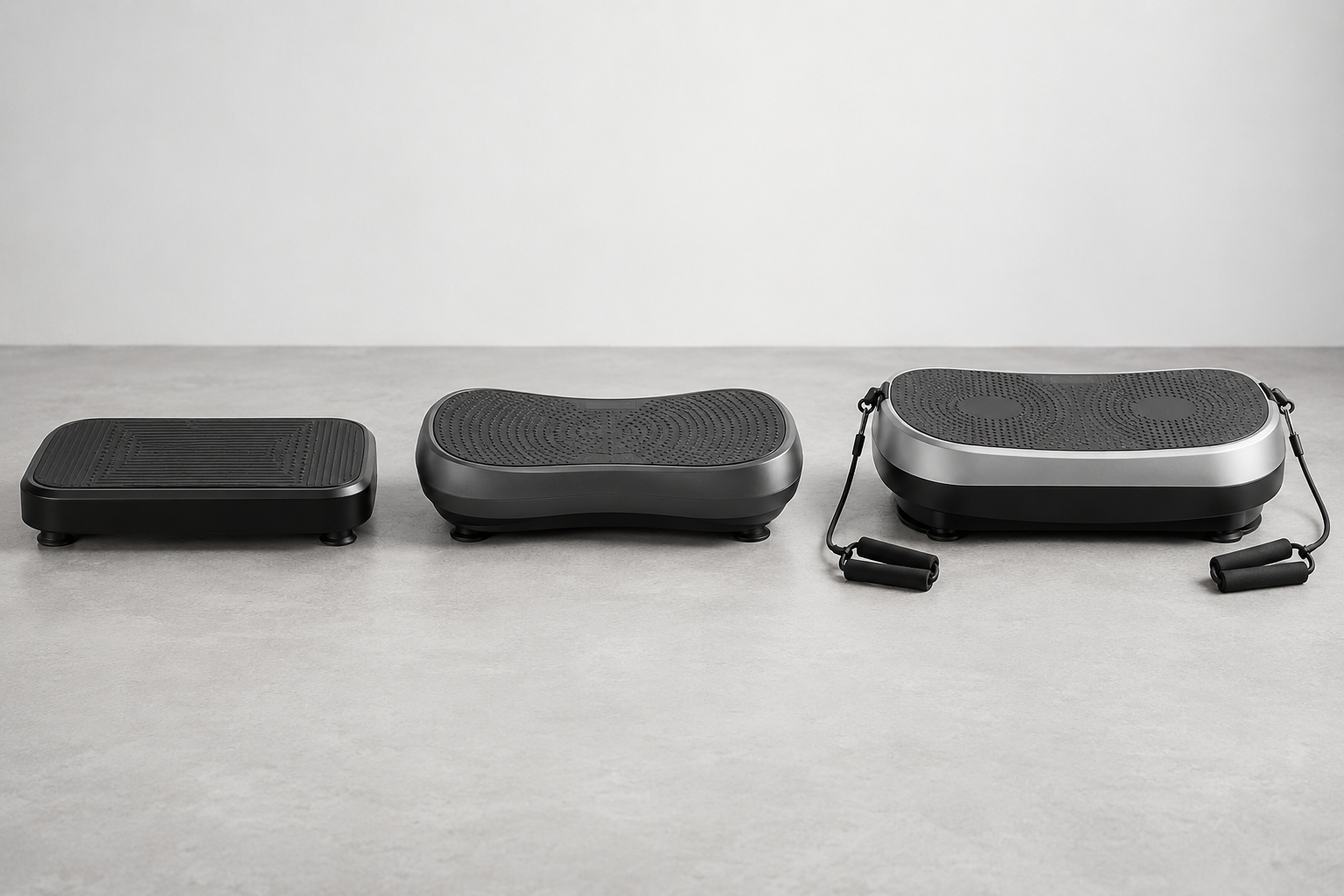
FLYBIRD Curved 120-Level Vibration Plate
A curved platform for shoppers comparing a wide control range in a compact chassis.
Stretching on a vibration plate can serve as a brief mobility sequence when the movement is mild and the position is easy to leave. The plate does not need to shake a joint at its end range. Its most practical role is to provide low-level sensory input while you hold a relaxed calf position, hip hinge, or kneeling hip-flexor stretch. Use low intensity, stay short of pain, and keep a stable support within reach. The following sequence takes about eight minutes and avoids complicated poses on a moving surface.
Set the platform on a firm floor and place a chair or rail beside it. Warm tissues first with two minutes of easy walking or marching. Select the lowest setting and test it with both feet centered and the knees soft. Stretching should feel calm enough for slow breathing. If the vibration makes you brace, clench the toes, or lose the position, turn the intensity down or perform the stretch beside the inactive plate.
Use a folded mat for any knee that rests on the floor. Wear shoes for standing calf work if the deck feels slippery, and keep shoelaces away from moving edges. Do not force a greater range because the muscle feels temporarily less guarded. Choose a mild pull that you could hold for 20 to 30 seconds without grimacing, bouncing, or changing your breathing.
Spend one minute standing with soft knees and slow breaths. For minutes two and three, stretch the calves: place the forefoot of one foot on the near edge, keep that knee straight but unlocked, and let the heel lower toward the floor for 25 seconds before switching. For minutes four and five, stand on the plate and perform a shallow hip hinge, resting the hands on the thighs and keeping the spine long for two 20-second holds.
For minutes six and seven, switch the motor off and kneel behind the platform with one padded knee down and the opposite foot supported on the deck. Tuck the pelvis slightly and move forward only until the front of the kneeling-side hip feels a stretch; switch after 30 seconds. Finish with one minute of gentle chest opening beside the machine, clasping the hands behind the back or holding a towel while breathing slowly.
For the calf, the heel should move down through a small range while the ankle stays aligned, rather than rolling to the outer edge of the foot. Bend the knee slightly to shift emphasis toward the lower calf. Keep one hand on support and avoid balancing on a single foot. If the platform edge presses uncomfortably into the sole, place both feet on the deck and use a staggered stance instead.
The standing hinge is often mislabeled as a toe-touch hamstring stretch. Keep the hands supported on the thighs, push the hips backward, and stop when the backs of the legs tighten. Rounding down toward the toes can send more vibration toward the head and encourages range from the spine rather than the hips. A smaller hinge with a long back provides the intended position more reliably.
The simplest regression is to switch the plate off and use it only as a low step. A second option is to perform each stretch entirely on the floor after one minute of easy standing vibration. Reduce holds to 15 seconds if the position becomes tiring. Anyone who feels unsteady should keep both feet on a stationary surface and treat vibration as a separate warm-up rather than combining it with stretching.
Progress by adding a second 20- to 30-second hold, not by raising the speed. You can also vary the knee angle in the calf stretch or place the hands on the hips during the hinge once balance is established. Longer is not automatically better; two comfortable rounds usually beat a single aggressive minute that leads to shaking, breath holding, or soreness around a joint.
Do not pulse deeper in time with the platform. Bouncing adds momentum to a surface that is already moving. Avoid locked knees, a rounded hanging forward fold, deep split stances, or seated positions that place the head close to the vibration source. The sensation should remain in the working area. Jaw chatter, headache, tingling, or dizziness means the position or setting needs to change immediately.
Stretching should not be used to override sharp pain or a recent injury. Exit by returning to a neutral position, holding the support, and stepping off after the machine stops. Walk for 30 seconds and notice whether the area feels freer without feeling unstable. If range increases but control decreases, use less intensity during the next session.
As an Amazon Associate, we may earn from qualifying purchases.
A curved platform for shoppers comparing a wide control range in a compact chassis.
Vibration plate stretching works best as a quiet mobility routine built around low intensity and modest ranges. The calf stretch, supported hip hinge, and stationary kneeling hip-flexor position cover common tight areas in eight minutes. Keep breathing easy, use support, and progress with an extra controlled hold rather than stronger vibration. A stretch should leave you moving comfortably when you step away from the platform.
Continue the Using a Vibration Plate During a Stretching Routine decision in the full product catalog, brand directory, or vibration plate finder.