FLYBIRD
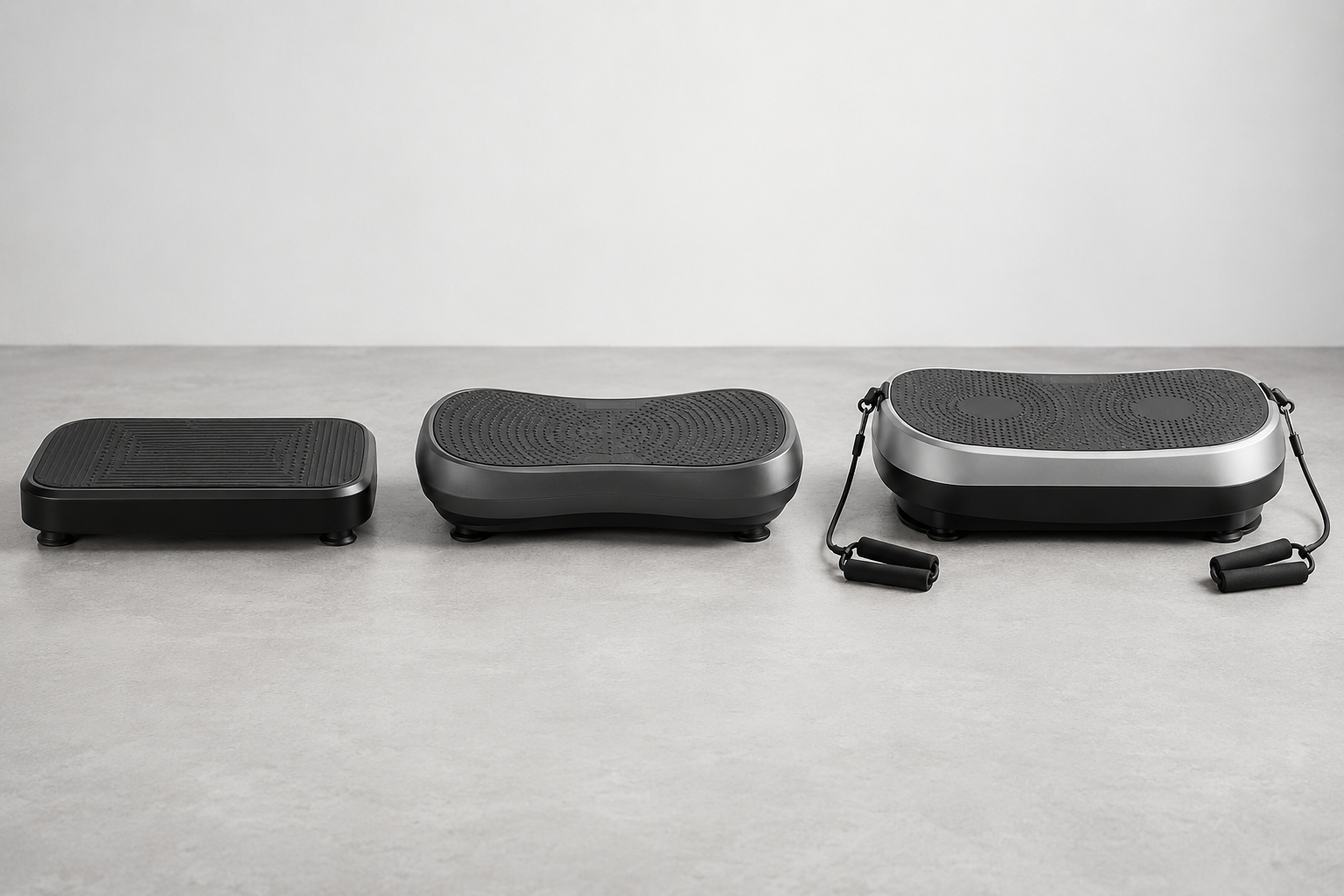
FLYBIRD Curved 120-Level Vibration Plate
A curved platform for shoppers comparing a wide control range in a compact chassis.
A vibration plate keeps the feet on a powered moving platform; a mini stepper asks the user to press alternating pedals through repeated steps. The plate is mainly a stationary-position tool, while the stepper is a compact cardio movement. Shoppers deciding between them should start with whether they want sustained stepping or brief vibration sessions.
A mini stepper requires continuous hip and knee work to drive the pedals. Pace and resistance shape effort. A vibration plate can add challenge to holds and exercises, but standing on it does not recreate the stepping volume of a stepper.
For a compact cardiovascular session, the mini stepper is the clear use-case winner.
The plate supports static holds, shallow squats, calf raises, stretches, and resistance-band movements without continuous stepping. It may suit users seeking variety around strength or warm-up positions and those specifically interested in vibration exposure.
A broad plate can feel more stable than narrow pedals, but users still need safe entry and soft knees.
Steppers create pedal and hydraulic sounds; plates can transmit a low buzz through floors. Test the exact surface and consider a dense mat. Both need clearance for balance and arm movement even when their stored footprints are small.
Check step height and pedal width for the stepper, and deck area and chassis weight for the plate.
Choose a mini stepper when calorie expenditure through continuous movement, stepping practice, and simple cardio progression are primary. Choose a vibration plate when powered platform work, stationary exercises, and bands are primary. A person who dislikes repetitive stepping is unlikely to use the stepper; a person expecting the plate to replace cardio will be disappointed.
The best tool is the one assigned a realistic weekly session.
A ten-minute stepper session consists of repeated pedal cycles. The user must keep stepping, regulate pace, and manage the pedal stroke. Resistance may come from hydraulic cylinders whose feel changes as they warm. A useful stepper comparison therefore checks pedal spacing, stride height, resistance behavior, handle or band options, and whether the frame stays flat. The display’s calorie estimate is secondary because compact consoles often rely on limited inputs.
A ten-minute plate session can contain several distinct positions without continuous locomotion: standing, shallow squat, calf raise, supported lunge, or band row. Its quality depends on posture and exercise selection rather than accumulating steps. Check deck area, movement type, low-setting control, and transition time between positions. A timer that forces a restart may be inconvenient for a circuit, while a responsive remote can make changes easier.
Progress also looks different. On a stepper, duration, cadence, and resistance can increase as conditioning improves. On a plate, the user may improve stance control, exercise range, or session structure before changing the motor. Someone whose main metric is daily movement minutes will find the stepper easier to track. Someone building brief strength or mobility blocks may find the plate more adaptable.
Try to predict the reason each machine might go unused. Steppers can feel repetitive or place an uncomfortable demand on knees and hips. Plates can feel passive when a buyer expected a full workout from standing alone, and floor noise may limit use. Select the device whose actual movement is appealing, comfortable, and compatible with the home rather than the one making broader outcome claims.
Check how each machine behaves when the session stops. Stepper pedals may remain at uneven heights, requiring a careful exit, while a vibration plate should return to a motionless, stable deck promptly. Users with limited balance should plan the hand support and exit sequence before starting. A device that delivers the preferred exercise but creates an awkward transition may need a different location, a handled version, or a different equipment choice.
As an Amazon Associate, we may earn from qualifying purchases.
A curved platform for shoppers comparing a wide control range in a compact chassis.
Mini stepper wins for compact cardio; vibration plate wins for powered stationary work and exercise variety. Match the purchase to the desired movement, joint comfort, floor noise, and the routine a person will actually repeat.
Continue the Vibration Plate vs Mini Stepper decision in the full product catalog, brand directory, or vibration plate finder.