AXV
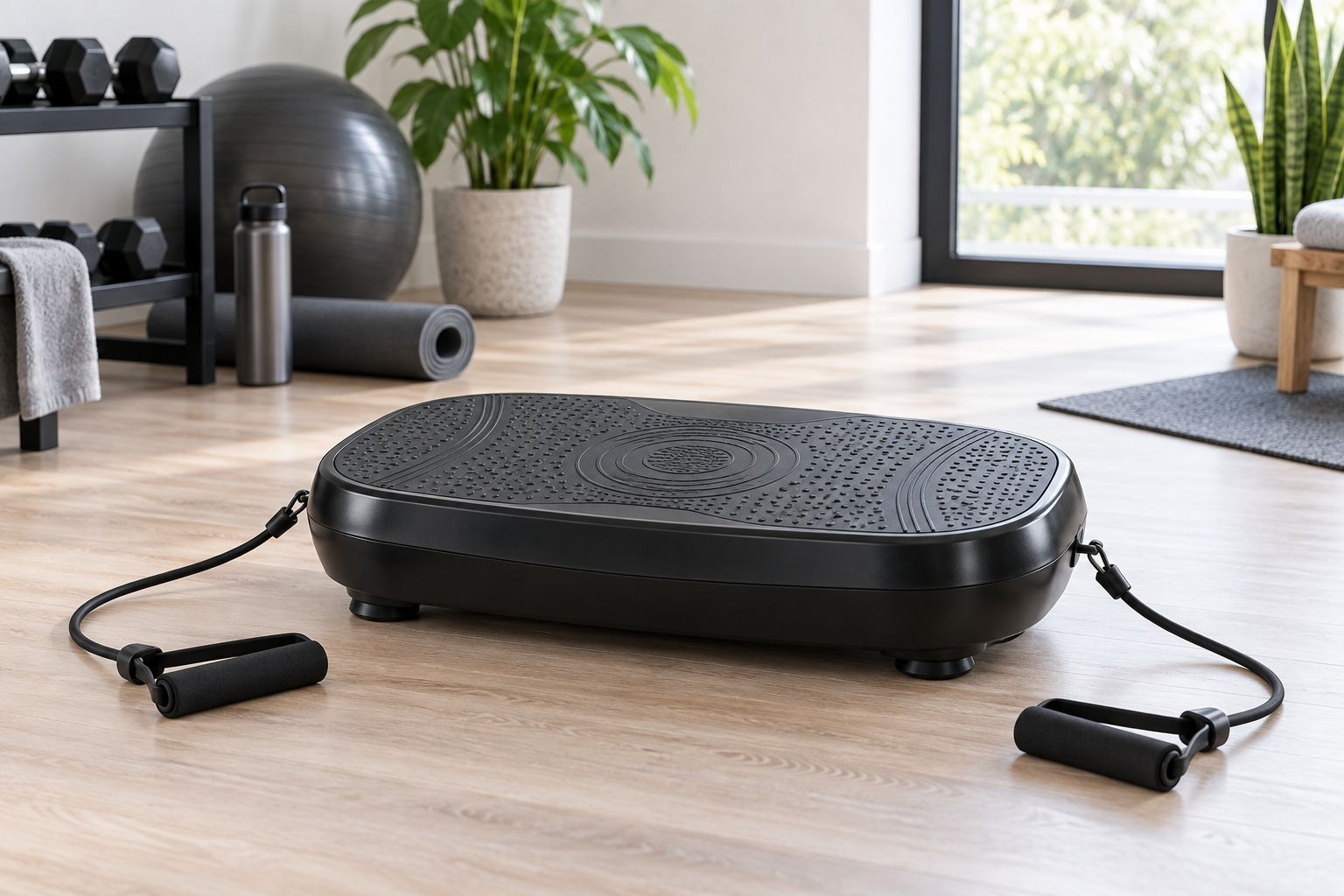
AXV Curved 200W Bluetooth Vibration Plate
A curved compact plate with a 200-watt motor and Bluetooth-listed configuration.
Walking pads and vibration plates are both compact home-fitness products, yet their central jobs barely overlap. A walking pad provides continuous belt travel for accumulated steps. A vibration plate provides repeated platform motion under a mostly stationary stance or exercise. The decision becomes easy once daily walking and vibration-assisted exercise are separated.
A walking pad supports minutes of continuous locomotion and can add steps during work or television. Speed, belt dimensions, user weight, and handrail design determine fit. If the goal is more daily walking, the pad is the direct tool.
A vibration plate cannot honestly be counted as equivalent walking distance simply because the leg muscles respond to motion.
A plate can host standing holds, squats, calf raises, planks, stretching, and band work in short sessions. It usually requires less length than a walking belt and may be easier to place beside other exercise equipment.
It wins when the buyer specifically wants vibration modes and varied stationary positions rather than steps.
Walking pads require front and rear clearance, belt alignment, and attention while stepping. Plates require safe step-on access, stance room, and a reachable stop. Under-desk walking adds desk height and concentration considerations that do not apply to a plate.
Compare stored dimensions, total weight, wheels or grips, floor noise, and outlet location.
Select the walking pad for daily step goals, gentle indoor walking, or workday movement. Select the plate for short structured exercise blocks with powered vibration. Buyers wanting both should schedule distinct uses instead of assuming one machine replaces the other.
For either product, an appealing stored footprint is irrelevant if setup is cumbersome enough to prevent use.
Walking-pad listings emphasize a slim stored profile, but operation requires the full belt length plus safe clearance to step on and off. Under-desk use also demands a desk high enough for walking posture and a layout that keeps the cord clear. Belt width and length should fit the user’s natural stride at the intended speed. A compact pad that forces short, guarded steps is a poor route to more daily walking.
A vibration plate occupies less length, yet exercises can extend beyond the shell. Band rows need room behind the user, lunges need floor beside the deck, and planks need body-length clearance. The user may also need a chair, wall, or rail within reach. Measure the complete activity zone for both machines rather than drawing conclusions from product dimensions alone.
Maintenance differs. A walking belt may require alignment checks, cleaning, and lubrication according to its manual. A plate needs inspection of feet, cord, deck surface, bands, and new rattles. Both should be unplugged before cleaning. Noise has different character: the pad adds footfall and belt sound, while the plate can create a structural hum. Test during the hours the equipment will actually be used.
Progress should follow the machine’s true job. On the pad, track time, comfortable speed, and frequency of walks. On the plate, record movement mode, stance, posture, exercise, and duration. Do not use calorie figures to make them appear equivalent. One tool builds walking volume; the other supplies a powered surface for selected positions. The better purchase fills the larger gap in the weekly routine.
The comparison also changes for shared households. A walking pad may fit one person’s stride and capacity but feel narrow to another. A vibration plate may accommodate several stances yet require individual baseline settings. List every intended user and verify dimensions, capacity, controls, and safe entry for each. Buying for the tallest or heaviest person alone does not ensure the machine will be approachable for everyone else.
As an Amazon Associate, we may earn from qualifying purchases.
A curved compact plate with a 200-watt motor and Bluetooth-listed configuration.
Walking pad wins for walking; vibration plate wins for vibration-based holds and exercises. Decide which behavior is missing from the week, then compare products within that equipment class for dimensions, controls, capacity, noise, and service. Assign the chosen machine a specific time and place in the weekly schedule before ordering; that practical commitment is a better use predictor than estimated calories.
Continue the Vibration Plate vs Walking Pad decision in the full product catalog, brand directory, or vibration plate finder.