MERACH
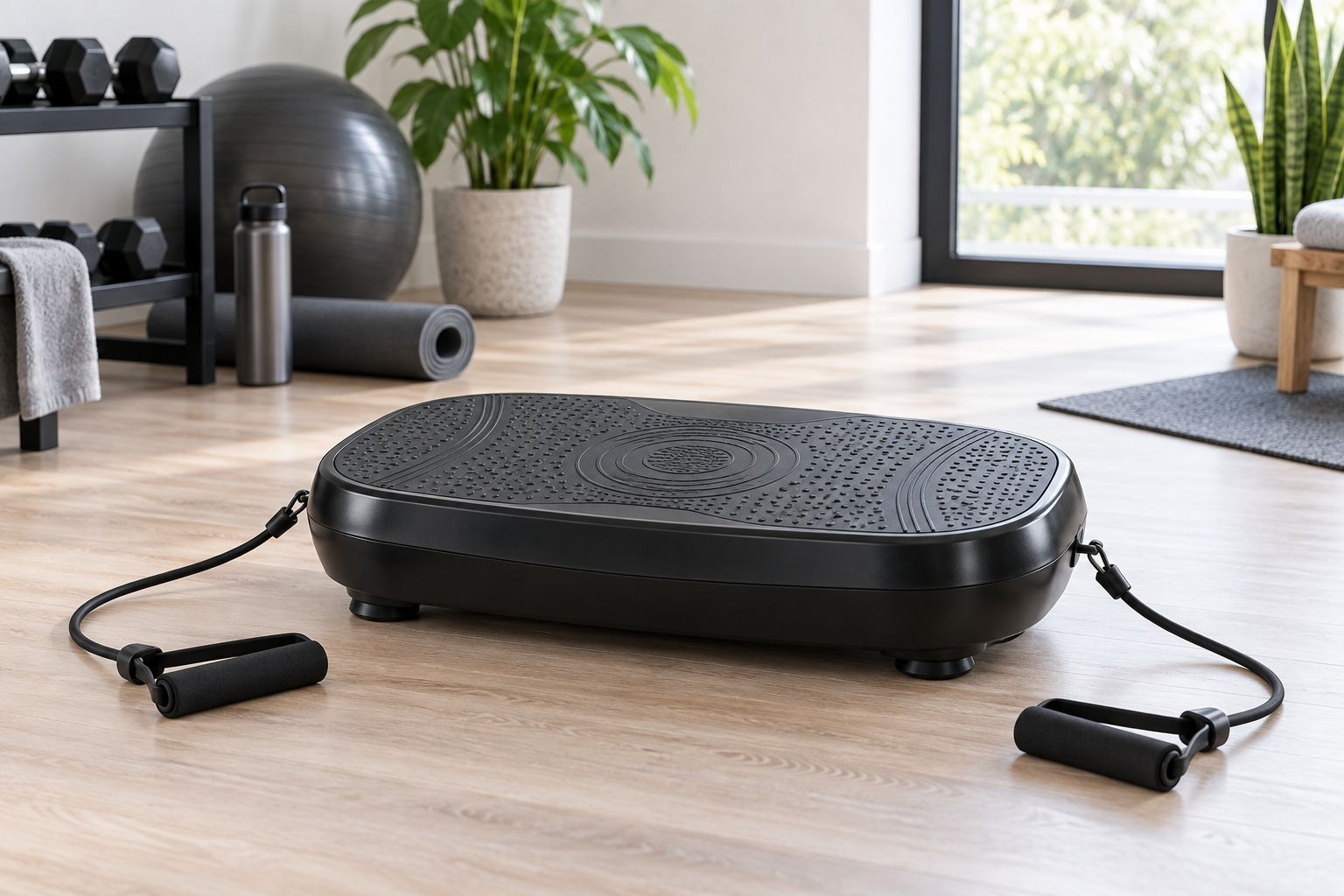
MERACH CV30 Curved Vibration Plate with Calorie Display
A curved MERACH model whose display and platform shape are central comparison points.
A vibration plate warm-up should raise readiness without tiring the legs before the main workout. Five to seven minutes is enough for most home sessions. Start beside the machine, then use low vibration with soft knees and simple movements that keep both feet supported. The goal is to finish warmer, more coordinated, and familiar with the platform's motion. If the warm-up leaves the thighs trembling or the breathing labored, the setting or duration was too high for its purpose.
Spend the first 90 seconds marching beside the switched-off plate. Let the arms swing, gradually lift the knees a little higher, and take several longer exhales. Follow with five ankle circles per direction and six slow hip hinges. This floor phase checks balance and gives you a baseline before vibration changes what the feet and legs feel. Keep a wall or rail available if you are new to the machine.
Next, test the platform for 30 seconds. Step to the center, place the feet hip width apart, and unlock the knees. Turn on the lowest comfortable level. Shift weight gently from left to right without lifting either foot. The upper body should remain quiet. If the teeth chatter or the head feels shaken, bend the knees slightly more and lower the intensity before continuing.
Minute one is the floor march. During minute two, stand centered on low vibration and practice slow weight shifts. Minute three uses eight shallow squats, each with a two-count descent and two-count rise. In minute four, perform alternating heel raises while both forefeet remain planted. Minute five is a hip hinge with the hands sliding to mid-thigh. For minute six, return to a relaxed athletic stance and take slow breaths.
Move between drills without rushing. The squat should be only deep enough to warm the thighs, and the heel raises should rise no higher than you can control. In the hinge, send the hips back while keeping the spine long and the knees loose. If you plan an upper-body workout, add ten shoulder circles and eight wall push-ups after stepping off instead of trying to balance through arm swings on the deck.
Before a squat or lunge session, repeat the shallow squat minute and add four reverse lunges per side on the stationary floor. Before resistance-band work, rehearse one set of six rows and presses with the motor off. Before a recovery-focused session, keep the sequence at low intensity and replace the squats with two minutes of comfortable standing and gentle calf raises.
The warm-up can also screen the day's readiness. Compare left and right weight shifts, notice whether the ankles feel stiff, and check whether the usual machine setting feels unusually strong. Reduce the main workout when balance, joint comfort, or coordination is clearly worse than normal. The opening minutes should inform the session rather than obligating you to follow a preset plan.
Keep one hand on a stable support and shorten the platform portions to 20 seconds. Perform the squat and hinge on the floor, using the machine only for a centered standing interval. Another regression is to complete the entire sequence with the motor off for the first session, learning where to step and how to use the controls before adding vibration.
People who are sensitive to motion may tolerate two or three brief exposures better than one continuous block. Stand for 20 seconds, switch the motor off, march on the floor for 40 seconds, and repeat three times. Stop if lightheadedness, nausea, numbness, or headache appears. A warm-up should resolve stiffness gradually; it should not require enduring uncomfortable symptoms.
Once the six-minute sequence feels easy, make the movements slightly larger rather than much faster. Lower the squat another inch, pause at the top of each heel raise, or reach the hips farther back in the hinge. You can increase the plate by one modest step on a later day, but keep the same sequence so the effect of that single change is clear.
Common mistakes include locking the knees during the standing minute, using a high setting to feel warmed up sooner, and turning the warm-up into a fatigue circuit. Breath holding and gripping the toes signal too much demand. Finish with energy available for the workout, step off after the deck stops, and take 30 seconds to arrange bands or other equipment before the first work set.
As an Amazon Associate, we may earn from qualifying purchases.
A curved MERACH model whose display and platform shape are central comparison points.
Use the vibration plate warm-up as a six-minute bridge from ordinary movement to training. March first, test a low setting, and cycle through weight shifts, shallow squats, heel raises, and hinges. Adjust the next workout according to how those movements feel. The right warm-up builds heat and confidence while preserving the strength and balance needed for the session that follows.
Continue the How to Use a Vibration Plate as a Short Warm-Up decision in the full product catalog, brand directory, or vibration plate finder.